
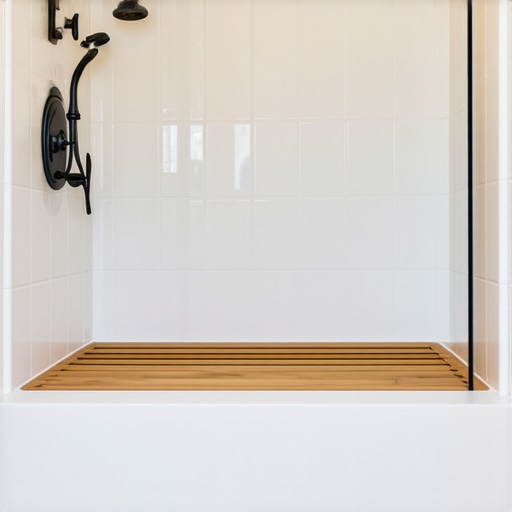
I spent three days grinding concrete on a job last month just so the floor wouldn’t click like a castanet, but that was nothing compared to the shower I saw last week. I once walked into a house where a custom bench was literally leaking through the floor joists into the kitchen below because the installer thought a bit of silicone and some green board was a waterproofing system. It wasn’t. The plywood underneath had the consistency of wet oatmeal and the mold growth was a biological hazard. You have to understand that water is a patient predator. It looks for the smallest path of least resistance, usually a fastener penetration or a poorly sloped corner, and it stays there until your structural framing is compromised. We are going to examine the physics of the secondary drainage plane and the chemistry of liquid membranes to ensure your shower bench lasts longer than the mortgage.
The physics of the horizontal drainage plane
To waterproof a bench inside a custom shower effectively, you must establish a continuous, unbroken moisture barrier and a mandatory 1/4 inch per foot slope. This ensures that gravity pulls water off the surface and toward the drain rather than allowing it to pool and penetrate the grout or tile substrate. Most failures occur because the horizontal plane is perfectly level. In the world of moisture management, level is actually a failure. You need a slight pitch. If the water sits, it finds a way in. This is why we use pre-sloped foam inserts or meticulously pitch our mortar beds. When you look at showers with a style that actually function, you are looking at a system that respects the flow of liquid over the surface of the tile.
“A floor is only as good as the subfloor beneath it; deflection is the enemy of every joint.” – Master Flooring Axiom
The chemistry of liquid membranes and sheet systems
Modern waterproofing relies on ANSI A118.10 standards which define the load-bearing and waterproof qualities of membranes used in thin-set tile installations. You have two primary choices, liquid-applied rubbers or bonded sheet membranes. Liquid membranes like Laticrete Hydro Ban or Custom Building Products RedGard are polymers that cure into a rubberized skin. You apply them with a brush or roller, paying special attention to the corners. The chemistry here involves a cross-linking of molecules that creates a flexible, waterproof shield. Sheet membranes like Schluter-Kerdi are made of polyethylene with a fleece webbing on both sides. These provide a uniform thickness that liquid applications sometimes lack. If you are aiming for showers that wow, you cannot afford to skip the technical specs of these layers. The bond between the membrane and the thin-set is where the battle for your subfloor is won or lost.
Why wooden frames are a gamble in wet environments
Building a shower bench with 2×4 lumber and plywood is a high-risk strategy that requires extreme precision in waterproofing to prevent the inevitable rot of organic materials. Wood moves. It expands and contracts based on ambient humidity and temperature shifts. When that wood is trapped inside a wet wall, any tiny breach in the membrane allows water to hit the cellulose. Once the moisture content of the wood exceeds 20 percent, wood-decay fungi begin to eat the lignin that gives the wood its strength. I prefer using high-density expanded polystyrene blocks. These foam blocks are lightweight, waterproof by nature, and do not expand or contract. They provide a stable substrate for the tile that will not rot if a single grout line cracks. If you must use wood, you have to wrap it in a cementitious backer unit and then apply multiple coats of a liquid membrane, reinforcing every single corner with alkali-resistant mesh tape.
The 1/8 inch margin of error in corner transitions
The transition where the bench meets the wall is the most vulnerable point in the entire shower assembly due to the concentration of structural stress. This is where the house settles and the walls shift. If you have a rigid grout joint here, it will crack. You must use a high-quality 100 percent silicone sealant in these change-of-plane joints. Silicone is an elastomer, meaning it can stretch and compress without breaking its bond. Standard grout, even the expensive stuff, is brittle. It cannot handle the movement of a shower bench when someone sits on it. Proper grout restoration often starts with replacing these cracked corner joints with flexible caulking that matches the grout color. We also talk about the anatomy of the “bird’s beak” or the way the tile is mitered on the edge of the bench. If those edges are not fully back-potted with mortar, they will be brittle and prone to chipping.
| Feature | Liquid Membrane | Sheet Membrane | Foam Pre-Fab |
|---|---|---|---|
| Application Type | Roller/Brush | Thin-set Bonded | Structural Block |
| Cure Time | 2 to 12 Hours | Immediate Tile | Immediate Tile |
| Vapor Barrier | Variable | High Rating | Total System |
| Flexibility | High | Moderate | Low (Rigid) |
The microscopic reality of the tile bond
Achieving a 95 percent mortar coverage on the underside of the tile is a TCNA requirement for wet areas to prevent water from collecting in voids. When you have air pockets behind your tile on a shower bench, they become miniature reservoirs for stagnant water. This leads to efflorescence, where minerals from the cement are carried to the surface and leave white, crusty deposits on your grout. It also leads to mold. You need to use a notched trowel to create ridges in the mortar, then collapse those ridges by moving the tile perpendicular to the lines. This creates a vacuum-like bond that excludes air and water. For those looking for eco-friendly tile solutions, choosing high-quality mortars that reduce waste and increase longevity is a major part of the sustainability equation.
“Ensure a minimum of 95 percent coverage in wet areas to avoid the formation of water pockets that breed mold and compromise the bond.” – TCNA Handbook for Ceramic Tile Installation
The final inspection checklist for bench safety
- Verify the slope is at least 1/4 inch per foot toward the drain using a digital level.
- Confirm all fastener heads in the backer board are covered with membrane and mesh.
- Check that the membrane extends at least 6 inches up the wall from the bench surface.
- Perform a flood test by damming the bench area and checking for moisture penetration after 24 hours.
- Inspect all change-of-plane joints for 100 percent silicone sealant rather than hard grout.
- Ensure the thin-set used is compatible with both the membrane and the specific tile type.
Maintenance is the last part of the puzzle. Even the best waterproofing system requires that you keep the surface clean. Following tile cleaning tips will help keep the protective glazes and sealants in top shape. If you ever see a crack in the corner, do not wait. That is the entrance for the predator. Fix it immediately. Your subfloor and your wallet will thank you. For further help with your specific layout or if you need professional guidance on complex waterproofing, feel free to contact us directly. We focus on structural integrity because a beautiful shower that rots your house from the inside out is not a luxury, it is a liability.