
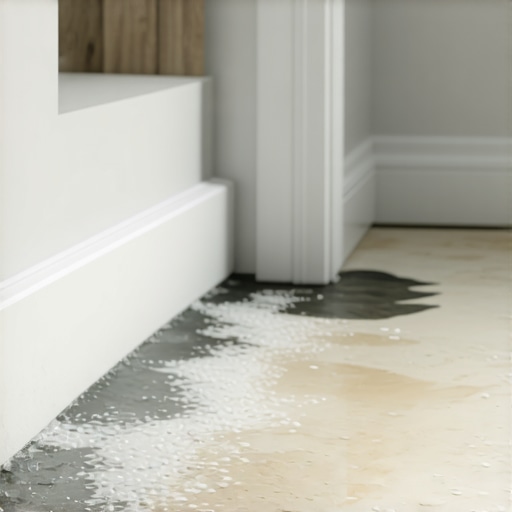
The hidden rot behind the paint
Bubbling baseboards near a toilet indicate a failure in moisture management where water is wicking into the porous core of the trim through capillary action or direct leaks. This phenomenon occurs when the protective paint seal fails or water escapes the toilet wax ring, saturating the wood fibers and causing the internal resins to expand and delaminate. I spent three days grinding concrete on a job last month just so the floor wouldn’t click like a castanet, only to find the bathroom baseboards were essentially oatmeal. The homeowner thought they just had a messy toddler, but the reality was a slow-motion structural failure. Most guys skip the leveling compound and ignore the perimeter seals. They think the underlayment will hide the dip, but it won’t. In that bathroom, the MDF baseboards were acting like a sponge, pulling water from a microscopic leak in the wax ring until the paint literally separated from the wood substrate. It was a mess that could have been avoided with a simple moisture meter and the right choice of materials.
The physics of the wax ring failure
A toilet wax ring is a mechanical gasket designed to bridge the gap between the toilet horn and the closet flange. When this seal fails, gravity and hydrostatic pressure push water into the subfloor. This water does not just stay on the surface. It travels along the easiest path, which is usually the gap between the tile and the baseboard. As the water sits, it seeks out any organic material to saturate. If you have builder-grade MDF trim, the urea-formaldehyde resins that hold the wood particles together begin to dissolve. This chemical breakdown causes the fibers to swell in a localized area, creating the unsightly bubbles you see under the paint. It is a molecular collapse of the trim structure. Many people try to scrape the bubbles and repaint, but you cannot fix a chemical bond failure with a fresh coat of latex. The damage is deep within the cellular structure of the material. You are fighting a battle against the very nature of wood fibers and moisture.
“A floor is only as good as the subfloor beneath it; deflection is the enemy of every joint.” – Master Flooring Axiom
The capillary action of fiberboard
Medium Density Fiberboard is the most common material for baseboards in modern construction, but it is the worst choice for a bathroom environment. MDF is composed of sawdust and glue. When liquid water contacts the bottom edge of an unsealed baseboard, capillary action pulls the moisture up into the board against the force of gravity. Think of it like a sugar cube touching coffee. The water rises. As the water molecules penetrate the board, they increase the internal pressure. The fibers expand at different rates, causing the surface paint to stretch and eventually bubble. This is why your baseboards makeover ideas to elevate your space must prioritize moisture-resistant materials. In my experience, even a small splash from a shower can trigger this if the bottom of the trim was not primed before installation. It is a detail that most contractors miss because they are in a hurry to get to the next job. They leave the raw edge of the MDF exposed to the floor, creating an open straw for every drop of water that hits the tile.
When grout becomes a straw
Grout is a cementitious product, which means it is inherently porous at a microscopic level. Unless you are using high-grade epoxy grout, those lines between your tiles are absorbing moisture. In a bathroom, this becomes a highway for water to reach the wall plate. If the grout near the toilet is not sealed or has cracked due to subfloor deflection, water seeps through and migrates under the baseboards. This is especially common in showers with a style trendy ideas for small bathrooms where space is tight and everything gets wet. The water travels under the tile and hits the baseboard from the back. By the time you see bubbles on the front of the trim, the back of the board is likely covered in mold. You need to understand the grout restoration secrets for long-lasting results to prevent this moisture migration. Sealing your grout is not an optional aesthetic choice, it is a structural necessity for the longevity of your walls and trim.
| Material Type | Moisture Resistance | Durability | Best Use Case |
|---|---|---|---|
| MDF | Very Low | Low | Dry bedrooms and hallways |
| Finger-Jointed Pine | Moderate | Medium | General living areas |
| Solid PVC | High | High | Bathrooms and laundry rooms |
| Solid Oak | Medium | High | High-end custom builds |
The unseen moisture trap behind the tile
Water does not just evaporate when it gets behind a baseboard. It stays trapped between the drywall and the trim. This creates a humid micro-environment that accelerates the rot of the baseboard. If your bathroom has high humidity levels from showers that wow modern designs for 2025, that trapped moisture has nowhere to go. It sits against the paper backing of the drywall and the back of the wood. This is how you end up with black mold colonies growing completely hidden from view. You might think the bubbling is just a cosmetic issue, but it is often the first sign of a much larger mold problem. In my years of experience, a bubbling baseboard near a toilet or shower is the canary in the coal mine. It tells you that the waterproofing integrity of the room has failed. You should never ignore it. You should always pull the board to see what is happening underneath. If you find wet drywall, you have a leak that needs immediate attention from a professional who understands the chemistry of moisture barriers.
“Tile installations fail not because of the tile, but because of the movement and moisture in the substrate.” – TCNA Technical Manual
A checklist for troubleshooting bubbling trim
- Check the wax ring for leaks by looking for water at the base of the toilet after a flush.
- Inspect the grout lines for cracks or missing sections that allow water to seep under the tile.
- Measure the humidity in the bathroom to ensure the exhaust fan is moving enough air.
- Feel the baseboard for soft spots or a damp sensation that indicates active saturation.
- Look for discoloration in the tile cleaning tips for a sparkling bathroom in 2025 that might suggest minerals from a leak.
The 1/8 inch that ruins everything
Precision matters in flooring. If your installer left a gap between the tile and the wall that is too large, or if they didn’t use a 100 percent silicone caulk at the floor-to-wall transition, you are at risk. Water follows the path of least resistance. A tiny gap of 1/8 inch is enough for a whole gallon of water to disappear under your trim over a month of daily use. Most people use cheap acrylic caulk in bathrooms, but it shrinks and cracks over time. You need the flexibility and water-repelling properties of silicone to create a true dam. If you are looking at chic baseboard designs that transform rooms in 2025, make sure they are installed with a bead of silicone along the bottom edge. This prevents water from ever touching the raw bottom of the baseboard. It is a small detail that makes the difference between a floor that lasts thirty years and one that fails in three. I always tell my clients that the most expensive floor is the one you have to install twice because you skipped the cheap precautions. If you are unsure about your current setup, it is better to contact us for a professional evaluation before the rot spreads to your subfloor structure. We can look at the eco-friendly tile solutions for sustainable homes in 2025 that provide better moisture resistance. Do not wait for the paint to fall off the wall to realize you have a problem. The bubbling is a warning. Listen to it. Use a moisture meter. Ensure your bathroom is a dry sanctuary, not a petri dish for rot. Your home and your health depend on keeping water exactly where it belongs, which is inside the pipes and the porcelain fixtures. Any deviation from that is a recipe for a structural nightmare that will cost you thousands in the long run. Keep it dry, keep it sealed, and choose your materials based on performance, not just the price tag at the big-box store.