
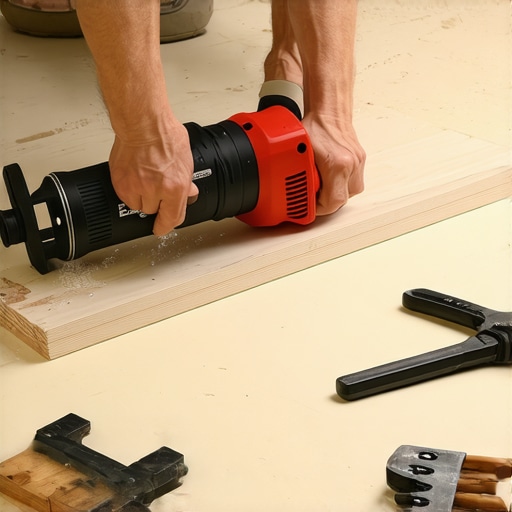
I have spent twenty-five years with sawdust under my nails and a permanent squint from checking the levelness of concrete slabs. Most people think a finish carpenter needs a trailer full of power tools to get a clean joint. They are wrong. I once spent three days grinding concrete on a large residential job just so the floor would not click like a castanet because the subfloor was a disaster. That taught me that the foundation dictates the finish. If your subfloor is not right, your baseboards will never sit flush. When you are working without a power saw, you are returning to the physics of manual friction and the chemistry of wood fibers. You do not need a loud miter saw to achieve a professional result. You need a sharp blade, a steady hand, and an understanding of how wood reacts to pressure and humidity. Many homeowners believe that speed comes from electricity, but a master knows that speed comes from accuracy. Cutting a miter by hand avoids the setup time of a power station and the dust management required for indoor sawing. It is about the elegance of the back saw and the rigidity of the miter box. This approach is not just for the budget-conscious, it is for the craftsman who respects the cellular integrity of the wood.
The myth of the electric miter saw
To cut baseboard miters without a power saw, you must utilize a rigid manual miter box paired with a fine-tooth back saw or a Japanese pull saw. These tools provide the necessary guide to maintain a 45-degree angle while ensuring the kerf remains narrow and the wood fibers do not splinter. The electric miter saw is a convenience, not a requirement. In many cases, the time it takes to haul a heavy sliding compound saw into a second-story bedroom is longer than the time it takes to make the cuts manually. The manual miter box is the anchor of this process. It relies on the physics of a confined channel to keep the blade on a vertical plane. When you use a power saw, the high RPMs can often melt the factory finish on pre-painted baseboards or cause internal fractures in medium-density fiberboard (MDF). A manual saw allows you to feel the resistance of the wood. This tactile feedback lets you adjust your stroke before a mistake becomes a ruined piece of trim. It is a quiet, meditative process that produces less airborne particulate matter, which is better for your lungs and your workspace cleanliness. If you are looking for baseboards makeover ideas to elevate your space, mastering the manual cut is your first step toward a high-end finish.
“A floor is only as good as the subfloor beneath it; deflection is the enemy of every joint.” – Master Flooring Axiom
The anatomy of a manual miter cut
A successful manual miter cut depends on the tooth count of your saw blade and the stability of your workpiece within the miter box. High-quality results require a saw with at least 14 to 16 teeth per inch (TPI) to ensure the cut surface is smooth enough for immediate assembly without excessive sanding. When you examine a piece of baseboard under a microscope, you see a complex network of cellulose and lignin. A power saw tears through these with brute force. A fine-tooth back saw shears them. The back saw has a thick spine of steel or brass along the top of the blade, which prevents the thin metal from bowing. This rigidity is what allows for a perfectly straight 45-degree cut. You must also consider the moisture content of the wood. In a humid environment like the Southeast, wood expands. If you cut your miters in a damp garage and move them into a climate-controlled room, the joints will likely open as the wood shrinks. Always acclimate your trim to the room where it will be installed for at least 72 hours. This prevents the heartbreak of a perfect miter turning into a gaping hole three weeks later.
Coping is the secret of the masters
Coping is the process of removing the back of one baseboard at an angle so it fits perfectly against the face of another, which is the superior method for inside corners. While mitering is common, coping accounts for walls that are not perfectly square, a common reality in every home. Professionals rarely miter inside corners. They cope them. To do this without power tools, you use a coping saw, which has a thin, wire-like blade held under high tension. You cut the first piece of baseboard square against the wall. The second piece is cut at a 45-degree miter to reveal the profile, then you use the coping saw to follow that profile, removing the waste material from the back. This allows the two pieces to overlap. If the walls are at an 88-degree angle instead of 90, a coped joint will still look tight. A mitered joint will fail every single time. It is about the geometry of the intersection. Using chic baseboard designs that transform rooms in 2025 requires this level of precision. A coped joint is also more resistant to the natural expansion and contraction of the house frame. It is the gold standard of trim carpentry.
| Tool Type | TPI (Teeth Per Inch) | Best Use Case |
|---|---|---|
| Back Saw | 14-16 | Straight miter box cuts and 45-degree angles |
| Coping Saw | 18-24 | Inside corner profiles and intricate curves |
| Japanese Pull Saw | 17-22 | Flush cuts and clean finishing in hard woods |
| Fret Saw | 32+ | Micro-detail work in thin veneers |
The ghost in the expansion gap
The expansion gap is the intentional space left between the flooring material and the wall to allow for natural movement caused by temperature and humidity changes. Your baseboards must be thick enough to cover this gap without being pinned to the flooring itself. I have seen $20,000 floors ruined because the installer nailed the baseboards through the flooring into the wall plate. This locks the floor in place. When the humidity rises, the floor has nowhere to go, so it buckles. The baseboard should float just a hair above the floor, or sit lightly on top, but it must be nailed only into the wall studs. This is why the thickness of your baseboard matters. If you are working with a floating LVP or a solid hardwood, that gap is your insurance policy. If your manual cuts are not perfect, do not try to fix them by pushing the board tighter against the floor. Instead, focus on the verticality of the cut. A gap at the bottom can be hidden by shoe molding, but a gap in the miter is visible to everyone who walks in the room. This is especially true when integrating trim with showers that wow modern designs for 2025, where transitions between tile and drywall must be handled with extreme care.
Why your subfloor is lying to you
A subfloor may appear flat to the naked eye, but micro-deviations in the surface will cause baseboards to appear crooked or create gaps at the mitered joints. You must use a long straightedge to identify dips and humps before you begin your trim installation. If there is a dip in the subfloor at the corner of the room, your miter will never close at the top. You will be fighting the physics of the house. This is why I always check the floor before I pick up a saw. If the floor is out of level, you have two choices. You can scribe the bottom of the baseboard to follow the floor, or you can fix the floor. For a professional, fixing the floor with a self-leveling compound is the only real answer. This creates a true horizontal plane. When your floor is flat, your manual miters will click together like a puzzle. This attention to detail is what separates a DIY job from an architectural masterpiece. It is the same logic used in eco-friendly tile solutions for sustainable homes in 2025, where the substrate is the most critical component of the build.
“Precision in the substrate eliminates the need for correction in the finish; always measure the void before you cut the solid.” – Tile Council of North America Principle
The 1/8 inch that ruins everything
Small measurement errors of just 1/8 inch are magnified at the corner joints, leading to miters that do not meet or baseboards that bow out from the wall. You must measure from the furthest point of the previous board to ensure the long point of your miter is accurate. Most amateurs measure to the corner and then forget to account for the thickness of the board itself when cutting the miter. If you are using a manual miter box, you have to account for the kerf, which is the width of the saw blade. A back saw has a thin kerf, but it is not zero. If you cut on the wrong side of your pencil line, you have already lost 1/16 of an inch. Do that on both ends, and you have a gap that even the best caulk cannot hide. I always suggest cutting your boards slightly long, maybe by 1/16 of an inch, and then “springing” them into place. This creates a tight tension fit that keeps the miters closed without needing a dozen nails. It is a trick of the trade that requires a bit of muscle but yields a flawless look. For those dealing with existing trim, you might find how to refresh grout without replacing it useful if your baseboards meet tiled areas that need a facelift.
Essential manual tool checklist
- Manual miter box with cam pins to secure the board
- Fine-tooth back saw or heavy-duty miter saw with 14+ TPI
- Coping saw with replacement blades
- Wood glue with a high solids content for the joints
- Spring clamps to hold miters together while the adhesive sets
- A set of sharp wood chisels for cleaning up the internal cope
- A dual-grit sanding block for fine-tuning the miter face
Adhesive chemistry and the permanent bond
Using the right adhesive is just as important as the cut itself, as wood glue creates a chemical bond that is often stronger than the wood fibers. For mitered joints, a combination of wood glue and a CA (cyanoacrylate) glue with an activator provides an instant, permanent hold. When you join two pieces of wood at a miter, you are gluing end-grain to end-grain. End-grain is like a bundle of straws. It sucks up glue, leaving the surface dry and the bond weak. The pro move is to “size” the joint. Apply a thin layer of glue to both faces, let it sit for two minutes until it becomes tacky, and then apply a second layer before joining. This prevents the wood from starving the joint of adhesive. For miters, I also use a drop of CA glue. This acts as a “liquid nail” that sets in seconds, holding the miter in place while the yellow wood glue cures over the next few hours. This is especially important for showers with a style where moisture-resistant baseboards or transitions are required. A tight, glued joint prevents water from seeping into the core of the trim.
Final adjustments and the art of the file
The final fit of a manual miter often requires micro-adjustments made with a hand file or a sanding block rather than additional saw cuts. By removing just a few microns of material from the back of the miter, you can close a gap at the front face perfectly. This is where the artistry comes in. If your miter has a tiny gap at the top, use a fine-cut file to shave the bottom of the miter face. This changes the angle by a fraction of a degree. You cannot do this with a power saw without risking a kickback or taking off too much material. The hand file is the most underutilized tool in a carpenter’s bag. It allows for a level of precision that is measured in the thickness of a human hair. Once the fit is perfect, you can use a round screwdriver shaft to “burnish” the edge of the miter. By rubbing the metal shaft along the sharp corner, you slightly fold the wood fibers inward toward each other. This hides the seam and makes the two boards look like a single piece of wood. It is a technique that has been used for centuries and still works better than any modern filler. If your project involves tile, remember to check tile cleaning tips for a sparkling bathroom in 2025 to ensure your new baseboards stay clean against the floor. If you have questions about specific installations, you can always contact us for expert advice or check our privacy policy for how we handle your data. For long-term maintenance of the surrounding areas, grout restoration secrets for long lasting results will keep your entire room looking professional.