
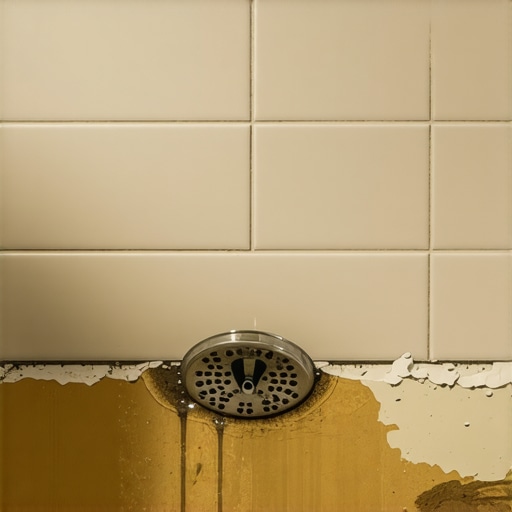
A leaking shower pan is a silent killer of structural integrity. I have spent 25 years kneeling on cold concrete and saturated plywood, and I can tell you that water does not follow the rules you think it does. It follows the path of least resistance, usually through a pinhole in a clogged weep hole or a failed PVC liner. Most homeowners wait until they see a yellow stain on the kitchen ceiling before they realize their second-floor shower is a liability. By then, the joists are already growing fungal colonies. You need to look at your bathroom through the eyes of a structural engineer, not a decorator. A floor is a performance surface, and in a shower, it is a hydraulic containment system. If the system fails, gravity will ensure the destruction of everything beneath it.
The hidden signals of moisture migration
Identifying a failing shower pan requires a meticulous inspection of grout integrity, capillary action in baseboards, and efflorescence patterns on tile surfaces. These early indicators manifest long before the ceiling below collapses. Look for darkened grout lines that never seem to dry or a faint musty odor that lingers after the bathroom has been ventilated. Most guys skip the leveling compound. They think the underlayment will hide the dip. It won’t. I spent three days grinding concrete on a job last month just so the floor wouldn’t click like a castanet, and that same attention to level surfaces is what prevents water from pooling in the corners of a shower. When water pools, it exerts hydrostatic pressure on the waterproof membrane, eventually finding a microscopic path through. You should regularly check the perimeter where the floor meets the wall. This is where the most movement occurs and where the waterproofing is most likely to tear. If you notice the tile in the center of the floor feels spongy or moves slightly when you step on it, the subfloor is already saturated. This is not a cosmetic issue. This is a structural emergency. High-quality tile cleaning tips can help you see these cracks more clearly, as dirt often masks the hairline fractures in the grout that allow water to bypass the surface.
“A floor is only as good as the subfloor beneath it; deflection is the enemy of every joint.” – Master Flooring Axiom
The physics of the pre-slope and the weep hole
The shower drain assembly consists of a clamping ring and weep holes designed to allow moisture that gets behind the tile to escape into the drain pipe. If these holes become clogged with thin-set or hard water deposits, the water becomes trapped. This trapped water sits in the mortar bed, creating a stagnant swamp that eventually rots the pan liner. To understand this, you have to look at the chemistry of the installation. Modern showers often use a liquid-applied membrane, but older homes rely on a thick mortar bed over a PVC or CPE liner. If the installer did not create a pre-slope under the liner, the water will never move toward the drain. It just sits there, slowly eating away at the bond between the tile and the substrate. This leads to the “squish” sound you might hear when stepping on the floor. In dry climates like Phoenix, this moisture might evaporate fast enough to hide the problem, but in high-humidity areas like Houston, that trapped water will stay liquid for years, slowly dissolving the glue in your plywood subfloor. This is why showers that wow must be built from the subfloor up with proper drainage physics in mind.
Why your subfloor is lying to you
Subfloor deflection is the primary cause of shower pan failure because it creates mechanical stress on the waterproofing membrane. Even if the liner is technically waterproof, the constant shifting of an undersized joist or thin plywood will eventually snap the seal. You cannot hide a bad subfloor with more tile. I have seen guys try to use double layers of cement board to fix a bouncy floor, but all that does is add more weight, which increases the deflection. You have to get down to the bones. If the joists are spaced at 24 inches on center, you need a much thicker subfloor than the standard 16-inch spacing requires. When the subfloor moves, the grout cracks. Once the grout cracks, the water moves in. If you are seeing consistent cracking in the same area of your shower floor, it is not a grout problem, it is a structural movement problem. You might need to look into grout restoration secrets once the underlying structure is stabilized, but simply reapplying grout is like putting a bandage on a broken leg.
| Material | Permeability | Elasticity | Installation Difficulty |
|---|---|---|---|
| PVC Liner | Low | Moderate | High |
| CPE Liner | Very Low | High | Moderate |
| Liquid Membrane | Low | High | Low |
| Sheet Membrane | Extremely Low | High | Moderate |
Efflorescence as a chemical distress signal
Efflorescence is the white powdery substance that appears on tile grout when mineral-rich water evaporates and leaves salts behind. If you see this in your shower, it means water is sitting underneath your tile for extended periods. This is a massive red flag. It indicates that the moisture is not draining through the weep holes as intended. The water is being pulled up through the grout by capillary action. As it travels, it picks up minerals from the mortar bed or the concrete. When it hits the air, the water vanishes, but the minerals stay. This is nature’s way of telling you that your shower pan is failing. You can scrub it away, but it will come back until the drainage problem is solved. If you ignore it, the salts will eventually expand and pop the tiles right off the floor. This is common in older installations where the plumber didn’t protect the weep holes with gravel or spacers. If you are trying to maintain a clean look, how to refresh grout is a common question, but if efflorescence is present, you are fighting a losing battle against chemistry.
Swelling baseboards and the capillary effect
Swelling baseboards near the shower entrance are a definitive sign of water migrating laterally from the shower receptor. Water does not just go down, it moves sideways through the wall studs and the subfloor. When the shower pan fails, the moisture often travels along the top of the liner and soaks into the bottom of the drywall and the baseboards. If you see the paint peeling at the bottom of your trim or if the wood feels soft to the touch, the pan is likely leaking at the curb. The curb is the most difficult part of a shower to waterproof correctly. It requires precise folding of the liner or a perfect seal with a topical membrane. If the installer nailed the liner to the top of the curb, they created four or five leak points before the tile was even laid. For those looking to upgrade their bathroom aesthetics, choosing chic baseboard designs is great, but ensure your waterproofing is solid first so those new boards do not rot in six months. You might also consider baseboards makeover ideas that use moisture-resistant materials like PVC in wet areas.
- Inspect grout for hairline cracks or pinholes every six months.
- Check the ceiling directly below the shower for damp spots or discoloration.
- Press on the bottom row of wall tiles to ensure they are firm and not spongy.
- Monitor the baseboards outside the shower for swelling or paint failure.
- Observe how quickly the floor dries after use; slow drying indicates saturation.
The 1/8 inch that ruins everything
Expansion gaps are the most ignored technical requirement in tile installation and flooring architecture. Every change of plane, such as where the floor meets the wall, requires a movement joint. This should be filled with 100 percent silicone caulk, never grout. Grout is rigid. Houses move. When the house shifts, the rigid grout in the corners will crack. These cracks are the primary entry point for water to bypass your tile and reach the sensitive subfloor. I have seen thousands of dollars in damage because someone wanted the corners to match the floor grout color exactly. Use a color-matched caulk instead. It is the only way to ensure the joint stays waterproof as the building expands and contracts with the seasons. If you are working on a smaller space, you might find trendy ideas for small bathrooms that emphasize these clean, caulked lines for both durability and style. Furthermore, considering eco-friendly tile solutions can provide materials that are more stable and less prone to extreme thermal expansion.
“Water is the universal solvent; given enough time, it will find the flaw in even the most expensive installation.” – TCNA Handbook Wisdom