
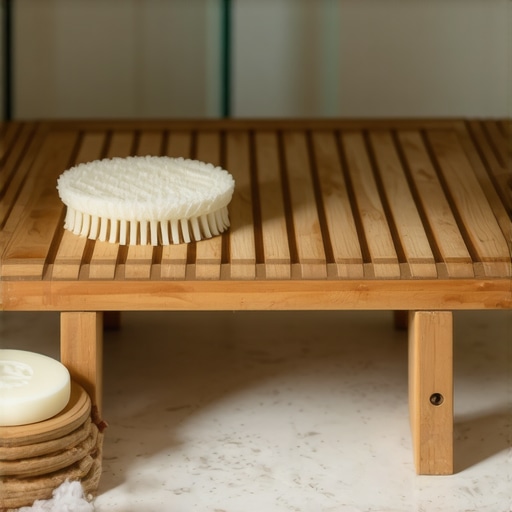
The Best Way to Clean a Teak Shower Bench
I have spent twenty-five years on my knees with a moisture meter and a levels, smelling like a mix of WD-40 and fresh-cut white oak. I am the guy you call when your fifteen-thousand-dollar bathroom starts to fail because some contractor thought he could eyeball the slope of a drain. Most guys skip the leveling compound and think the underlayment will hide the dip. It won’t. I spent three days grinding concrete on a job last month just so the floor wouldn’t click like a castanet, and that is the same level of precision you need when dealing with a teak shower bench. People treat these benches like cheap plastic lawn furniture, but they are high-performance organic structures sitting in a high-stress chemical environment. I once saw a custom shower where a high-end teak bench was left to rot, and the resulting tannin bleed permanently stained the light marble tile orange. The homeowner thought teak was invincible. It is not. If you do not understand the physics of wood in a wet environment, you are just waiting for a structural failure or a fungal outbreak. We are going to look at the chemistry of the wood and the mechanical process of keeping it clean without destroying your tile or grout.
The molecular reality of teak wood
Teak wood contains high concentrations of natural oils and silica which act as a hydrophobic barrier against water penetration and fungal decay. These biopolymers within Tectona grandis ensure the wood remains dimensionally stable in high-humidity showers, preventing the warping and cupping seen in lesser hardwoods like maple or oak. Teak is legendary in the maritime industry for a reason. Its heartwood contains tyloses, which are outgrowths on the xylem vessels that essentially plug the wood up from the inside. This makes it incredibly dense and resistant to the rot that kills most lumber. However, when you put this wood in a shower, you are exposing it to surfactants. These are the chemicals in your soap that break down surface tension. Once that surface tension is gone, the water can start to find its way into the microscopic pores of the wood. This is why you cannot just ignore your bench. You have to maintain the balance of those natural oils or the wood will start to silver and eventually crack, allowing moisture to reach your showers that wow modern designs for 2025 and potentially compromise the waterproofing beneath.
Why soap scum is a chemical predator
Soap scum consists of calcium and magnesium particles combined with fatty acids and dead skin cells that create a biofilm on the teak surface. This alkaline layer traps moisture against the wood grain, leading to mold spores and permanent discoloration of both the bench and surrounding tile. Soap scum is not just an aesthetic problem. It is a chemical one. Most people use bar soaps that are heavy in animal fats. When these fats hit the hard water in your pipes, they create that sticky white film. On wood, this film acts like a sponge, holding water against the surface long after you have finished your shower. This prevents the teak from reaching its equilibrium moisture content. If the wood stays wet, the bacteria starts to grow. I have seen grout lines turn black behind a teak bench because the air could not circulate. If you are worried about your grout, you should check out tile cleaning tips for a sparkling bathroom in 2025. A teak bench should be a feature, not a source of infection for your stone and tile surfaces.
“A floor is only as good as the subfloor beneath it; deflection is the enemy of every joint.” – Master Flooring Axiom
The structural danger of tannin bleed
Tannin bleed occurs when water-soluble phenols leach out of the teak bench and settle into porous grout lines or natural stone tiles. This results in rust-colored stains that are difficult to remove without specialized grout cleaners or restoration techniques. I have seen this a hundred times. A guy buys a beautiful bench, sets it on some light-colored travertine, and within a month, there are brown rings under the feet. Those are the tannins. They are the wood’s natural defense mechanism, but they are a nightmare for tile. To prevent this, you have to ensure the bench is properly seasoned or that the tile is sealed with a high-quality impregnating sealer. If you have already seen staining, you might need grout restoration secrets for long lasting results to get it back to its original state. The relationship between the organic bench and the inorganic tile is a constant battle of chemistry and physics.
Cleaning agents for teak maintenance
| Cleaning Agent | Safety Level | Function |
|---|---|---|
| pH Neutral Soap | High | Daily cleaning of surface oils and dirt |
| Acetic Acid (Vinegar) | Medium | Kills mold spores but can strip wood oils |
| Baking Soda Paste | High | Mechanical scrub for deep set soap scum |
| Oxygen Bleach | Medium | Brightens wood without damaging fibers |
| Chlorine Bleach | Low | Destroys wood lignin and ruins grout |
Tools for mechanical cleaning
A soft-bristle nylon brush is the ideal tool for mechanical agitation of the teak wood grain because it removes biofilm without scratching the silica-rich surface. Avoid steel wool or stiff wire brushes which can tear the wood fibers and leave metal fragments that will rust and stain the shower floor. When you are cleaning, you need to follow the grain. Never scrub across the grain. You are trying to lift the dirt out of the microscopic valleys in the wood. If you scrub across, you are just pushing the dirt deeper in. I like to use a brush that has some flex to it. If the brush is too hard, you are essentially sanding the wood while it is wet, which is a recipe for a fuzzy, splintery mess. If your shower has chic baseboard designs near the entry, be careful not to splash your cleaning agents on them, as wood baseboards outside the shower have very different finish requirements than the teak inside.
Environmental factors in different climates
Regional humidity levels directly affect the drying rate of teak benches, with high-humidity areas like Houston requiring more frequent cleaning to prevent mildew. Conversely, arid climates like Phoenix can cause the wood to dry too quickly, leading to surface checks and cracks that trap soap residue. If you are in a swampy area, your bench is never really getting dry. You need to pull it out of the shower once a week and let it sit in a room with a dehumidifier. If you are in the desert, you might actually need to oil the wood more often to keep it from getting brittle. Brittle wood splinters, and nobody wants a teak splinter in their backside during a morning shower. Also, consider the impact on your tile. If you are constantly moving the bench, you might be scratching the finish of your floor. You can find ways to fix the look of your space with baseboards makeover ideas to elevate your space if the wear and tear starts to show at the floor level.
“In any wet environment, the interface between organic wood and inorganic tile creates a localized microclimate that accelerates microbial growth if not vented.” – Structural Installation Manual
Maintenance schedules for long term durability
Establishing a consistent maintenance cycle prevents the accumulation of mineral deposits and soap scum that degrade teak shower furniture over time. A daily rinse followed by a weekly deep clean ensures the wood remains vibrant and the surrounding grout stays intact. If you notice your grout is starting to look rough regardless of how much you clean the bench, you might need to know how to refresh grout without replacing it. It is all about the long game. You don’t want to be the guy who has to rip out a whole shower floor because he let a wooden bench turn into a Petri dish.
The expert teak care checklist
- Rinse the bench with fresh water after every single use to remove surfactants.
- Use a squeegee to remove standing water from the bench top.
- Clean weekly with a pH-neutral cleaner and a soft nylon brush.
- Ensure the rubber feet on the bench are intact to prevent tile scratching.
- Check the wood monthly for any signs of silvering or graying.
- Apply a high-quality teak sealer once a year if you prefer the honey color.
- Inspect the grout directly under the bench legs for signs of cracking or mold.
- Use oxygen bleach for heavy mold stains instead of harsh chlorine.
The bottom line is that a teak bench is a piece of furniture, and furniture needs care. You wouldn’t leave a mahogany table out in the rain and expect it to look good in a year. Your shower is an even harsher environment. It is a cycle of heat, moisture, and chemical exposure. If you treat your bench with the same respect I treat a subfloor, it will last you a lifetime. If you treat it like an afterthought, you will be calling someone like me to fix the damage it causes to your showers with a style trendy ideas for small bathrooms. Stay on top of the cleaning, watch for tannin bleed, and never let soap scum get a foothold. Your tile, your grout, and your bench will thank you for the effort.