
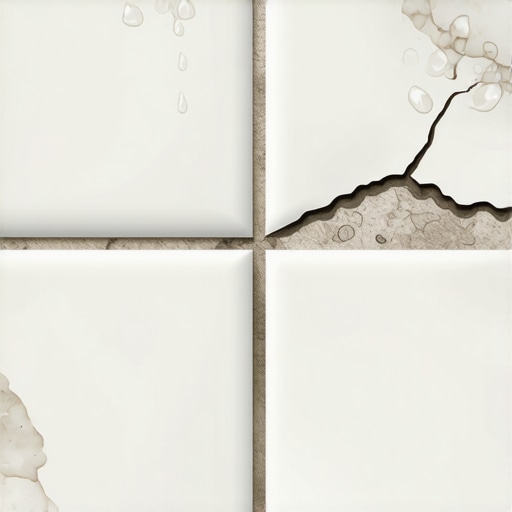
I spent three days grinding concrete on a job last month just so the floor wouldn’t click like a castanet, and that same level of discipline applies to your maintenance routine. If you think a splash of vinegar is a cheap way to clean your shower, you are effectively paying for the slow destruction of your investment. I have seen twenty thousand dollar marble installations reduced to a chalky, pitted mess within six months because of a lemon-scented spray. My hands are calloused from replacing etched stone and crumbling grout. I smell like floor wax and wet stone most days, and I am here to tell you that chemistry does not care about your DIY cleaning hacks. When you apply an acid to a calcium-based stone, you are not cleaning it. You are dissolving it. This is a structural engineering reality that many homeowners ignore until the tiles start to wiggle and the grout turns to powder.
The chemical war on your bathroom floor
Acidic cleaners like vinegar, lemon juice, and commercial descalers cause a chemical reaction with calcium carbonate found in marble and cementitious grout. This etching process permanently dissolves the surface, creating microscopic pits that trap bacteria and mold. Once the surface seal is breached, the structural integrity of the tile and grout is compromised beyond simple repair. You are looking at a molecular battle where the hydrogen ions in the acid seek out the carbonate ions in your stone. This is not a stain. It is a physical change in the material. When you see that fizzing action, that is the sound of your floor turning into carbon dioxide gas and water. It is a literal disappearance of the material you paid for.
Why vinegar is a silent killer
Vinegar is often praised as a natural wonder, but in the world of stone masonry, it is a corrosive agent. Marble is a metamorphic rock composed primarily of recrystallized carbonate minerals. When acetic acid touches these minerals, it breaks the molecular bonds. The result is a dull spot known as an etch mark. It looks like a watermark that you cannot wipe away. People often mistake this for a stain and try to scrub it harder with more acid, which only deepens the crater. This is particularly dangerous for grout. Most grout is cement-based. Portland cement is alkaline. When you introduce an acid, you neutralize the binder that holds the sand together. Over time, the grout becomes sandy and brittle. It will eventually fall out in chunks, leaving your tile edges exposed to chipping and moisture infiltration. You might think you are saving money, but you are actually accelerating the timeline for a full tear-out. If you find your grout is already failing, you should look into grout restoration secrets for long lasting results to fix the damage before it reaches the substrate.
“A floor is only as good as the subfloor beneath it; deflection is the enemy of every joint.” – Master Flooring Axiom
The physics of porous grout lines
Grout is the most vulnerable part of any tile installation because of its high porosity. Under a microscope, grout looks like a sponge. It is filled with tiny voids that can suck up liquids through capillary action. When you use an acidic cleaner, the liquid travels deep into the grout joint, not just the surface. This means the acid is eating the grout from the inside out. In a shower environment, this is a disaster. Once the grout becomes porous, water can travel through the joint and reach the backer board. If your waterproofing wasn’t perfect, you are now growing mold behind the walls. This is why professional installers insist on pH-neutral cleaners. A pH of 7 is the goal. Anything lower is an acid, and anything higher is a base. Marble and cement prefer the middle ground. If you are struggling with keeping your bathroom clean without harsh chemicals, these tile cleaning tips for a sparkling bathroom in 2025 will save your stone. High-quality maintenance is about preserving the molecular lattice, not attacking it with corrosive liquids.
| Cleaner Type | pH Level | Effect on Marble | Effect on Grout |
|---|---|---|---|
| White Vinegar | 2.5 | Severe Etching | Binder Dissolution |
| Lemon Juice | 2.0 | Immediate Damage | Rapid Degradation |
| Neutral Cleaner | 7.0 | Safe | Preserves Integrity |
| Baking Soda | 8.5 | Mildly Abrasive | Safe if Diluted |
| Bleach | 11.0 | Surface Dulling | Weakens Sealant |
The ghost in the expansion gap
Movement is the primary cause of floor failure, and chemistry plays a role in how your floor handles stress. When acidic cleaners weaken the grout, the floor loses its ability to distribute load across the tiles. Each tile starts to act as an individual island. If you have a heavy bathtub or a large vanity, the pressure on the weakened grout joints will cause them to crack. I always tell my clients that a floor needs to breathe and move as a single unit. In many showers with a style trendy ideas for small bathrooms, the space is tight, and the movement is concentrated. If your grout is soft from acid damage, it cannot resist the thermal expansion that happens when you turn on the hot water. The 1/8 inch gap at the corners is there for a reason. If you use acid, that gap becomes a point of total failure. You must also consider the transition to other materials. If your acidic cleaner drips onto your baseboards makeover ideas to elevate your space, it can strip the finish or cause the wood to swell, leading to a cascade of maintenance issues.
The 1/8 inch that ruins everything
Precision in flooring is measured in fractions. A grout joint that is supposed to be 1/8 of an inch wide provides a specific amount of compression resistance. When acid eats away just half a millimeter of that grout, the physics change. The tile edge is now vulnerable to mechanical impact. If you drop a shampoo bottle, a healthy grout joint would help absorb the energy. A weakened, acid-etched joint will allow the edge of the marble to snap. This is how you get those jagged chips that make a floor look cheap. Furthermore, the sealer you applied to the marble is likely a topical or penetrating fluoropolymer. Acids strip these sealers instantly. You are then left with raw, unprotected stone that will absorb body oils and dyes from soap. It is a vicious cycle of damage. While some people think they can just re-seal the floor, you cannot seal over a surface that is currently reacting with acid. You have to neutralize the stone first, which is a process most homeowners are not equipped to handle.
- Never use vinegar or lemon juice on any natural stone surface.
- Always check the pH level of commercial cleaners before application.
- Rinse surfaces with clean water after any cleaning process to remove residue.
- Dry the stone with a microfiber cloth to prevent water spotting and mineral buildup.
- Re-seal your marble and grout every six to twelve months depending on usage.
- Use a soft brush rather than a scouring pad to avoid mechanical scratching.
The regional impact of hard water and humidity
If you live in a region with high mineral content in the water, such as the Southwest or parts of Florida, your marble faces a double threat. Hard water deposits minerals like calcium on the surface, which look like white crust. Your instinct will be to use an acid to dissolve that calcium. However, since the marble itself is made of the same mineral, the acid cannot distinguish between the deposit and your floor. In high-humidity areas, the moisture stays in the grout longer. If that moisture is acidic, the reaction time is extended. I have seen floors in humid climates fail twice as fast as those in dry climates because the acid never really stops working. It stays damp and continues to chew through the cement binder. You have to be even more vigilant about pH neutrality in these environments. The swampy air holds onto chemical vapors, and that can even affect the finish on your fixtures. If you are planning a renovation, look for showers that wow modern designs for 2025 that utilize large format tiles to minimize the amount of grout you have to maintain.
“Stone is a living material; treat it with the respect its geological history deserves.” – Stone Masonry Principles
Protecting the adjacent structures
Cleaning does not happen in a vacuum. When you spray an acidic cleaner in a shower, the mist travels. It lands on your chic baseboard designs that transform rooms in 2025 and your metal transitions. Acid is the primary cause of oxidation on chrome and nickel fixtures. It also eats through the paint and caulk at the base of your walls. I have walked into many bathrooms where the floor looked okay but the baseboards were rotting from the bottom up because of the cleaning routine. You have to look at the bathroom as a complete ecosystem. Every chemical you introduce affects every surface. If you must use a specialized cleaner for a specific stain, you should protect the surrounding areas with tape and plastic. But for daily maintenance, stick to a stone-safe soap. It is the only way to ensure that your marble remains a luxury feature rather than a maintenance nightmare. If you find that your grout is already beyond simple cleaning, you may need to learn how to refresh grout without replacing it using professional-grade colorants that provide a new protective layer.