
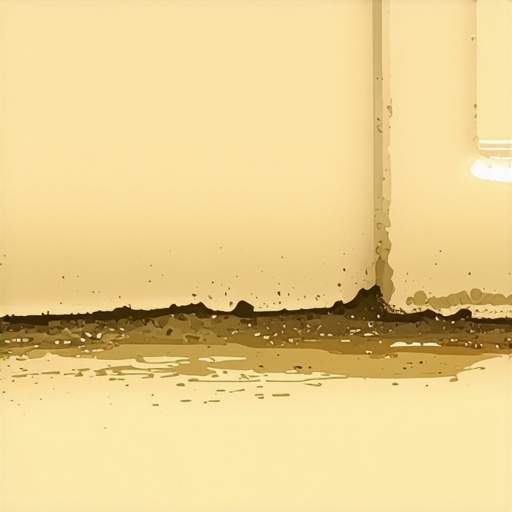
Most guys skip the leveling compound. They think the underlayment will hide the dip. It won’t. I spent three days grinding concrete on a job last month just so the floor wouldn’t click like a castanet. But that headache is nothing compared to the nightmare of a rotting shower curb. Last winter, I was called to a house in a humid coastal zip code where the homeowner smelled something like damp earth every time they stepped into the master bath. The tile was expensive marble. The fixtures were gold plated. But when I put my weight on the curb, the whole thing depressed by a quarter inch. Water squished out of the grout lines like a soaked sponge. I knew immediately what I would find behind those stones. Someone had used a staple gun to secure the liner to the top of the wooden curb. It is a classic mistake. One tiny puncture on the top or inside of that barrier turns your structural wood into a slow-moving compost pile. By the time you see the mold, the framing is already gone.
The structural lie of the wooden curb
Shower curb rot occurs primarily when moisture bypasses the tile and grout to penetrate the wooden framing underneath. This happens through capillary action or via mechanical punctures in the waterproofing layer. When wood is trapped in a dark, wet environment without airflow, fungal spores thrive and break down the cellulose fibers. This leads to structural failure that can spread to the subfloor and even the floor joists. You cannot simply patch this. You have to understand the physics of how water moves through a shower threshold to prevent it.
“A shower is a containment system where gravity and capillary action are constantly seeking a path of least resistance to the wood substrate.” – Master Flooring Axiom
We need to talk about the molecular reality of your bathroom. Wood is hygroscopic. It wants to absorb water. When you build a curb out of three stacked 2x4s, you are creating a massive block of organic material that will swell and contract. If you nail a PVC liner into that wood, you have created a leak. It does not matter if the nail is at the top. Water wicks. It travels up. It travels sideways. This is why many high-end installers have moved toward solid foam curbs or pre-cast concrete. They do not rot because there is no organic food for the mold to eat. If you are still using wood, you are playing a dangerous game with the humidity levels of your home.
The chemistry of capillary action
Capillary action is the ability of a liquid to flow in narrow spaces without the assistance of, or even in opposition to, external forces like gravity. In a shower, your grout is the narrow space. Standard cement-based grout is porous. Under a microscope, it looks like a series of interconnected tunnels. When you stand in the shower, the water does not just sit on the tile. It gets sucked into those tunnels. If your curb is not pitched correctly at a 1/4 inch slope toward the drain, that water pools on the flat surface and waits. It waits for a pinhole in your membrane. If you need help with maintenance, tile cleaning tips for a sparkling bathroom in 2025 can help keep surface grime down, but they won’t stop a structural leak.
The bond between your thin-set and the waterproofing membrane is a chemical and mechanical lock. If you use a cheap, unmodified thin-set over a high-performance membrane, the bond might fail when the curb undergoes thermal expansion. You see, the shower gets hot when the water is on and cold when it is off. This creates stress. A flexible, polymer-modified thin-set is essential to absorb this movement. Without it, the tile cracks, the grout separates, and the water finds its way to the wood. For those looking for better materials, eco-friendly tile solutions for sustainable homes in 2025 offer great alternatives that prioritize durability and health.
Why nails are the enemy of your threshold
Driving a fastener through the waterproofing zone of a shower curb is the single most common cause of catastrophic failure. Many old-school installers still wrap a liner over a wood curb and nail it to the sides to keep it tight. This is a death sentence for the bathroom. Every single hole is a portal for moisture. The TCNA (Tile Council of North America) standards are clear about moisture management, yet I see this error on every other remodel. Instead of nails, you should be using high-quality adhesives or specialized curb wraps that require no penetrations.
| Waterproofing Method | Risk of Rot | Installation Difficulty | Relative Cost |
|---|---|---|---|
| PVC Liner with Nails | Extremely High | Low | Low |
| Liquid Applied Membrane | Low | Moderate | Medium |
| Solid Foam Curb System | Zero | High | High |
| Hot Mop (California Style) | Moderate | Expert Only | High |
Liquid membranes like Laticrete Hydro Ban or Schluter Kerdi-Fix are the gold standard today. They create a continuous, rubberized skin over the substrate. If you are designing a new space, check out showers with a style trendy ideas for small bathrooms to see how modern systems handle these transitions. A liquid membrane allows you to skip the bulky liners and create a tighter, more reliable seal at the corners where the curb meets the wall. That junction is where 90 percent of leaks actually start.
The 1/8 inch that ruins everything
Precision in the pitch of the curb is non-negotiable for a long-lasting shower. If the top of your curb is perfectly level, you have failed. It must lean toward the drain. If it leans toward the bathroom floor, the water will run under your bathroom door and rot out your baseboards. I have seen beautiful chic baseboard designs that transform rooms in 2025 destroyed in months because a shower curb was pitched the wrong way. A mere 1/8 inch of error is enough to create a puddle that never dries.
When water sits, it creates hydrostatic pressure. It pushes against the grout. Eventually, the grout fails. If you are seeing dark spots in your grout, you might need grout restoration secrets for long-lasting results to fix the surface, but always check the stability of the curb first. If the curb moves when you push it, the rot has already begun. You cannot grout your way out of a structural problem. The wood inside is expanding as it rots, pushing the tile outward. It is a slow-motion explosion.
Baseboard failure at the wet junction
The point where the shower curb meets the drywall and baseboard is the secondary rot zone. This area often lacks proper flashing. Water splashes against the glass door, runs down the channel, and hits the baseboard. If that baseboard is made of MDF (Medium Density Fiberboard), it will soak up water like a paper towel. For ideas on better materials, look into baseboards makeover ideas to elevate your space using water-resistant options. I always recommend using a solid PVC or a high-quality hardwood baseboard in the bathroom, and never letting the wood touch the floor directly. Leave a small gap and fill it with 100 percent silicone caulk.
- Always use a pre-fabricated curb if possible.
- Never drive a screw through the top of the curb.
- Apply two coats of liquid waterproofing over all cement board seams.
- Ensure the curb has a 2 percent slope toward the drain.
- Use silicone at the transition between tile and the bathroom floor.
Final expert advice for a dry home
Do not trust the “standard” way things have been done for forty years. The old ways involved thick lead pans and massive mortar beds that could handle a little dampness. Modern homes are built with light-gauge wood and drywall that cannot handle any moisture. If you suspect your shower is failing, contact us for a professional evaluation before the mold reaches your subfloor. It is much cheaper to fix a curb today than to replace a whole floor tomorrow. For more information on how we handle your data, see our privacy policy.