
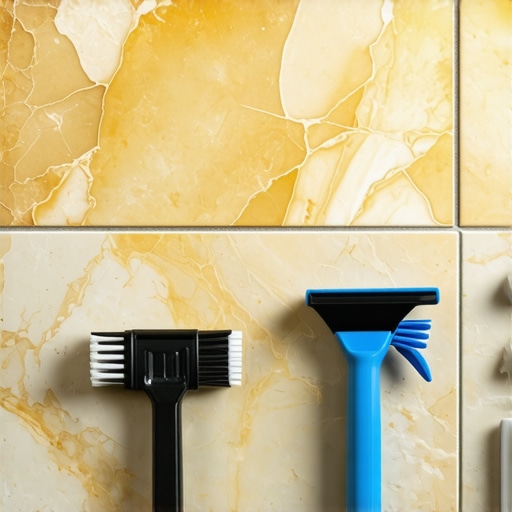
Why Your Marble Tile is Turning Yellow and What You Can Do
I spent three days grinding concrete on a job last month just so the floor wouldn’t click like a castanet. That level of obsession is the only thing that separates a luxury marble installation from a yellowing disaster. I recently walked into a high end master bath where the Carrara marble was turning a sickly shade of rust. The homeowner was furious with the stone supplier. I took one look at the grout lines and the saturation levels in the subfloor and knew exactly what happened. They used a low grade thin-set and skipped the moisture barrier. Marble is a sponge. It is a metamorphic rock composed of recrystallized carbonate minerals. If you treat it like plastic, it will punish you. Most guys skip the leveling compound and ignore the chemistry of the stone. They think the underlayment will hide the dip. It won’t. I have seen fifteen thousand dollar slabs ruined because an installer wanted to save twenty bucks on modified thin-set. If your marble is yellowing, you are likely dealing with iron oxidation or resin ambering. It is a chemical failure. You cannot just wipe it away with a damp rag. You need to understand the physics of the stone to fix the mess.
The oxidation trap in natural stone
Marble yellowing is caused by iron oxidation within the stone, moisture vapor transmission from the subfloor, or the degradation of topical sealers. When iron sulfides like pyrite are exposed to water and oxygen, they rust. This rust migrates through the pores of the calcite to the surface of your tile. It creates a yellow or orange hue that looks like a stain but is actually a chemical change. Marble is not a solid, inert block. It is a network of microscopic capillaries. If the moisture levels in your bathroom stay high, the internal iron will eventually reach the surface. This often happens in showers where the waterproofing membrane was installed incorrectly. I have seen moisture get trapped in the mud bed with nowhere to go. It sits there and cooks the stone from the inside out. You might also be seeing the result of phenolic resins. Some lower quality marble tiles use resin backings for strength. Over time, UV light or heat causes that resin to turn yellow. It is a permanent structural failure of the material itself. You need to identify if the yellowing is on the surface or deep in the stone before you try a poultice. If the stone was not back-buttered properly, you will see shadows through the translucent marble. That is not dirt. That is the thin-set showing through. It is a classic rookie mistake.
“A floor is only as good as the subfloor beneath it; deflection is the enemy of every joint.” – Master Flooring Axiom
Why your sealer might be the villain
Yellowing of marble tile often results from the aging and ambering of topical sealers or the accumulation of dirty mop water. Topical sealers sit on top of the stone and create a plastic-like film that eventually breaks down. This film traps dirt and oils beneath it. As the sealer reacts with oxygen, it turns a golden yellow color that people mistake for stone aging. You should always use a penetrating sealer, not a topical wax. Penetrating sealers enter the pores and repel liquids from the inside. They do not change the color of the stone. If you have been using floor wax on your marble, you are building up a layer of yellow sludge. This is why I tell people to avoid big-box store miracle cleaners. They contain waxes that make the floor shine today but ruin it tomorrow. If you want a floor that lasts, you have to respect the breathability of the stone. If the sealer is the problem, you have to strip it. You need a high pH stripper to dissolve the old layers without etching the marble. It is a tedious process that involves a lot of scrubbing. I have spent many nights on my knees with a soft nylon brush removing layers of wax that should never have been applied in the first place.
The hidden chemistry of iron and water
The presence of iron minerals in white marble leads to yellowing when the stone is saturated with water for extended periods. In wet environments like bathrooms, the mineral pyrite reacts with water and oxygen to create iron hydroxide. This is the same chemical process that creates rust on a car. Because marble is porous, the rust moves through the stone through capillary action. It is not just on the surface. It is embedded in the molecular structure of the calcite. This is why you see yellowing around baseboards and corners where water tends to sit. If your grout is not sealed, it acts as a wick. It pulls water into the edge of the tile. This is a major reason why I recommend grout restoration secrets for long-lasting results to my clients. You have to keep the water out of the substrate. If the subfloor is wet, the tile will never be dry. I have seen slabs that stayed wet for months because the installer did not use a proper moisture barrier over the concrete. The concrete pulls moisture from the earth and feeds it into the stone. It is a relentless cycle of oxidation. You can try to bleach it out, but it will come back if you do not stop the water.
| Marble Type | Iron Sensitivity | Porosity Level | Recommended Sealer |
|---|---|---|---|
| Carrara | High | Medium | Solvent-Based Penetrating |
| Calacatta | Medium | Low-Medium | Water-Based Penetrating |
| Statuary | High | High | High-Solids Solvent |
| Thassos | Low | Low | Nano-Technology Sealer |
Cleaning mistakes that bleach your investment
Using acidic cleaners on marble tile causes etching and yellowing by dissolving the calcium carbonate and trapping dirt in the new pores. Vinegar and lemon juice are the enemies of marble. They are acids that eat away the surface of the stone. This creates a dull, rough texture that absorbs dirt faster than a sponge. Many people think they are cleaning when they use these products, but they are actually destroying the finish. When the surface is etched, light does not reflect off it correctly. It looks yellow and dingy. You must use a pH-neutral cleaner designed specifically for natural stone. Even some dish soaps contain citrus acids that will damage the stone over time. If you have already etched your floor, you might need to have it professionally honed and polished. This involves using diamond abrasive pads to grind away the damaged layer. It is the only way to restore the original luster. You should also check out these tile cleaning tips for a sparkling bathroom in 2025 for the latest in stone maintenance. Do not trust a generic label that says safe for all floors. If it does not say marble-safe, stay away from it. I have seen beautiful bathrooms ruined by a cleaning lady who thought she was doing a good job with a bottle of Clorox.
How to save a yellowed stone
Restoring yellowed marble requires identifying the cause and applying a chemical poultice or professional honing to remove the oxidized minerals. If the yellowing is caused by iron, you need a reducing agent to turn the iron back into a colorless form. This is usually done with a poultice. A poultice is a paste made of a chemical cleaner and an absorbent powder like diatomaceous earth. You apply the paste to the stain and cover it with plastic wrap. As the paste dries, it pulls the iron out of the stone and into the powder. It can take forty eight hours to work. Sometimes you have to do it three or four times. If the yellowing is caused by old sealer, you have to strip the floor. I use a chemical stripper and a floor machine with a soft pad. Once the sealer is gone, the stone often looks bright again. If the problem is deep in the stone, you might be out of luck. Sometimes the oxidation is so severe that the stone is structurally compromised. In those cases, replacement is the only option. I always tell people to buy an extra box of tile for this exact reason. You never know when a specific vein of stone will decide to turn orange.
- Identify the source of moisture in the subfloor or walls.
- Strip all old topical waxes and sealers from the surface.
- Apply a specialized iron-out poultice for rust stains.
- Clean the grout with a pH-neutral stone cleaner.
- Re-seal the marble with a high-quality penetrating sealer.
- Maintain the floor with dry dust mopping and stone-specific soap.
The ghost in the expansion gap
Expansion gaps at the perimeter of a marble floor are necessary to prevent cracking but often become reservoirs for moisture and dirt. Most installers tight-fit marble against the baseboards. This is a mistake. Stone expands and contracts with temperature. If it has nowhere to go, it will tent or crack. These gaps are often filled with grout, which is brittle. I prefer to leave a true expansion gap and cover it with the baseboard. This allows the assembly to breathe. If water gets behind the baseboard, it can seep into the edge of the marble and start the yellowing process. I have seen mold growing in these gaps because they were never sealed properly. You need to ensure that the transition between the floor and the wall is watertight. This is especially true in showers. If you are looking for design ideas, check out chic baseboard designs that transform rooms in 2025 to see how to hide these functional gaps. A floor is a living system. It needs to move. If you lock it down, it will break. I spend half my time fixing floors that were installed too tight. It is basic physics. If you ignore it, you will pay for it later.
“Marble is a record of the earth’s history; do not let your poor maintenance rewrite it.” – Master Flooring Axiom
Prevention through proper installation
Preventing marble yellowing starts with a dry subfloor, 95 percent thin-set coverage, and the use of white fortified adhesives. You should never use gray thin-set with light marble. The gray color can bleed through and make the stone look muddy or yellow. You also need to ensure that you are getting full coverage. Air pockets behind the tile trap moisture. That moisture becomes a breeding ground for minerals to oxidize. I always back-butter every single marble tile. It takes longer, but it is the only way to guarantee a bond that will not fail. You also need to consider the environment. If you are in a high humidity area, you need a robust dehumidification system. I have installed marble in Florida where the stone stayed yellow because the house was always at eighty percent humidity. The stone could never dry out. You can also look into eco-friendly tile solutions for sustainable homes in 2025 if you want alternatives that are less finicky than natural stone. Marble is a commitment. It is like owning a classic car. You have to change the oil and keep it in the garage. If you want a floor you can ignore, get a porcelain tile that looks like marble. If you want the real thing, follow the rules. It will save you thousands of dollars in restoration costs down the road.