
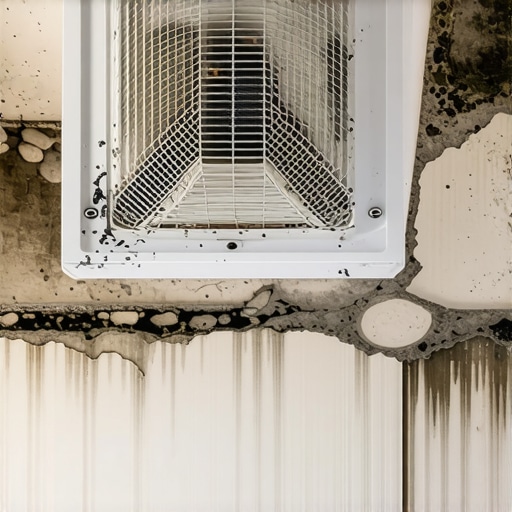
I spent three days grinding concrete on a job last month just so the floor wouldn’t click like a castanet. That is the reality of a proper installation. My name is Mike. I have 25 years of sawdust under my nails and I usually smell like WD-40 and oak dust. I have seen enough moldy bathrooms to know that your exhaust fan is likely a decorative plastic box that makes noise but does nothing for your structural integrity. Most guys skip the leveling compound. They think the underlayment will hide the dip. It won’t. The same logic applies to your bathroom ventilation. If you think a fan from a big box retailer is going to save your grout or your baseboards from rotting, you are mistaken. A floor is a performance surface and a bathroom is a high-moisture laboratory where physics and chemistry are constantly working against you.
The illusion of the ceiling suction
Bathroom exhaust fans fail to stop mold because they lack the Cubic Feet per Minute or CFM power to overcome static pressure within the ductwork. If the air cannot move through the pipe without resistance, it remains trapped in the room. This creates a micro-climate of high humidity that settles into porous tile surfaces and cementitious grout lines. Even a fan rated for a large room will fail if it is pulling against a sealed door without make-up air. Air is a fluid. It needs a source to replace what is being sucked out. When you close that bathroom door tight, the fan is spinning in a vacuum, doing nothing but burning out its motor while your showers turn into a petri dish.
The engineering of airflow is often ignored by the average contractor. They slap a fan in the ceiling and vent it into the attic. That is a crime in my book. It just moves the problem from your tile to your rafters. To actually stop mold, you need to understand the Dew Point. When the warm, moisture-laden air from your shower hits the cold surface of your baseboards or the grout in the corners, it turns back into liquid water. This is the condensation phase. Your fan needs to be powerful enough to remove that air before the phase change happens. Most fans are too weak. They are hindered by corrugated ducting that creates turbulence. You want smooth-walled aluminum pipes. Every bend in that pipe reduces your CFM. A 90-degree turn can cut your airflow efficiency by half. You are left with a bathroom that feels like a swamp long after you have finished your shower.
The molecular trap inside your grout
Grout is a hygroscopic material that acts like a ceramic sponge to pull moisture deep into the mortar bed through capillary action. Even if your fan is running, the water that has already entered the grout is protected from evaporation by the surface tension of the liquid. Mold does not just grow on top of the tile, it grows from the inside out. This is why grout restoration is such a massive industry. People think they can just wipe the surface and the problem is gone. They are wrong. The alkalinity of the grout provides a perfect environment for fungal spores to thrive when mixed with organic skin cells and soap residue.
“A floor is only as good as the subfloor beneath it; deflection is the enemy of every joint.” – Master Flooring Axiom
If you have cracks in your grout, you have a structural problem or a moisture problem. Or both. When I see cracked grout, I know the subfloor is flexing or the moisture is expanding the joists. A fan cannot fix a bad tile job. If the installer did not use a waterproof membrane like Schluter-Kerdi or a high-quality liquid-applied barrier, the moisture travels behind the tile. Once it gets into the drywall or the studs, a fan is useless. You are essentially trying to dry out a soaked sponge with a toothpick. You need to look into grout restoration secrets for long-lasting results to understand how to seal those pores permanently. If the grout is not sealed with a penetrating solvent-based sealer, it is an open door for mildew.
Baseboards and the hidden rot behind the paint
Baseboards in a bathroom are often the first casualty of poor ventilation because they are located at the lowest point where cold air and liquid water pool. Most builder-grade baseboards are made of MDF, which is essentially compressed sawdust and glue. It is a sponge. When the moisture from your shower settles on the floor, it wicks up the back of the baseboard. Because the front is painted, the moisture cannot evaporate. It sits there and rots the wood from the back. This is why you see the paint bubbling or the wood swelling. It is not just an aesthetic issue. It is a structural failure of the perimeter seal.
I always tell my clients to use PVC baseboards or solid wood that has been back-primed. If you do not prime the back of your wood, you are inviting disaster. You can find chic baseboard designs that transform rooms in 2025 that are actually made of moisture-resistant materials. The gap between the baseboard and the tile floor should be sealed with 100 percent silicone sealant, not caulk. Caulk is water-based and will eventually shrink and crack. Silicone is a flexible polymer that creates a watertight barrier. If your fan is not pulling the moisture out of the air, it is going to find that gap. It will settle under the baseboard and start the rot cycle. I have pulled up floors where the subfloor was completely black with mold because the baseboards were not sealed correctly.
The mistake of the oversized fan
While most people want the thickest underlayment, too much cushion actually causes the locking mechanisms on LVP to snap under pressure. Similarly, people think a bigger fan is always better. That is not true. If a fan is too powerful for the room, it can create backdrafting. It can pull carbon monoxide from your water heater or furnace back into the house. This is a dangerous pressure imbalance. You need a fan that matches the volume of the room. A general rule is 1 CFM per square foot for bathrooms under 100 square feet. But you must also account for the showers. A steam shower requires a completely different level of extraction than a standard tub. If you are designing modern showers, you need to think about the extraction rate before you pick out the tile.
You should look at showers that wow modern designs for 2025 to see how ventilation is integrated into the design. It is not just about the fan in the middle of the room. Sometimes you need an in-line duct fan that sits in the attic. These are much quieter and significantly more powerful. They can pull air through multiple grilles, one over the toilet and one directly inside the shower enclosure. This captures the steam at the source before it can migrate to the grout and baseboards throughout the rest of the room. This is the difference between a contractor and an architect. One follows the code. The other understands the physics of moisture.
| Material Type | Porosity Index | Mold Risk Level | Recommended Sealant |
|---|---|---|---|
| Ceramic Tile | 0.5% to 3.0% | Moderate | Penetrating Sealer |
| Porcelain Tile | Under 0.5% | Low | Unnecessary for surface |
| Cement Grout | High | Extreme | Solvent-based Sealer |
| MDF Baseboards | Very High | Critical | Do not use in wet areas |
| Natural Stone | Variable | High | High-grade Impregnator |
The chemistry of failed tile installations
Tile is often marketed as waterproof, but this is a marketing lie. Porcelain is water-resistant, but the installation system as a whole is often vapor-permeable. When you take a hot shower, the air pressure in the room increases. This pushes water vapor through the microscopic pores of the grout. If there is no vapor barrier behind the cement board, that moisture hits the insulation. Cold insulation meets warm vapor and you get interstitial condensation. This is mold that grows inside your walls. Your exhaust fan cannot see it, and it certainly cannot dry it out. This is why proper waterproofing is the most important part of any bathroom remodel.
“Grout is not waterproof. It is a filter that allows moisture to enter the system.” – Tile Industry Truth
I have seen guys use mastic adhesive in showers. Mastic is organic. It is made from resins that mold loves to eat. When mastic gets wet, it re-emulsifies. It turns back into glue. The tile starts to sag and the grout cracks. You must use thin-set mortar, specifically polymer-modified thin-set that meets ANSI A118.4 standards. The polymers in the mortar create a mechanical bond that resists hydrostatic pressure. If you are experiencing issues, you might need to check out tile cleaning tips for a sparkling bathroom in 2025 to keep the surface clear while you address the structural moisture. Cleaning is a temporary fix. Chemistry is the permanent one.
Daily maintenance for mold prevention
Preventing mold is about humidity management. Even with a perfect fan and the best grout, you have to be smart. If you leave a wet towel on the floor, you are creating a moisture reservoir. That water has nowhere to go but into the subfloor. You need to keep the relative humidity in your bathroom below 50 percent at all times. A fan should run for at least 20 minutes after a shower. Many modern fans have humidity sensors that do this automatically. They do not turn off until the dew point is reached. This is a smart investment for any homeowner.
- Run the fan five minutes before starting the water to establish airflow patterns.
- Squeegee the walls of the showers to reduce the evaporative load on the fan.
- Keep the bathroom door open an inch to allow make-up air to enter.
- Check the caulk lines around baseboards for any signs of separation.
- Wash bath mats weekly to prevent spore buildup.
- Inspect the exterior vent cap to ensure it is not blocked by bird nests or lint.
If you have already started to see discoloration, you may need to learn how to refresh grout without replacing it before the fungus takes root in the backing board. Once the mold is in the drywall, the only solution is demolition. I have done too many rip-outs where the studs were so soft I could poke a screwdriver through them. All because of a 50 dollar fan and a lack of sealant. If you are building new, consider eco-friendly tile solutions for sustainable homes in 2025 that use recycled materials with lower porosity. These materials are harder for mold to cling to and easier to keep sanitary over the long term.
The ghost in the expansion gap
In the flooring world, we talk about expansion gaps constantly. Tile expands. Wood expands. Subfloors expand. If you do not leave a 1/4 inch gap at the perimeter of your tile floor, the grout will pop. If you fill that gap with hard grout instead of flexible sealant, the baseboards will eventually show a crack at the bottom. This crack is where moisture enters. It is a micro-void that acts as a breeding ground for mold. A bathroom exhaust fan cannot pull air through a 1/16 inch crack. The vapor gets in, but it never gets out. This is the 1/8 inch that ruins everything.
You must treat the junction where the wall meets the floor as a living joint. Use color-matched silicone. This allows the floor to move without breaking the moisture seal. If you see your baseboards pulling away from the floor, do not just paint over it. That is a signal that your bathroom is breathing moisture. You need to investigate the source. Is the fan ducting disconnected in the attic? Is the crawlspace damp? Is the grout failing? A floor is a performance surface. It requires maintenance and engineering to survive the extreme environment of a bathroom. If you treat it like a decoration, it will fail you in five years. If you treat it like a structural challenge, it will last a lifetime.