
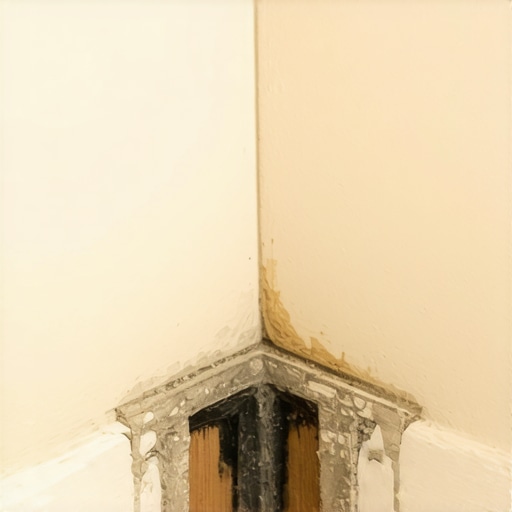
I have spent thirty years on my knees checking subfloors. My boots are stained with thin-set and my lungs have inhaled more oak dust than any man should. I am not here to talk about paint colors or the latest trends in vanity hardware. I am here to talk about the physics of failure. Most homeowners treat a warped baseboard as a small annoyance. They see a gap and think they just need a thicker bead of caulk. They are wrong. I remember a job in a high-rise where a homeowner ignored a slight curve in her baseboards for six months. By the time I arrived, the $15,000 marble floor was popping like popcorn because the trim had wicked up so much moisture it expanded and put ten tons of lateral pressure on the tile. The baseboard is the canary in the coal mine for your bathroom. If it is moving, your house is telling you that the chemistry of your wet room has failed. You are dealing with hydrostatic pressure, capillary action, and the inevitable decay of lignocellulosic fibers.
The invisible siphon behind your trim
Bathroom baseboards warp primarily because of capillary action where liquid water or high vapor emissions travel into the porous back of the trim material. This physical phenomenon occurs when the space between the floor and the wall acts as a straw, pulling moisture upward into the unfinished side of the wood or MDF. Once the moisture content of the material exceeds its fiber saturation point, the internal cell walls swell, causing the visible bowing and twisting that pulls the nails right out of the studs. This is not just about splashes from the tub. It is about the microscopic movement of water molecules through the grout and into the subfloor. If you are struggling with these issues, you might need to look at grout restoration secrets for long lasting results to seal those pathways. A floor is a system, and any breach in the grout is an open door for water to find the path of least resistance, which is usually the soft wood of your baseboards. Moisture doesn’t just sit on top of tile. It migrates. It finds the voids in the thin-set. It moves through the screed. When it hits the wall, it has nowhere to go but up into your trim. This process is exacerbated by the lack of airflow behind the baseboard, creating a perfect micro-environment for rot and structural deformation.
“A floor is only as good as the subfloor beneath it; deflection is the enemy of every joint.” – Master Flooring Axiom
Why medium density fiberboard is a sponge
Medium Density Fiberboard or MDF is the most common material for modern baseboards but it is also the most susceptible to water damage because it is essentially compressed sawdust and resin. When the resin bonds in MDF are exposed to a relative humidity above 80 percent, the fibers begin to delaminate and expand at an exponential rate compared to solid wood. I despise builder-grade MDF in wet environments. It is a cost-cutting measure that creates a ticking time bomb for the homeowner. Once MDF gets wet, it never goes back to its original shape. It is a one-way trip to the dumpster. Solid wood has some memory, but MDF is a composite of cellulose fibers that are glued together under immense heat and pressure. When water infiltrates, it breaks the phenolic resin bonds. The material blows out, looking like wet cardboard. If you are planning a renovation, you should consider more durable options like those found in chic baseboard designs that transform rooms in 2025 to avoid this cycle of replacement. You need materials that can handle the high vapor pressure of a modern shower environment. The molecular structure of the trim must be able to withstand the constant cycle of wetting and drying without losing its mechanical integrity. Most MDF is only rated for interior dry use, yet installers put it in bathrooms every single day because it is easy to cut and easy to paint. It is a professional failure of the highest order.
The structural failure of the floor to wall seal
The gap between the bottom of your baseboard and the top of your tile is the most critical junction in the entire bathroom and it is usually the first place where the installation fails. This joint must remain flexible to accommodate the natural expansion and contraction of the house, yet it must be perfectly watertight to prevent moisture from reaching the plate of the wall. In many cases, installers use hard grout in this corner. That is a mistake. Grout is rigid. It cracks when the house shifts. Once that crack forms, it acts as a funnel for every drop of water that runs down the wall. This is especially true in showers with a style trendy ideas for small bathrooms where space is tight and water splash is inevitable. You need a high-quality 100 percent silicone sealant at that transition. Silicone remains elastomeric, meaning it can stretch and compress without breaking the bond. Hard grout in a change of plane will always fail. It is a law of physics. When the grout fails, the water travels under the tile, saturates the thin-set, and then wicks into the baseboard. You might think you are cleaning the floor well, but you might actually be feeding the problem. Following tile cleaning tips for a sparkling bathroom in 2025 can help, but if the seal is gone, no amount of cleaning will save the wood. You are just dumping more water into the siphon.
How cracked grout lines feed the beast
Cracked grout lines are not just an aesthetic problem because they allow water to saturate the cementitious bed beneath your tiles, leading to long-term subfloor rot and baseboard warping. Cement-based grout is naturally porous. It is essentially a hard sponge. Even when it is not cracked, it can absorb water via osmotic pressure. If you haven’t used a high-performance sealer, you are basically living on a giant wet towel. I have seen subfloors that were so soft from grout leaks that I could push a screwdriver through them with one finger. This moisture then moves laterally. It finds the edge of the room where your baseboards are nailed. The wood pulls that moisture out of the floor like a wick in an oil lamp. This is why I always tell people to check their grout. If you don’t want to rip everything out, you should learn how to refresh grout without replacing it before the damage reaches the structural framing. The chemical composition of the grout matters. Modern epoxy grouts are nearly impervious to water, but the old-school sanded grout used in most homes is a liability. It absorbs body oils, soap scum, and most importantly, water. That water sits in the grout line and slowly evaporates into the back of your baseboards, causing the wood to cup and pull away from the drywall.
| Material Type | Moisture Resistance | Expansion Potential | Durability Rating |
|---|---|---|---|
| MDF Composite | Very Low | Extremely High | Poor |
| Finger-Jointed Pine | Low | Moderate | Average |
| Solid PVC | Total | Very Low | Excellent |
| Solid Oak/Hardwood | Medium | Moderate | Good |
The 1/8 inch that ruins everything
Leaving a proper expansion gap at the perimeter of the room is mandatory for any flooring installation but if that gap is not properly managed it becomes a reservoir for trapped moisture. The NWFA specifies that wood floors need space to breathe. The same is true for tile. We leave a small gap at the wall to allow for the house to move. The baseboard covers this gap. However, if the baseboard is pressed too tightly against the floor, it creates a tension point. When the floor expands, it pushes against the baseboard. If the baseboard is wet and soft, it will buckle. I have spent days grinding concrete just to get a floor level enough so the baseboard sits flat without tension. If you want to see what a proper installation looks like, check out baseboards makeover ideas to elevate your space for examples of high-functioning trim. You need to understand that the 1/8 inch of space behind your baseboard is where the air should circulate. If that space is filled with dust, hair, and moisture, you have created a compost pile inside your wall. This leads to mold, mildew, and the eventual failure of the drywall itself. The bottom of the drywall should never touch the floor for this exact reason. It should be held up, and the baseboard should be the only thing spanning the gap.
“Water is the universal solvent and it will eventually find every mistake an installer makes.” – Master Flooring Axiom
When the shower pan fails before the floor
A warped baseboard near a shower is often the first sign of a leaking shower pan or a failed waterproof membrane behind the wall tiles. Water does not always leak through the ceiling below first. Sometimes it travels horizontally across the subfloor. It follows the plywood or the concrete slab until it hits the wall. Then it climbs. If your baseboards are warping specifically near the shower entrance, you have a major problem. It could be a failed weep hole in the drain or a puncture in the liner. This is common in showers that wow modern designs for 2025 where people focus on the glass and the stone but ignore the heavy-duty waterproofing required underneath. You need to pull that baseboard off. Look at the drywall behind it. If it is soft or black, the shower is leaking. You are not just looking at a trim repair. You are looking at a plumbing and tile failure. Do not just caulk the gap and walk away. That is how you end up with a $20,000 mold remediation bill. You have to address the source. Is it a pinhole leak in the valve? Is it a crack in the corner grout? Every drop of water that escapes the shower is looking for a home, and your baseboard is the easiest target in the room.
Practical steps for a permanent fix
If you want to stop the warping, you have to change your materials and your methods. Stop using MDF in the bathroom. Period. It is a garbage product for wet environments. Switch to solid PVC trim or a high-density polyurethane. These materials are chemically inert when it comes to water. They do not swell. They do not rot. They do not feed mold. When you install them, use stainless steel finish nails so they don’t rust. Seal the bottom edge with a high-grade silicone that matches your grout color. This creates a redundant moisture barrier. If you are worried about the environment while doing this, you can look into eco-friendly tile solutions for sustainable homes in 2025 to pair with your new moisture-resistant trim. This is about building for the long haul. It is about respecting the physics of the home. You cannot fight water and win. You can only redirect it and use materials that are immune to its effects.
- Inspect the transition between the floor and the baseboard for any cracks in the sealant.
- Use a moisture meter to check the levels in the drywall at the base of the wall.
- Remove any MDF trim and replace it with PVC or primed solid wood.
- Apply a high-quality grout sealer every 12 to 18 months to reduce absorption.
- Ensure the bathroom exhaust fan is rated for the square footage and is running for 20 minutes after every shower.
- Check the shower door seals to ensure water is not escaping onto the floor.
The reality is that your bathroom is a high-stress environment for building materials. The constant fluctuations in temperature and humidity create a cycle of expansion and contraction that will destroy anything that isn’t installed to the highest standards. I have seen it a thousand times. A guy thinks he can save fifty bucks by using cheap trim and some basic caulk. Two years later, I am charging him three thousand dollars to rip it all out and do it right. Don’t be that guy. Listen to the house. If the baseboard is warping, it is screaming for help. Address the moisture source, fix the grout, and use materials that belong in a wet room. That is how you build a floor that lasts a lifetime. If you have questions about specific failures in your home, you can always contact us for a professional evaluation. We see the things that other guys miss because we know what happens under the surface.