
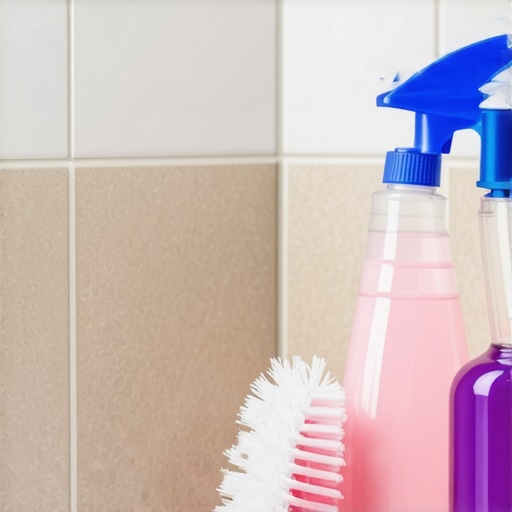
Most guys skip the leveling compound. They think the underlayment will hide the dip. It won’t. I spent three days grinding concrete on a job last month just so the floor wouldn’t click like a castanet. That same lazy attitude is why most people fail at cleaning their showers. They think a quick spray of a generic blue liquid will melt away years of buildup. It won’t happen. If you have textured tile, you have essentially installed a microscopic mountain range in your bathroom, and every valley is currently filled with a mixture of human skin cells, body oils, and calcium stearate. This is what we call soap scum. It is a chemical bond, not just a layer of dust. To remove it, you need to understand the physics of the surface and the chemistry of the bond. I have spent 25 years looking at tile under a magnifying glass, and I can tell you that textured porcelain is a magnet for minerals. If you do not attack this with the right pH balance and mechanical agitation, you are just moving the grease around.
The Molecular Reality of Calcium Stearate
To remove heavy soap scum from textured tiles you must apply an acidic cleaner to dissolve mineral bonds or a high-alkaline degreaser to break down organic oils. Agitation with a stiff nylon brush is required to reach the recessed areas of the tile texture. This process requires a dwell time of at least ten minutes to allow the chemical reaction to complete. Soap scum is the result of a chemical reaction between the fatty acids found in bar soap and the calcium and magnesium ions present in hard water. In regions like Phoenix or Las Vegas, where the water is basically liquid rock, this buildup happens in weeks, not years. The resulting compound is a waxy, insoluble salt that clings to the textured surface of your tile with incredible tenacity. Because textured tile has a high Dynamic Coefficient of Friction (DCOF), it provides more surface area for these salts to anchor themselves. You are not just cleaning a flat pane of glass. You are cleaning a topographical map of the Himalayas.
“A floor is only as good as the subfloor beneath it; deflection is the enemy of every joint.” – Master Flooring Axiom
While that axiom usually refers to the structural integrity of the installation, it applies to maintenance as well. If your grout lines are recessed and your tile is peaked, you are creating a drainage nightmare. When you look at tile cleaning tips for a sparkling bathroom in 2025, you will see that the focus is shifting toward preventing these chemical bonds before they harden into a crystalline structure. Once the scum has petrified, you are looking at a mechanical removal process that could potentially damage the glaze of the tile if you are not careful.
The Physics of Textured Surfaces
Textured tiles are designed for safety. They provide grip when wet, which is why they are the standard for modern showers with a style that prioritizes accessibility. However, the same pits and fissures that prevent you from slipping also act as reservoirs for gray water. When the water evaporates, the minerals stay behind. Over time, these layers stack. This is why your floor feels sticky even after you think you cleaned it. You only cleaned the peaks of the texture, leaving the valleys full of gunk. To get into those valleys, you cannot use a flat mop or a rag. You need a brush with bristles that are smaller than the diameter of the tile’s texture pits. I always recommend a medium-stiff nylon brush. Avoid wire brushes at all costs. Even though porcelain is hard, a steel brush can leave metal marks that are permanent. Ceramic is even softer and will scratch, leading to even more places for soap scum to hide in the future.
Chemical Warfare Against Mineral Deposits
You have to choose your weapon based on the enemy. If your buildup is white and chalky, it is mineral based. You need an acid. Sulfamic acid or phosphoric acid are the industry standards for heavy duty cleaning. They work by breaking the ionic bond between the calcium and the tile surface. If the buildup is dark and greasy, it is organic. You need an alkaline cleaner. This is where most homeowners mess up. They use vinegar for everything. Vinegar is a weak acetic acid. It might work for a light film, but for heavy textured buildup, it is like bringing a toothpick to a knife fight. You need something with a lower pH to actually dissolve the crust. However, you must be careful with your grout restoration secrets because strong acids will eat cementitious grout. Always saturate the grout with clean water before applying any cleaning chemicals. This fills the pores of the grout so it cannot soak up the acid and erode.
| Cleaner Type | Target Contaminant | pH Level | Surface Compatibility |
|---|---|---|---|
| Phosphoric Acid | Calcium, Lime, Scale | 1.0 to 2.0 | Porcelain, Ceramic, Granite |
| Alkaline Degreaser | Body Oils, Soap Fats | 11.0 to 13.0 | All Tile Types |
| Neutral Cleaner | Daily Dust, Light Soil | 7.0 | Marble, Limestone, Travertine |
| Hydrogen Peroxide | Mold, Mildew, Stains | 4.0 to 5.0 | Grout, Porcelain |
The Proper Execution of Agitation and Extraction
The secret is the dwell time. Most people spray and wipe immediately. That is a waste of money. You need to let the chemistry do the work. Apply the solution and let it sit for ten to fifteen minutes. Do not let it dry. If it starts to dry, mist it with a little more water. During this time, the acid is literally eating the soap scum. Once the time is up, you start the mechanical agitation. Use a circular motion. This ensures the bristles hit the texture from every possible angle. You will see the liquid turn into a thick, gray slurry. This is the soap scum being suspended in the liquid. If you just let it dry now, it will settle back into the texture and you have accomplished nothing. You must extract it. Use a wet vacuum if you have one. If not, use a microfiber cloth and rinse with clean water three times. You have to remove the suspended solids entirely. This is also a good time to look at your baseboards makeover ideas because the runoff from cleaning a shower often pools at the edges and can rot out cheap MDF baseboards if they are not properly sealed.
Protecting the Structural Integrity of Grout
Grout is the most vulnerable part of any tile installation. It is porous and chemically reactive. When you are scrubbing textured tile, you are inevitably hitting the grout lines. If you have been using harsh cleaners for years, your grout is likely pitted. Once grout is pitted, it becomes a gutter for soap scum. I tell my clients that if they want to stop cleaning their shower every weekend, they need to seal their grout. A high quality penetrating sealer will fill the microscopic voids in the grout, making it hydrophobic. Water will bead up and roll off rather than soaking in. If your grout is already beyond help, you might need to look into how to refresh grout without replacing it by using a colorant sealer. This creates an epoxy-like shell over the grout that is completely waterproof and much easier to clean than the original cement.
“Cementitious grout is a sponge. If you do not seal it, you are effectively inviting the dirt to live inside your floor.” – Tile Installation Handbook
The Checklist for Heavy Duty Tile Restoration
- Acquire a pH-balanced acidic cleaner specifically for tile.
- Purchase a stiff-bristle nylon scrub brush with a comfortable handle.
- Ensure the area is well ventilated to avoid inhaling fumes.
- Pre-wet all grout lines with plain water to prevent chemical absorption.
- Apply the cleaning solution and allow a 10 minute dwell time.
- Scrub in overlapping circular motions to reach all textured valleys.
- Rinse the surface thoroughly with hot water to remove chemical residue.
- Dry the tile completely with a lint-free towel to check for remaining spots.
The Regional Impact of Water Hardness
In the humid climates of the Southeast, you deal with more mold and mildew. But in the West and Southwest, the mineral content of the water is the primary enemy. If you live in an area with hard water, you are fighting a losing battle unless you have a water softener. Without one, every single shower adds a new microscopic layer of rock to your tile. This eventually fills in the texture completely, making the tile look dull and faded. Many people think their tile is “wearing out,” but it is actually just buried under a layer of minerals. A deep clean with a phosphoric acid base can often restore the original color and luster of the tile, making it look like it was installed yesterday. If you are doing this work, check your transitions and chic baseboard designs near the bathroom. Moisture travels. If your shower is leaking or the cleaning water is seeping into the walls, you will have bigger problems than just soap scum. Always ensure your caulking is intact at the change of plane where the tile meets the wall or the floor.
Managing Expectations with Modern Materials
Not all textured tiles are created equal. Some have a surface that is so aggressive it will literally shred a sponge. If you have this type of tile, your only real option for maintenance is a steam cleaner. High-pressure steam at 200 degrees Fahrenheit can melt the fatty acids in soap scum almost instantly. This allows you to wipe it away without the need for harsh chemicals. It is the most eco-friendly way to maintain a shower and it is particularly effective for people with respiratory sensitivities. If you are interested in sustainability, look into eco-friendly tile solutions for sustainable homes in 2025. These materials are often designed to be easier to clean with just water and heat, reducing the need for the chemical warfare I described earlier. Regardless of the material, the rule remains the same. You cannot ignore the physics of the surface. If there is a hole, something will fill it. If you keep the holes empty through regular maintenance, your floor will last a lifetime. If you let the soap scum win, it will eventually degrade the grout and lead to structural failure of the tile bond. Take care of the surface and the structure will take care of you. If you need further assistance with your specific flooring situation, feel free to contact us for expert advice on restoration and maintenance.