
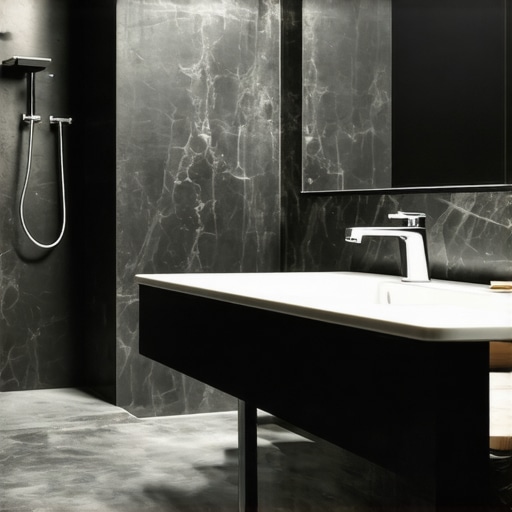
The Real Reason Industrial Epoxy Coatings are Taking Over Modern Bathroom Renovations
For decades, the standard for a luxury bathroom has been defined by tile. Whether it is subway tile, large-format porcelain, or natural Carrara marble, the aesthetic has always relied on the grid. But as anyone who has actually lived with a tiled bathroom for more than six months knows, the “luxury” fades the moment you have to pick up a toothbrush and scrub the grout lines. As a business owner who has spent years in both the sales and installation sides of home remodeling, I have seen homeowners grow increasingly frustrated with traditional materials that look great on day one but become a maintenance nightmare by year two.
This frustration is fueling a massive shift in the residential market. We are seeing a migration of technology from the factory floor to the master suite. High-performance industrial coatings, once reserved for the most demanding industrial environments like pharmaceutical labs and automotive plants, are now becoming the premier choice for modern bathroom renovations. This isn’t just a trend; it is a fundamental shift toward durability, hygiene, and seamless design. Homeowners are realizing that they don’t have to settle for the inherent flaws of masonry when they can have a designer finish that is essentially bulletproof.
The move toward these systems is driven by a desire for a “forever floor.” When you hire the best epoxy garage floor installers, you aren’t just getting a shiny surface; you are getting a multi-layered chemical bond designed to withstand heavy machinery and chemical spills. Bringing that same level of protection into a bathroom – where the primary enemies are water, steam, and soap scum – just makes sense. In this guide, I’m going to pull back the curtain on why industrial-grade solutions are the future of residential bathrooms and why the “industrial-to-residential” shift is the smartest move you can make for your next remodel.
The Death of Grout: Why Traditional Tile is Failing
The biggest weakness of any tiled surface isn’t the tile itself; it’s the grout. Traditional cementitious grout is a porous material. By its very nature, it absorbs moisture, oils, and bacteria. In a wet environment like a bathroom, this is a recipe for disaster. This is specifically Why Cementitious Grout Fails in Steam Showers; the high heat and constant moisture drive water deep into the substrate, leading to mold growth that no amount of bleach can fully eradicate.
I often talk to clients who are looking for ways How to Refresh Grout Without Replacing It, and the truth is that while there are temporary fixes, they are just band-aids. The real solution is to eliminate the grout line entirely. Industrial epoxy and polyaspartic systems create a truly seamless surface. There are no cracks, no crevices, and no porous lines for mold to take root. This is why these coatings are a staple in senior living facilities and medical offices – environments where hygiene is non-negotiable. Seamless surfaces mitigate the spread of infectious diseases and allergens by removing the “pockets” where they thrive.
Beyond the hygiene factor, there is the structural issue. Homes move. They settle, they expand with humidity, and they contract with the cold. This movement often causes grout to crack or pop out. When you choose a seamless coating, you are choosing a material with a degree of flexibility and a chemical bond to the subfloor that traditional mortar simply cannot match. You are effectively “waterproofing” the entire room in a way that tile never could.
What Exactly Are Industrial Coatings?
When I talk about industrial coatings, I am not talking about the “garage floor paint” you find at a big-box hardware store. Those DIY kits are usually water-based acrylics with a tiny bit of epoxy mixed in. They sit on top of the concrete like a thin skin and eventually peel. True industrial systems are a different beast entirely.
Professional-grade industrial coatings are two-component systems consisting of a resin and a hardener. When mixed, a chemical reaction occurs that transforms the liquid into a rigid, high-strength plastic. This material doesn’t just “dry”; it cures. During the curing process, it forms a mechanical bond with the pores of the concrete or substrate. This is why epoxy floor coating companies emphasize preparation – the coating needs to “bite” into the surface to become one with it.
In the world of high-end renovations, we primarily deal with three types of chemistry:
- Epoxy: The backbone of the industry. Known for its incredible adhesion and thickness. It’s perfect for leveling floors and creating deep, metallic designs.
- Polyaspartic: A newer technology that is essentially a high-performance version of polyurea. It is faster-curing, UV-stable, and much more flexible than standard epoxy.
- Polyurea: Often used as a base coat in specific environments due to its extreme elongation properties and rapid set times.
These materials are engineered to withstand forklifts, acids, and extreme temperature swings. When you apply that same technology to a master bathroom, you are creating a surface that will likely outlast the house itself.
Epoxy vs. Polyaspartic vs. Polyurea: Choosing Your Armor
Choosing the right material for a bathroom renovation requires understanding the specific needs of the space. In a garage, you’re worried about hot tire pick-up and oil leaks. In a bathroom, you’re worried about standing water, thermal shock (hot showers), and chemical resistance to cleaners and hair dyes.
While many epoxy garage floor installers use epoxy for everything, we often recommend a polyaspartic garage floor coating system – even for the bathroom. Why? Because polyaspartic is roughly three times as hard as standard epoxy, yet it remains flexible. This flexibility is crucial in a bathroom where the floor might experience rapid temperature changes. Furthermore, polyaspartic is 100% UV stable. If your bathroom has a large window, a standard epoxy might yellow over several years of sun exposure; a polyaspartic will stay crystal clear or maintain its true color indefinitely.
A polyurea garage floor coating or polyaspartic also has the advantage of a faster return-to-service. We can often complete a bathroom floor in a single day, and you can walk on it in socks that evening. For a homeowner undergoing a renovation, minimizing the “down-time” of a bathroom is a huge selling point. However, it’s important to work with established epoxy floor coating companies because these high-performance materials require expert handling; they cure so fast that an amateur will likely leave roller marks or “holidays” in the finish.
Safety First: The Non-Slip Revolution
The most common question I get when suggesting epoxy for a bathroom is: “Isn’t it going to be slippery?” It’s a valid concern. A smooth, high-gloss epoxy floor can be slick when wet, much like polished marble or large-format glazed tile. However, the beauty of industrial coatings is that we can “engineer” the slip resistance to your exact needs.
Unlike tile, where you are stuck with whatever “coefficient of friction” the factory decided on, we can add texture to our coatings. By incorporating fine quartz sand, decorative vinyl flakes, or specialized anti-slip additives (like aluminum oxide or glass beads), we can create a surface that has a significant grip even when covered in soapy water. This is a major reason why these systems are replacing tile in medical facilities and ADA-compliant bathrooms.
If you’ve noticed Why Your Shower Pan Is Creaking When You Step In, it might be due to a poor installation of a traditional pan that is shifting. When we apply an industrial coating, we are often going over a solid, prepared substrate that is monolithic. There is no “give” or “creak,” and the integrated texture provides a level of safety that a smooth acrylic shower base simply cannot match. We can customize the “grit” to be comfortable on bare feet while still providing maximum traction.
The Aesthetic Edge: Metallic, Marble, and Quartz
Don’t let the word “industrial” fool you into thinking your bathroom will look like an auto shop. The design versatility of these coatings is staggering. We are no longer limited to “battleship gray.” Today’s systems allow for high-end, artistic finishes that mimic the most expensive natural stones on earth.
For those looking for Showers with a Style: Trendy Ideas for Small Bathrooms, metallic epoxies are a game-changer. By using metallic pigments that stay suspended in the resin, we can create floors that look like flowing lava, deep-sea water, or “Luxury Green Marble.” Because the pigments move until the resin cures, every single floor is a one-of-a-kind piece of art. No two are ever the same.
If you prefer a more understated look, a “Full Flake” or “Quartz” broadcast system provides a granite-like appearance that is incredibly durable and hides dirt and hair exceptionally well. These systems are also excellent for hiding minor imperfections in the subfloor. If you’ve ever struggled with The Secret to Removing Dried Epoxy Grout Haze, you will appreciate that with a seamless coating, there is no haze to clean, no scrubbing required, and the finish remains vibrant for decades without the need for periodic sealing.
The Installation Reality: Why Professional Prep Matters
I cannot stress this enough: an industrial coating is only as good as the surface it is bonded to. This is where most DIY projects and low-bid contractors fail. You can’t just pour epoxy over a dirty concrete floor and expect it to hold. Professional best epoxy garage floor installers spend 80% of their time on preparation and only 20% on the actual coating.
The process starts with diamond grinding. We use heavy industrial grinders with diamond-segmented blades to remove the top layer of the concrete, opening up the “pores” so the resin can sink in. We also have to address any structural issues. If your floor has cracks, we use specialized polymers to bridge them. This is why we are often categorized alongside concrete crack repair companies; we have to fix the foundation before we can apply the finish.
Furthermore, bathrooms present unique challenges like moisture vapor transmission. Since concrete is porous, moisture from the earth can rise through the slab and “push” the coating off. Professionals use moisture meters to test the slab and apply a specialized moisture vapor barrier if needed. This is also the time to address leveling. If you are wondering How to Level an Uneven Bathroom Subfloor for Large Tile, the answer is often the same for epoxy: a high-build self-leveling primer that creates a perfectly flat canvas. And finally, before any resin touches the floor, we ensure the waterproofing is intact. You should always know Why You Need a Waterproof Membrane Under Every Bathroom Floor, especially in a second-story renovation where a leak could be catastrophic.
Conclusion: The Long-Term Value Proposition
When you look at the total cost of ownership, industrial coatings are the clear winner for bathroom renovations. While the initial investment for a high-end metallic or polyaspartic floor might be higher than basic ceramic tile, you have to factor in the lifespan. A properly installed industrial coating will not crack, will not grow mold, and requires zero specialized cleaners. You won’t be spending your weekends scrubbing grout or hiring someone to regrout your shower in ten years.
We are moving into an era where homeowners value time and health above all else. A seamless, hygienic, and incredibly durable floor provides peace of mind that traditional materials simply cannot offer. Whether you are looking for a modern, minimalist look or a bold, artistic statement, industrial coatings provide the performance you need with the aesthetic you want.
If you are ready to ditch the grout and upgrade to a surface designed for the modern world, contact the experts at epoxy flooring delaware. Whether you need a full bathroom overhaul or are looking for the best epoxy garage floor installers to handle your home’s high-traffic areas, we have the industrial-grade solutions to make your vision a reality.