
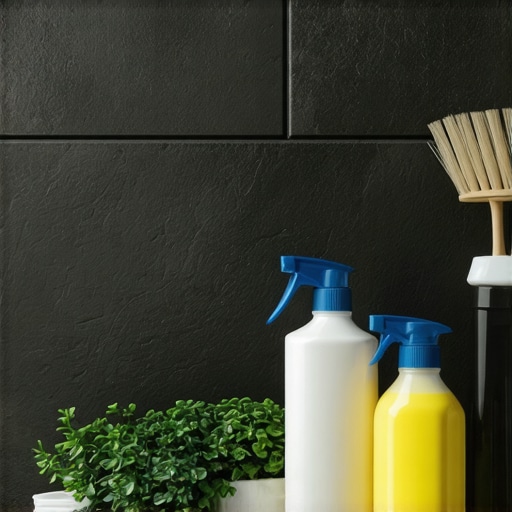
I spent three days grinding concrete on a job last month just so the floor wouldn’t click like a castanet. That job was a precursor to a massive slate installation in a master suite where the homeowner had already ruined the previous floor with a bottle of generic supermarket bathroom spray. Most guys skip the leveling compound. They think the underlayment will hide the dip. It won’t. If the subfloor is not dead flat, your slate will crack. If your cleaning routine is not chemically precise, your slate will dissolve. Slate is not a ceramic imitation. It is a metamorphic rock born from shale and clay. It has layers. It has personality. It has a chemical vulnerability that most people ignore until their expensive black floor turns a chalky, cloudy grey. I have seen fifteen thousand dollar installations look like a sidewalk within six months because the owner treated it like linoleum. We are going to fix that understanding today.
The chemical vulnerability of metamorphic stone
To clean dark slate bathroom tiles effectively, you must use a pH-neutral stone cleaner to avoid etching the calcium-based minerals within the rock. Avoid acidic solutions like vinegar or lemon juice which dissolve the stone surface. Use a soft-bristled brush to reach into the natural clefts and fissures. Dark slate is particularly prone to showing white mineral deposits and soap scum. When you apply an acid to this surface, you are not just cleaning it. You are performing a microscopic chemical peel. The acid reacts with the calcium carbonate and other mineral inclusions. This reaction creates a permanent dull spot known as etching. This is not a stain. It is a physical change in the stone structure. You cannot wash an etch away. You have to polish it out. Using a specialized stone soap keeps the surface tension high and the stone integrity intact. This is the foundation of long-term durability in a wet environment like a bathroom.
Why your subfloor determines your cleaning success
A stable subfloor prevents the micro-cracking of grout lines where dirt and mold typically colonize bathroom surfaces. If your floor deflects more than the industry standard of L over 360, the movement will cause the slate to flake. This flaking creates pockets that trap grime and moisture. I always tell my clients that a floor is only as good as what is underneath it. If your slate was installed over a bouncy plywood subfloor without a proper cement backer board or uncoupling membrane, the tiles will shift. Slate is brittle. It does not bend. It snaps. When it snaps, the natural clefts open up. These microscopic canyons become the perfect breeding ground for bacteria. You can scrub all day, but if the stone is delaminating due to structural failure, it will never look clean. You need to ensure the perimeter expansion gaps are clear to allow for the natural movement of the house. For those looking to integrate these floors with modern aesthetics, checking out showers that wow modern designs for 2025 can provide insight into how structural stability meets high-end design.
“A floor is only as good as the subfloor beneath it; deflection is the enemy of every joint.” – Master Flooring Axiom
The physics of the natural cleft surface
The natural cleft of slate refers to the uneven surface created when the stone is split along its foliation planes. This texture provides excellent slip resistance in showers but requires specific mechanical cleaning techniques. A flat mop will simply skip over the low points, leaving behind a residue of dirty water. You need a dual-action approach. First, you must acknowledge that slate is porous. Water is a solvent. Over time, water can penetrate the layers of the stone. This causes a phenomenon known as shaling, where thin layers of the rock flake off. To prevent this, your cleaning must be followed by immediate drying. If you leave water to sit in the low spots of the tile, the minerals in your water, such as calcium and magnesium, will bond to the slate. This creates a white crust that is incredibly difficult to remove without damaging the dark pigment of the stone. For more general advice on maintaining these surfaces, tile cleaning tips for a sparkling bathroom in 2025 offers a broader perspective on modern stone care.
| Cleaner Type | pH Level | Effect on Slate | Recommended Use |
|---|---|---|---|
| Vinegar/Lemon | 2.0 to 3.0 | Severe Etching | Never |
| Bleach | 11.0 to 13.0 | Degrades Sealer | Emergency Only |
| Stone Soap | 7.0 | Safe and Protective | Daily Maintenance |
| Heavy Duty Alkaline | 10.0 to 11.0 | Strips Grease | Deep Clean Only |
The hidden battle within the grout lines
Grout is the most vulnerable part of a slate floor because it is more porous than the stone itself. In a bathroom, grout acts like a sponge for body oils and soap particles. Dark slate usually pairs with dark grout, which can hide mold growth until the problem is systemic. Most installers skip the grout sealer because it takes an extra day. That is a mistake. Unsealed grout will absorb dirty mop water. This leads to a permanent darkening and eventual failure of the grout bond. If your grout is already looking tired, you might need to investigate grout restoration secrets for long-lasting results or even how to refresh grout without replacing it. These methods ensure that the moisture stays on the surface rather than migrating into the subfloor where it can cause rot and structural degradation. You want the water to bead up. If it soaks in, you are losing the battle against time and physics.
The protocol for a deep clean without destruction
Deep cleaning dark slate requires a systematic approach that balances chemical power with physical safety. You should never use a steam mop on natural stone. The intense heat and pressure can drive moisture deep into the stone layers and cause the sealer to delaminate or turn cloudy. Instead, follow this professional checklist for a monthly deep clean. First, dry vacuum the floor to remove all abrasive grit. Small particles of sand act like sandpaper under your feet. Second, apply a diluted alkaline cleaner specifically designed for stone. Let it dwell for five to ten minutes. This dwelling time allows the chemistry to break down the oils without mechanical scrubbing. Third, use a medium-soft nylon brush to agitate the grout lines. Fourth, extract the dirty solution with a wet-dry vacuum rather than a mop. This ensures you are actually removing the dirt rather than just spreading a thinner layer of it across the floor.
- Vacuum with a soft brush attachment to prevent scratching the foliation.
- Use distilled water for the final rinse to prevent mineral spotting.
- Check the integrity of the sealer by dropping a tablespoon of water on the tile.
- Microfiber cloths are superior for hand-buffing the stone to a matte glow.
- Avoid any cleaning product containing wax or silicone.
Protecting the perimeter and the baseboards
The transition between your slate floor and the vertical wall is a critical moisture junction. High moisture in bathrooms causes baseboards to swell if the grout or caulk at the floor line is compromised. Using a high-quality silicone-based caulk that matches your grout is the only way to ensure a flexible, waterproof seal. Many people forget that the baseboard itself needs protection during the cleaning process. If you are using heavy-duty cleaners, they can strip the paint or finish from your trim. Exploring chic baseboard designs that transform rooms in 2025 can help you choose materials that are more resistant to the humid environment of a slate-heavy bathroom. In regions with high humidity, like the coastal areas or the swampy south, the expansion gap is even more vital. Without it, the slate will heave and buckle when the humidity spikes, ruining both the floor and the wall base. Proper maintenance involves checking these seals every six months to ensure no water is bypasssing the floor system and reaching the wall studs.
“Slate is a living surface. It breathes, it moves, and it remembers every chemical you put on it.” – Stone Mason Principles
The myth of the waterproof stone
While slate is naturally dense, it is not a plastic. It is water-resistant, not waterproof. Prolonged exposure to standing water will eventually lead to mineral leaching and structural softening of the stone. This is especially true in open-concept showers where drainage might be insufficient. Many homeowners assume that because they have stone, they can ignore the maintenance of the shower pan. This is false. In fact, natural stone showers require more attention than ceramic ones. You must ensure that the slope toward the drain is perfect. If you see water pooling in the corners of your slate shower, you have a structural problem that no cleaner can fix. You might need to look into showers with a style trendy ideas for small bathrooms to see how modern drainage solutions integrate with natural materials. A properly sloped floor ensures that the stone dries out completely between uses, preventing the growth of deep-seated mildew that thrives in the dark pores of the rock.
The final word on long term stone health
Maintaining dark slate is about understanding the balance between mineralogy and chemistry. You are the steward of a piece of geologic history. Treat it with the respect that a million years of pressure deserves. Keep the pH neutral. Keep the abrasive grit off the surface. Ensure your subfloor is rock solid. If you do these things, your slate will outlast the house itself. If you cut corners, the stone will tell the story of your neglect in flakes and stains. For further help or to discuss a specific flooring challenge, you can always contact us for expert guidance. Remember that a floor is more than just a surface. It is the foundation of your home environment. Treat it accordingly. [IMAGE_PLACEHOLDER]