
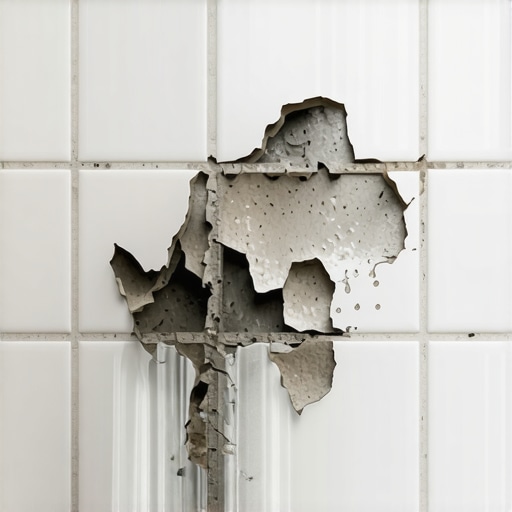
I spent three days grinding concrete on a job last month just so the floor wouldn’t click like a castanet. Most guys skip the leveling compound. They think the underlayment will hide the dip. It won’t. I am standing here with the smell of WD-40 and fresh oak dust on my clothes because I care about the structural math of a home. When we talk about why your grout is falling apart in your shower, we aren’t talking about a cleaning issue. We are talking about a failure of engineering. Grout is the messenger. It is the first thing to break when the bones of the shower are moving or when the chemistry of the installation was botched from day one. You see a crack. I see a subfloor that was too thin or a thin-set mortar that was mixed with too much water. Most homeowners think a floor is just something pretty to walk on. To me, a floor is a performance surface that must withstand thousands of pounds of pressure and constant thermal expansion. When your grout crumbles, it is telling you that the system has failed.
The structural math of subfloor deflection
Subfloor deflection refers to the amount of vertical flex a floor system experiences under a load, which directly causes grout to crack and crumble. If your joists are spaced too far apart or your plywood is too thin, the floor moves every time you step into the shower. Ceramic tile and cementitious grout have zero flexibility. When the wood beneath them bends, the grout is crushed or pulled apart. This is often the result of ignoring the L/360 standard required by the Tile Council of North America. For natural stone, that requirement doubles to L/720. If your installer didn’t add a second layer of exterior-grade plywood or a proper uncoupling membrane, the grout didn’t stand a chance. It is a rigid material trapped in a moving environment. Eventually, the bond breaks at the molecular level and the material turns back into the dust it came from.
“A floor is only as good as the subfloor beneath it; deflection is the enemy of every joint.” – Master Flooring Axiom
Mixing errors that turn grout to dust
Improper water-to-powder ratios during the mixing process create a weak crystalline structure in the grout that leads to soft, powdery joints. I see this on almost every DIY job. Someone grabs a bucket, dumps in some grout, and adds water until it looks right. That is a recipe for disaster. If you add too much water, you dilute the polymers and the cement never properly hydrates. As the excess water evaporates, it leaves behind microscopic air pockets. These voids make the grout brittle and porous. It might look fine for a month, but as soon as the shower starts seeing regular use, the water pressure from the showerhead and the friction of your feet start eroding those weak walls. You need a peanut butter consistency, and you need to let the grout slake for ten minutes to allow the chemicals to fully activate. If you skip the slake, you skip the strength.
[image placeholder]
The role of humidity in Houston and Phoenix
Regional climate conditions like extreme humidity or dry heat significantly affect how grout cures and its long-term durability. If you are in a swampy environment like Houston, the moisture in the air can prevent the grout from drying at a consistent rate. Conversely, in the dry heat of Phoenix, the air will suck the water out of the grout before the cement has time to reach its full strength. This is why professional installers often damp-cure their grout. We lightly mist the joints with water and cover them with plastic to ensure the hydration process lasts long enough for the crystals to interlock. Without this, the grout remains