
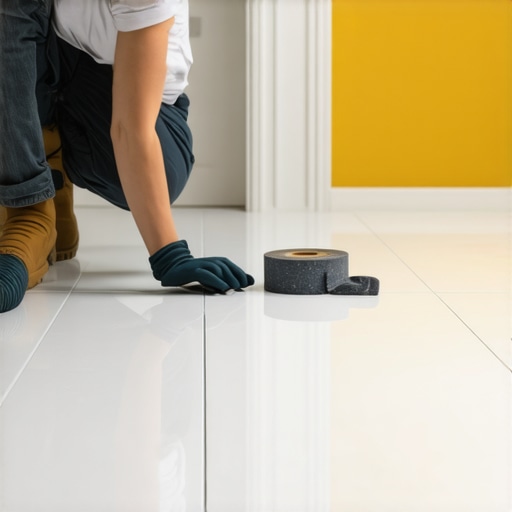
I smell like oak dust and the sharp chemical bite of floor wax today. My knees have the permanent callouses of a man who has spent twenty five years chasing perfection across subfloors that were never flat to begin with. Most guys skip the leveling compound. They think the underlayment will hide the dip. It won’t. I spent three days grinding concrete on a job last month just so the floor wouldn’t click like a castanet. After you put that much sweat into the structural integrity of a surface, the last thing you want is a sloppy paint line ruining the visual transition. Most homeowners think a roll of blue tape is a magic wand. They are wrong. They buy the cheapest masking tape at the big box store and wonder why their tile looks like a kindergarten art project. Painting baseboards over tile is a game of surface tension, capillary action, and mechanical shielding. It is about understanding that paint is a liquid looking for any micro fissure to invade, especially when it meets the porous valley of a grout line.
The physics of the paint bond
Painting baseboards without getting paint on the tile requires managing the surface tension of the liquid paint and the microscopic porosity of the tile glaze and grout. By using a mechanical shield rather than adhesive tape, you prevent the capillary draw that pulls wet paint under a mask. When you press tape onto a textured tile surface, you are creating thousands of tiny tunnels. The paint, driven by atmospheric pressure and its own viscosity, flows into those tunnels. This is why you peel back the tape and find a jagged mess. To avoid this, we have to look at the molecular level. Standard latex paint contains long chain polymers that need to bind to the wood of the baseboard while being kept away from the silicate structure of the tile. If you are working near showers that wow modern designs for 2025, you also have to account for the residual moisture in the air which slows the drying time and increases the window for paint to run. You need to keep the paint thick enough to stay put but thin enough to lay flat. It is a balancing act of solids and solvents.
“A floor is only as good as the subfloor beneath it; deflection is the enemy of every joint.” – Master Flooring Axiom
Why painter tape is a lying tool
Tape creates a false sense of security that leads to over loading the brush and flooding the gap between the baseboard and the tile floor. The adhesive on the tape can also interact with tile sealers, leaving a sticky residue that attracts dirt later on. I have seen guys spend four hours taping off a room only to have the paint bleed through every single joint. This happens because tile is rarely perfectly flat. Even high quality porcelain has slight undulations. The tape cannot flex into these microscopic valleys. When you drag a wet brush over it, you are hydraulicly forcing paint into those gaps. Instead, I advocate for the metal shield method or the dry brush technique. If you are aiming for baseboards makeover ideas to elevate your space, you cannot afford the jagged edges that tape leaves behind. You need a crisp, surgical line that defines the plane where wood meets stone. The secret is to treat the paint like a solid that you are carefully placing, not a liquid you are slathering on.
The shield method for crisp lines
The shield method involves using a thin stainless steel or plastic painting guard that is physically held against the tile while the brush applies paint to the baseboard edge. This creates a temporary mechanical barrier that is moved along the perimeter as you work. This is the only way to ensure that not a single drop hits the tile. You hold the shield at a 45 degree angle, wedging the edge into the tiny gap between the wood and the floor. This compresses any dust or debris and creates a seal. You then use a 2.5 inch angled sash brush with firm synthetic bristles. You load only the bottom inch of the brush. You don’t dip it to the ferrule. You then pull the brush in a long, steady stroke. The shield catches any stray bristles or excess paint. Every three feet, you wipe the shield clean with a lint free rag. If you leave paint on the shield, it will transfer to the next section of tile, defeating the whole purpose. This is particularly vital when dealing with chic baseboard designs that transform rooms in 2025 where the profiles are often complex and deep.
| Method | Risk Level | Required Skill | Resulting Quality |
|---|---|---|---|
| Standard Masking Tape | High | Low | Low (Bleed Likely) |
| High Precision Frog Tape | Medium | Medium | Moderate |
| Metal Shielding | Low | High | Professional Grade |
| Freehand Cutting | High | Expert | Variable |
Dealing with the grout line hurdle
Grout lines are the most difficult part of the process because they represent a dip in the surface where paint loves to pool and settle. You must use a dry brush technique when crossing grout lines to prevent the liquid from filling the void. If you are working on showers with a style trendy ideas for small bathrooms, you know that grout is often the first thing to fail or look dirty. If you get paint in that grout, it is there forever. You cannot just wipe it out because the grout is porous and will suck the pigment deep into its cementitious structure. If you do make a mistake, you might end up needing grout restoration secrets for long lasting results. To prevent this, I always keep a damp Q tip and a bucket of clean water nearby. If a tiny speck hits the grout, I hit it immediately. But the real pros know that if you keep your brush speed slow and your shield tight, the grout line becomes just another minor obstacle in the path of a perfect finish.
“Tile grout is a porous structure that acts as a conduit for liquids through capillary action and must be protected from pigment intrusion.” – Ceramic Engineering Note
The chemistry of baseboard materials
The material of your baseboard, whether it is solid wood, MDF, or PVC, dictates the viscosity of the paint you should use and how it interacts with the tile. Solid wood expands and contracts more than MDF, which can create a moving target for your paint line. Solid oak or maple has grain that can pull paint upward. MDF is like a sponge. It will suck the moisture out of your paint so fast that the edge will dry before you can finish the stroke. This causes lap marks. If you are using eco friendly tile solutions for sustainable homes in 2025, you should pair them with low VOC, high solids acrylic paints. These paints have a shorter open time but provide a thicker film that is less likely to run down the wall and onto the floor. I always recommend back priming the baseboards before they are installed to limit moisture movement. This keeps the wood stable, so your paint line doesn’t move 1/16th of an inch when the seasons change and show a raw wood gap. Before you start, always make sure the floor is spotless. Use tile cleaning tips for a sparkling bathroom in 2025 to ensure no dust interferes with the shield’s seal against the tile surface.
- Vacuum the gap between the baseboard and the tile with a crevice tool.
- Wipe the tile with denatured alcohol to remove any oils or waxes.
- Ensure the baseboard is sanded to 180 grit for optimal paint adhesion.
- Check the room humidity; it should be between 40 and 50 percent.
- Use a high quality 2.5 inch angled sash brush with synthetic filaments.
- Keep a clean, lint free rag in your pocket at all times.
Regional climate impacts on paint drying
In humid regions, paint stays wet longer, increasing the risk of sags and drips that can migrate onto the tile surface long after you have moved to the next room. In dry climates, the paint can skin over too fast, causing it to tear when you move your shield. If you are in a swampy area like Houston, you need to use a paint with a higher solids content. The moisture in the air will prevent the water in the paint from evaporating, which means the paint stays in a liquid state for an extended period. Gravity will pull that liquid down. If you are in the desert heat of Phoenix, the paint will dry on the brush itself. You might need to add a flow extender like Floetrol to keep the paint workable. This prevents the brush from dragging and creating splatters. Always remember that the floor temperature is often lower than the room temperature. This can cause condensation at the baseboard line, which will ruin the bond of the paint. It is a game of thermodynamics as much as it is a game of aesthetics. If you have questions about specific materials, you can always contact us for more technical data.