
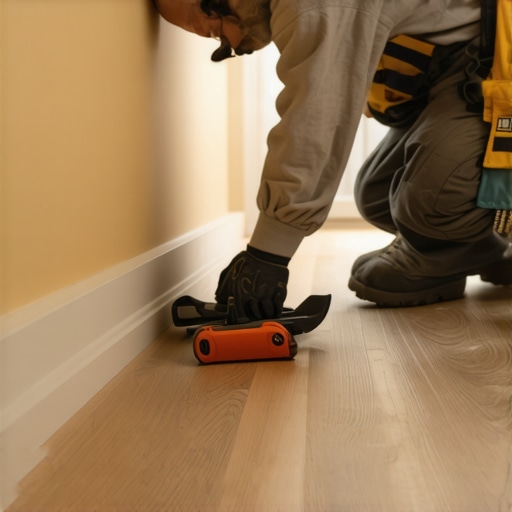
Most guys skip the leveling compound. They think the underlayment will hide the dip. It won’t. I spent three days grinding concrete on a job last month just so the floor wouldn’t click like a castanet. That job was a reminder that you cannot hide a bad subfloor with expensive materials. When I finally got that slab within the industry standard of one eighth of an inch over ten feet, the baseboards still had to follow the natural movement of the house. Scribing is the only way to reconcile a straight architectural element with a fluid structural reality. This is where the physics of the house meet the precision of the carpenter. If you want a floor that looks like it grew out of the walls, you have to learn to cope with the waves. This is especially true when dealing with high-end installations involving showers with a style or intricate tile work where grout lines create additional visual planes. It is about more than just aesthetics, it is about structural integrity and preventing dust traps that rot your trim from the bottom up.
The anatomy of a wavy floor
Wavy floors are a result of concrete curling, joist shrinkage, or settling foundations that create uneven elevations across a room. To fix this, we look at the deflection limits. For natural stone or tile, we follow the L/360 rule, meaning the floor should not bend more than the length of the span divided by 360. When these standards are ignored, you get a floor that resembles the rolling hills of Kentucky. This makes baseboard installation a nightmare for the uninitiated. You cannot simply force a three quarter inch piece of solid oak into a half inch dip. The tension will eventually pull the nails out or split the wood. Scribing allows the bottom of the board to mirror the exact topography of the subfloor while the top remains perfectly level. This technique is vital when you are aiming for chic baseboard designs that demand a tight fit against the flooring surface. I have seen guys try to fill a three eighths inch gap with caulk, and within six months, that caulk has cracked and turned black with dirt. That is not craftsmanship, that is a cover up.
“A floor is only as good as the subfloor beneath it; deflection is the enemy of every joint.” – Master Flooring Axiom
The physics of the scribe line
A scribe line is a precise geometric transfer of the floor’s profile onto the vertical face of the baseboard. To achieve this, you need a compass or a dedicated scribing tool. You set the distance of the compass to the largest gap between the floor and the board. As you drag the point along the floor, the pencil marks a line on the board that is an exact replica of the floor’s highs and lows. This process requires a steady hand and an understanding of how light hits the trim. If your line is off by even a fraction, the eye will catch the shadow. You must account for the thickness of the pencil lead itself. A sharp point is the difference between a tight fit and a sloppy one. When working with eco friendly tile solutions, the texture of the tile can be aggressive. A standard compass might jump on the grout lines, so I often use a piece of painter’s tape along the bottom of the board to make my marks clearer. This is the difference between a floor that looks finished and one that looks like a DIY disaster.
| Floor Type | Scribe Difficulty | Recommended Tool | Typical Gap Cause |
|---|---|---|---|
| Solid Hardwood | Medium | Compass with 4H Lead | Joist Shrinkage |
| Porcelain Tile | High | Pro Scribe Tool | Grout Level Variations |
| Luxury Vinyl | Low | Marking Gauge | Subfloor Pitting |
| Natural Stone | Extreme | Contour Gauge | Uneven Clefts |
The geometry of a perfect back cut
The back cut is a 45 degree relief angle ground into the back of the baseboard to ensure the front edge makes a crisp contact point with the floor. Once you have your line, you don’t just cut it straight. If you do, any slight tilt in the wall will cause a gap. By beveling the cut toward the back, you create a sharp leading edge that can be fine tuned with a block plane or a belt sander. This is where the sawdust gets under your nails. You grind away the material until you are right on the edge of that pencil line. In rooms with showers that wow, moisture is always a factor. A back cut also allows for a small bead of silicone to be hidden under the board to prevent water from wicking up into the drywall. This is high level engineering applied to finish carpentry. Most guys just want to get to the next job, but the guys who stay in business are the ones who understand that the bottom of the baseboard is just as important as the top.
Grout lines and baseboard alignment
Grout lines create a series of micro dips that can make a baseboard look jagged if the scribe is not handled with extreme care. When you are running trim over tile, you have to decide if you are going to follow every single grout joint or if you are going to average the line. In my experience, following the grout too closely can make the trim look like it has teeth. I prefer a smooth scribe that hits the high points of the tile and floats slightly over the grout. If the grout is recessed more than an eighth of an inch, you need to revisit your grout refresh strategies to ensure the surface is as flat as possible before the trim goes down. This is particularly important in wet areas where tile cleaning becomes a regular chore. If your baseboard is poorly scribed to the tile, dirty water will sit in those gaps and eventually fail the adhesive bond of the grout itself.
“The National Wood Flooring Association requires subfloors to be flat to within 3/16 inch in a 10-foot radius for professional installation.” – NWFA Technical Manual
The 1/8 inch that ruins everything
Precision in scribing is measured in increments of one sixteenth of an inch because any gap larger than that will be visible to the naked eye. I see it all the time. A guy installs a beautiful floor, then slaps on the baseboards and leaves a quarter inch gap. He thinks the shoe molding will cover it. Shoe molding is a crutch for people who can’t scribe. If you do it right, you don’t need that extra piece of wood cluttering up the profile. You want the clean lines of the original architect. This is especially true if you are trying to elevate your space with modern, tall baseboards. The taller the board, the more obvious a crooked bottom becomes. It acts like a lever, magnifying every mistake. When I scribe, I use a block plane for the final fit. I take off shavings thinner than a piece of paper until the board snaps into place. It should be a friction fit. If you have to hammer it, you are putting too much stress on the wall. If it falls in, you took too much off.
- Check the floor for high spots using a six foot level before starting.
- Mark the baseboard positions with a chalk line to ensure they stay level across the room.
- Set your scribe tool to the widest gap found along the entire wall length.
- Always use a back cut to allow for minor adjustments during final nailing.
- Test the fit without nails first to check for any binding against the drywall.
Tools for the surgical scribe
The right tool for scribing depends on the material of the baseboard and the complexity of the floor waves. For MDF, a simple compass works because the material is soft and easy to sand. For solid oak or maple, you need a high quality scribing tool with a locking mechanism. If the tool slips, your line is ruined and you’ve just wasted a twenty dollar piece of wood. I also keep a variety of sanding drums for my drill to handle the tight curves in a wavy floor. This is not about speed. This is about the chemistry of the finish and the physics of the fit. When you are dealing with grout restoration, you might find that the floor level has changed over the years. Scribing the existing baseboards can save you from having to replace the entire trim package. It is about working smarter, not harder. You have to respect the house and the ways it has moved over time. A house is a living thing, and your trim needs to be flexible enough to live with it. Stop looking for shortcuts and start looking for the scribe line. It will save your reputation and your floors.