
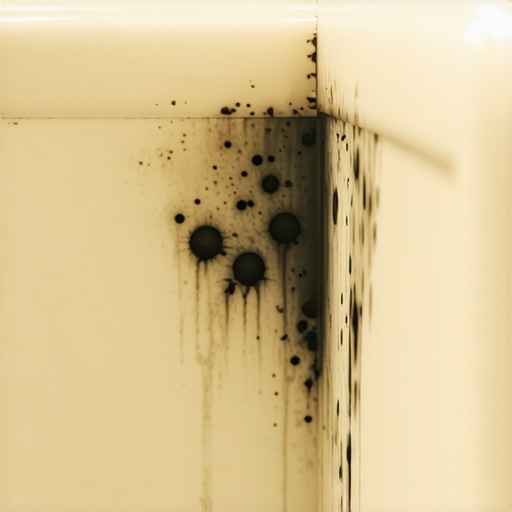
I spent three days grinding concrete on a job last month just so the floor would not click like a castanet, and that same level of obsessive detail is what your bathroom requires. Most guys skip the leveling compound or rush the drying time. They think the underlayment or a thick bead of silicone will hide the dip or the moisture. It will not. I have walked into countless bathrooms where the homeowner is baffled by black streaks appearing in their pristine white sealant. They scrub until their knuckles bleed, but the black returns within a week. This is because they are treating a symptom of a systemic structural failure. Your bathroom is an ecosystem, and right now, it is an ecosystem optimized for fungal conquest. Flooring is not a cosmetic choice. It is a structural engineering challenge. If your caulk is turning black, your engineering has failed.
The microscopic war inside your shower joints
Black mold and mildew thrive in bathroom caulk because of trapped moisture, soap scum, and human skin cells. When silicone sealants lose their adhesion to tile or showers, water seeps into the microscopic gaps, creating a dark, wet environment for fungal spores to colonize the sealant from the underside. You are looking at a biological bloom that is often fed by the very moisture trapped behind your walls. This is not just a surface stain. It is a sign that the bond between your finishing materials has been compromised. In my twenty five years of crawling across subfloors, I have learned that water is a patient predator. It finds the 1/64th inch gap you left behind and moves in. If your grout was not sealed correctly, or if your tile installer used a cheap, porous mastic instead of a high quality thin-set, you are essentially providing a buffet for mold.
Why your subfloor is feeding the fungus
A saturated subfloor or damp cement board is often the primary reason caulk turns black in modern showers. If the waterproofing membrane is failing, moisture migrates through the grout and settles into the plywood or concrete slab, pushing mold spores through the caulk line. This is the physics of hydrostatic pressure and capillary action at work. When I see black caulk, I do not just see mold. I see a potential failure in the mud bed or the liquid applied waterproofing. If your installer did not follow the Tile Council of North America standards for slope and drainage, water sits stagnant under your tile. This water has nowhere to go but out through your joints. Check out these grout restoration secrets for long lasting results to understand how to keep your joints dry. It is about more than just the surface. It is about the entire assembly from the joist up.
“A floor is only as good as the subfloor beneath it; deflection is the enemy of every joint.” – Master Flooring Axiom
The chemical failure of cheap silicone
Most contractor grade caulk fails because it lacks a high fungicide load and cannot handle the thermal expansion of tile and showers. As your house shifts and the temperature changes, the chemical bond of the sealant breaks, allowing black mold to take root in the micro-cracks. There are two main types of silicone. You have acetoxy cure, which smells like vinegar and cures fast, and you have neutral cure, which is much better for stone and masonry. If you used a cheap acrylic caulk in a wet area, you have already lost the battle. Acrylic is organic. Mold eats organic material. You need a 100 percent silicone product that is inorganic. Mold cannot eat inorganic silicone, but it can eat the soap scum that sits on top of it if you do not clean it. Understanding tile cleaning tips for a sparkling bathroom in 2025 is the first step in maintaining that chemical barrier. If the caulk is turning black from underneath, the chemistry of your sealant is being overwhelmed by the biology of your subfloor moisture.
| Sealant Type | Adhesion Level | Mold Resistance | Best Use Case |
|---|---|---|---|
| Acrylic Latex | Moderate | Low | Dry baseboards only |
| Siliconized Acrylic | High | Moderate | General bathroom trim |
| 100% Silicone (Acetoxy) | Very High | High | Glass and glazed tile |
| 100% Silicone (Neutral) | Extreme | Very High | Natural stone and showers |
How to kill the black bloom forever
Remediating black caulk requires the total removal of the old sealant, followed by a deep sterilization of the grout and tile joints using isopropyl alcohol or bleach solutions. You must ensure the substrate is 100 percent dry before applying a new bead of high grade silicone to prevent trapping new mold spores. I tell my clients that if they rush this, they are just burying the problem. You need to use a heat gun or a fan and let that joint sit open for at least twenty four hours. If you have a moisture meter, use it. The wood or cement board behind that caulk should be under 12 percent moisture content. If it is higher, you are just sealing in rot. While you are at it, consider how to refresh grout without replacing it to ensure the entire wet area is protected. A single weak point in the grout can allow water to bypass your new caulk bead and start the cycle all over again.
The precision of a perfect bead
The application of silicone is a structural seal, not a decorative trim, and it must be applied to clean, dry surfaces with a consistent depth to ensure maximum elasticity. If the bead is too thin, it will snap. If it is too thick, it will not cure properly in the center. I do not use my finger to smooth caulk. The oils from your skin and the bacteria on your hands get embedded in the silicone and provide a food source for mold. Use a professional profiling tool and a spray bottle of denatured alcohol or soapy water. This creates a smooth, non-porous surface that sheds water instead of holding it. This is especially vital in showers that wow modern designs for 2025, where large format tiles create long, continuous joints that are prone to movement. Precision here is the difference between a five year floor and a fifty year floor.
- Remove every trace of old caulk using a sharp utility knife or specialized scraper.
- Scrub the joint with a stiff brush and a mold-killing solution.
- Use a vacuum to pull dust and debris out of the deep crevices.
- Dry the area completely using a fan or heat gun for several hours.
- Wipe the joint with 91 percent isopropyl alcohol to remove any remaining residue.
- Apply a 100 percent neutral cure silicone bead at a 45 degree angle.
- Tool the bead immediately to ensure a concave shape that sheds water.
Protecting your baseboards from the invisible rot
Bathroom baseboards often rot and turn black at the floor line because of wicking moisture that bypasses the caulk seal at the bottom of the wall. You must use a waterproof sealant at the transition between the tile floor and the baseboard to prevent subfloor damage and mold growth. I have seen beautiful chic baseboard designs that transform rooms in 2025 get absolutely destroyed because the installer did not caulk the bottom edge. They left it open to “breathe,” but all it did was suck up mop water like a straw. If you are using MDF baseboards in a bathroom, you are asking for trouble. Use a solid wood or a PVC product, and seal every single edge. If you are looking for baseboards makeover ideas to elevate your space, prioritize materials that can handle high humidity without swelling. The 1/8 inch gap at the bottom of your baseboard is the most frequent entry point for water into your subfloor assembly. Seal it or lose it.
“Waterproofing is not a single product; it is a redundant system of barriers designed to fail gracefully.” – Master Flooring Axiom
The regional humidity factor in caulk failure
In high humidity regions like the Gulf Coast or the Pacific Northwest, bathroom caulk is under constant biological pressure, necessitating more frequent cleaning and the use of commercial grade fungicides. If you live in a swampy climate, your bathroom never truly dries out. This means your maintenance schedule has to be twice as aggressive. You might even need to consider eco friendly tile solutions for sustainable homes in 2025 that incorporate antimicrobial properties directly into the glaze or the grout. Even in dry climates, the localized humidity of a small, poorly ventilated bathroom can create a tropical microclimate. If your exhaust fan is not moving at least 50 CFM, your caulk is doomed regardless of the brand you buy. Ventilation is the silent partner of a good floor installation. Without it, the physics of evaporation will always work against you, and the black mold will always find a way back into your joints.