
The physics of seasonal movement and why wood shrinks
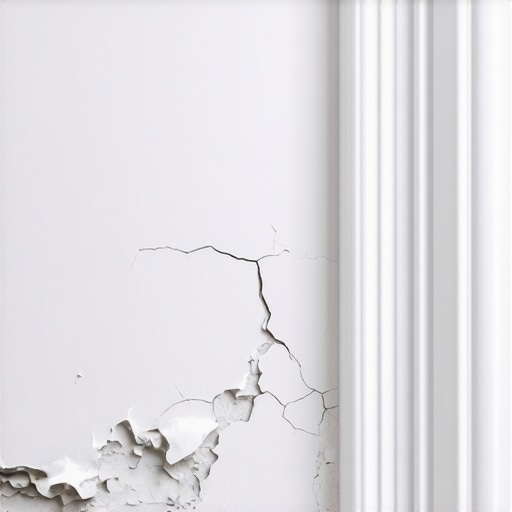
Baseboard caulk cracks every winter because of hygroscopic contraction where wood trim and wall studs lose moisture to the dry indoor air. This movement creates mechanical stress on the sealant bond that often exceeds its maximum elongation percentage. When the relative humidity drops below 30 percent in a heated home, the wood fibers pull away from the drywall. This is not a defect in the house, it is a law of thermodynamics. I spent twenty five years crawling across subfloors with a moisture meter, and I can tell you that physics does not take a day off. I once walked into a house where a $15,000 wide plank walnut floor was cupping so bad it looked like a potato chip because the installer didn’t check the crawlspace humidity. The homeowner thought the wood was haunted. No, it was just thirsty. The same principle applies to your trim. Wood is essentially a bundle of microscopic straws. In the summer, those straws are full of water and they swell. In the winter, the furnace kicks on, the air dries out, and those straws shrink. The caulk, which is supposed to be the flexible bridge between the wall and the wood, gets pulled in two different directions. If that caulk is a cheap, builder grade latex, it will snap like a dry twig.
The structural reality of your subfloor and wall framing
Subfloor deflection and wall stud twisting are the silent killers of a clean caulk line during the cold months. Most people think their walls are static, but they are dynamic systems that breathe with the seasons. If your subfloor has too much bounce, every step you take puts vertical pressure on the baseboard. This movement is often invisible to the naked eye until you look at the grout lines or the caulk bead.
“A floor is only as good as the subfloor beneath it; deflection is the enemy of every joint.” – Master Flooring Axiom
When we talk about chic baseboard designs, we have to talk about how they are fastened. If you nail your baseboards into the floor joists instead of the wall studs, you are begging for a gap. The floor moves down, the wall stays put, and the caulk splits right down the middle. This is why we use a 15 gauge finish nailer to hit the studs squarely. We are looking for a structural bond that resists the natural tendency of the wood to pull away as the temperature drops. The chemistry of the bond is just as important as the mechanical fastening. A high quality sealant needs to have at least 25 percent movement capability. Most of the stuff you buy at the big box stores has about 5 percent. It never stood a chance.
Why cheap latex fillers fail in the cold
Low grade acrylic caulk loses its elasticity as the temperature drops and becomes brittle enough to fracture under minimal tension. Most installers use whatever is cheapest because they want to finish the job and get paid. They don’t care about what happens in three years when the house has settled. You need a siliconized acrylic or a pure silicone in high movement areas. When you are looking at baseboards makeover ideas, you must consider the expansion gap. You cannot just jam the wood against the wall and hope for the best. You need a relief valve. The chemistry of the sealant is a complex mix of polymers and solvents. When the solvent evaporates during the curing process, the caulk shrinks. If it shrinks too much during the initial install, it is already under tension before the winter even starts. Then the cold hits, the wood pulls back, and the bead fails. This is often why you see that ugly black line of dust getting trapped in the crack. It is a sign of a failed chemical bond.
| Material Type | Movement Capability | Best Use Case | Cure Time |
|---|---|---|---|
| Standard Latex | 5% to 10% | Low movement interior trim | 4 hours |
| Siliconized Acrylic | 25% to 35% | Baseboards and window casing | 24 hours |
| Pure Silicone | 50% | Showers and wet areas | 24 hours |
| Polyurethane | 50% plus | Exterior and structural joints | 72 hours |
The humidity impact of showers and wet areas
High humidity in bathrooms creates a localized microclimate that forces baseboards to expand far beyond their normal range. When you take a hot shower, the steam penetrates the wood trim. If that trim isn’t back primed, it absorbs that water like a sponge. Later, when the bathroom dries out, the wood shrinks rapidly. This cycle of extreme expansion and contraction is why you see the most caulk failure near showers with a style that ignores proper ventilation. You need a sealant that can handle the moisture. If you have tile floors, the transition between the tile and the baseboard is a critical failure point. People love to put grout in that gap. Don’t do it. Grout is rigid. It will crack and fall out within six months. You must use a color matched caulk that matches your grout. If your grout is already looking rough, you might need to look into grout restoration secrets before you re caulk your baseboards. Maintaining that seal is what prevents water from getting under your flooring and rotting out your subfloor. It is a protective barrier, not just a cosmetic fix.
The hidden danger of heavy furniture on floating floors
Locking a floating floor under a heavy kitchen island or a massive bookshelf prevents the floor from sliding under the baseboard and forces the caulk to snap. Homeowners always ask why their waterproof vinyl is buckling. Usually, it is because they locked it under a heavy kitchen island, killing the floor’s ability to breathe. A floating floor needs to move as a single unit. If you pin one side down with a thousand pounds of granite, the floor can’t expand or contract toward that side. Instead, it pushes or pulls against the other walls. This creates massive pressure on the baseboards. If your caulk is cracking, check to see if your floor is actually floating or if it is trapped. This is a common mistake in modern open concept homes. We see it all the time with LVP and engineered hardwood. The floor wants to move 1/4 inch, but it has nowhere to go, so it lifts the baseboard right off the wall. No amount of caulk will fix a structural installation error. You have to fix the floor first.
Winter proofing your baseboard joints checklist
- Check indoor humidity with a hygrometer and maintain 35 to 45 percent.
- Identify if the crack is at the top of the baseboard or the bottom at the floor.
- Remove old, brittle caulk completely using a sharp utility knife or specialized scraper.
- Clean the gap with denatured alcohol to remove dust and oils that prevent bonding.
- Use a backer rod for gaps wider than 1/4 inch to provide three point bonding resistance.
- Select a high stretch elastomeric sealant rated for at least 25 percent movement.
- Apply the bead during the middle of the day when temperature and humidity are stable.
Mastering the transition between tile and trim
Using grout at the junction of a tile floor and a baseboard is a fundamental error because tile and wood move at different rates. Tile is thermally stable, but wood is not. When you are following tile cleaning tips, you might notice the edges where the tile meets the wall are crumbling. That is because the house is shifting. The TCNA (Tile Council of North America) is very clear about this.
“Expansion joints must be provided at the perimeter of all tile installations to allow for structural movement.” – TCNA Handbook
If you don’t have that gap, your tile will tent or crack. The caulk is the only thing that makes that gap look good. If you are dealing with old, stained grout that makes your baseboards look dirty, check out how to refresh grout without replacing it. Once the grout is clean, you can apply a fresh bead of high quality silicone caulk to the baseboard line. This creates a water tight seal that actually lasts through the winter. It stops the drafts, stops the bugs, and stays flexible when the house settles. Don’t let a 1/8 inch gap ruin the look of a professional floor. Fix the source of the movement, choose the right chemistry, and stop chasing cracks every December. If you need professional help with your subfloor or trim, feel free to contact us for an evaluation. A little bit of physics goes a long way in keeping your home solid. “,