
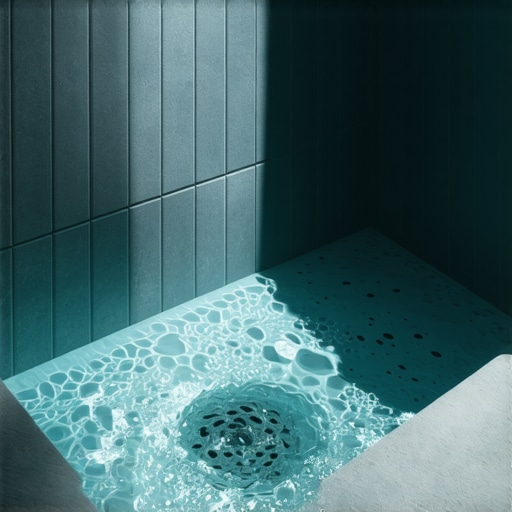
Why your shower niche is collecting water and how to slope it
I spent three days grinding concrete and rebuilding a shower floor on a job last month just so the floor would not click like a castanet and the water would actually find the drain. Most guys skip the leveling compound. They think the underlayment will hide the dip. It will not. The same laziness happens inside the shower niche. I walked into a master bath last week where the homeowner was complaining about a swampy smell. The niche was level. To a layman, level sounds good. In a shower, level is a failure. If that shelf is not pitched toward the drain, water sits. It breeds slime. It eats grout. It destroys the integrity of your tile work.
The physics of the stagnant puddle
Shower niches collect water because the bottom shelf lacks a positive slope of at least 1/8 to 1/4 inch toward the drain. Gravity cannot overcome surface tension on a perfectly level surface. Stagnant water penetrates grout, saturates the thin-set, and eventually compromises the waterproofing membrane or causes mold growth. Every horizontal surface in a wet area must be pitched. This is not a suggestion. This is a law of fluid dynamics and structural engineering. When water hits a flat ceramic surface, it forms a bead. Without a pitch, that bead stays there until it evaporates or soaks into the cementitious materials beneath it. If you want showers that wow modern designs for 2025, you have to start with the physics of the substrate.
The unseen failure of the horizontal plane
A shower niche is essentially a hole in your wall. When you cut into the studs to create that box, you are creating a point of vulnerability. Most installers nail in a pre-formed plastic or foam box and call it a day. The problem is that even these pre-formed boxes can be installed incorrectly if the framing is not plumb. If the wall leans back even a fraction of a degree, your niche shelf will lean back with it. This creates a reverse pitch. Water will run toward the back of the niche, pooling against the rear tile and the grout lines. Over time, the hydrostatic pressure of that standing water will find a pinhole in the grout. From there, it enters the wall cavity. You will not see it for a year. Then, you will see the baseboards in the bedroom on the other side of the wall starting to warp. This is why baseboards makeover ideas to elevate your space always start with ensuring the wet areas are sealed tight.
“A floor is only as good as the subfloor beneath it; deflection is the enemy of every joint.” – Master Flooring Axiom
The chemistry of the bond and the barrier
We need to talk about the molecular reality of your niche. Grout is not waterproof. It is a porous filter. When water sits on a flat niche shelf, it moves through the grout via capillary action. If the installer used a standard polymer-modified thin-set without a secondary waterproofing membrane like Kerdi or Hydro Ban, that water is now sitting in a wet sponge of mortar. The chemical bond of the thin-set begins to weaken under constant saturation. This is often why tiles in a niche start to pop or sound hollow when tapped. You need a liquid-applied waterproofing membrane that creates a monolithic barrier. But even the best membrane will fail if the water has nowhere to go. You are essentially building a tiny bathtub inside your wall. If the bathtub does not drain, it eventually overflows or leaks through the seams.
The 1/8 inch that ruins everything
The standard requirement for a shower niche is a 1/4 inch per foot slope. Since most niches are only 4 inches deep, we are talking about a very slight 1/12 inch to 1/8 inch pitch. It is barely visible to the naked eye, but it is the difference between a dry shelf and a mold factory. When setting the tile for the bottom of the niche, I always use a slightly thicker bed of mortar at the back and taper it toward the front. I use a small torpedo level to ensure the bubble is just touching the line. This ensures that every drop of water that splashes into that niche immediately rolls off and down the wall toward the main shower pan. If you find your grout is already failing from water damage, you might need grout restoration secrets for long-lasting results to fix the aesthetic damage, but the slope must be corrected first.
Niche pitch technical specifications
| Material Type | Recommended Pitch | Minimum Curing Time | Waterproofing Method |
|---|---|---|---|
| Ceramic Tile | 1/4″ per foot | 24 Hours | Liquid Membrane |
| Natural Stone | 1/8″ to 1/4″ | 48 Hours | Sheet Membrane |
| Glass Mosaic | 1/4″ per foot | 72 Hours | Epoxy Grout |
| Large Format Porcelain | 1/8″ per foot | 24 Hours | Cementitious Barrier |
The ghost in the expansion gap
Water collection in a niche often leads to another problem. The change of plane. Wherever two surfaces meet at a 90-degree angle, such as the back of the niche meeting the shelf, you cannot use regular grout. It will crack. This is called the ghost in the expansion gap. You must use a 100 percent silicone sealant that matches your grout color. If you use hard grout in these corners, the micro-movements of your house will cause the grout to crack. Once it cracks, the standing water in your level niche has a direct highway into the wall studs. This leads to rot. I have seen 2×4 studs that looked like wet cardboard because a niche was not sloped and the corners were not silked. If you are dealing with old, stained grout in these areas, check out how to refresh grout without replacing it before the structural damage becomes terminal.
A checklist for a bone dry niche
- Verify the framing is plumb before installing the niche box.
- Install the bottom shelf with a 1/8 inch to 1/4 inch forward pitch.
- Use a monolithic waterproofing membrane over all seams and fasteners.
- Apply a 100 percent silicone caulk to all internal 90-degree corners.
- Test the slope by spraying the niche and watching the water exit.
- Ensure the tile overhangs the niche edge slightly to create a drip edge.
The myth of waterproof grout
Many homeowners think that using a high-end epoxy grout solves the sloping problem. It does not. While epoxy grout is nearly impervious to water, it does not change the laws of gravity. Water will still sit on top of the epoxy grout. This water will collect soap scum and skin cells, creating a biofilm. This is the pink or black slime you see in the corners of your shower. Even if the water does not soak through, the shelf remains a sanitary disaster. You can learn about tile cleaning tips for a sparkling bathroom in 2025, but you will be cleaning that niche every three days if the water does not drain. Slope is the only permanent solution to a clean shower.
“Water is the most patient architect; it will find every mistake you made in the substrate.” – TCNA Installation Manual Reference
The regional climate factor in shower failure
In humid regions like the Gulf Coast, a poorly sloped niche never truly dries out. The high ambient humidity prevents evaporation, meaning the niche stays wet 24/7. This accelerates the breakdown of the adhesives. In drier climates, you might get away with a level niche for longer because the water evaporates, but you are still leaving mineral deposits behind that will ruin the finish of your tile. Regardless of where you live, the engineering remains the same. Pitch the shelf. Protect the wall. Avoid the rot. It is a simple formula that most installers ignore because it takes an extra five minutes of work. Do not let your shower become a statistic of poor drainage. Ensure that every surface has a destination for the water it carries.