
I spent three days grinding concrete on a job last month just so the floor wouldn’t click like a castanet. Most guys skip the leveling compound because they think the underlayment will hide the dip. It won’t. That same obsession with the hidden mechanics of a build applies to your bathroom. If the subfloor or the shower pan slope is off by even a fraction of an inch, you get standing water. This water does not just sit there, it evaporates and leaves behind a microscopic layer of minerals that bond to your glass. I have seen fifteen thousand dollar bathroom remodels look like trash in six months because the owner did not understand the chemistry of their water. You have to treat your shower glass like a performance surface, not just a clear divider. The cloudiness you see is not just dirt, it is a chemical etch that becomes permanent if you ignore it. This guide focuses on the engineering of your bathroom surfaces and the one habit that keeps them pristine. Modern shower designs demand high levels of maintenance to keep their structural integrity and visual clarity.
The morning ritual that preserves your glass
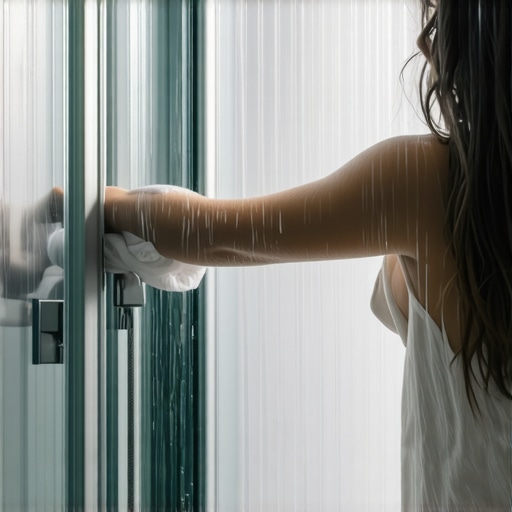
To stop shower glass from getting cloudy you must use a squeegee or a microfiber cloth to remove all surface water immediately after every shower. This simple habit prevents mineral deposits from evaporating and bonding to the silica in the tempered glass, ensuring clarity and longevity. When you leave water on the glass, you are inviting calcium and magnesium to set up shop. These minerals are not just sitting on the surface, they are looking for a way to integrate. Glass is actually porous at a microscopic level. It looks flat to your eye, but to a mineral ion, it is a landscape of peaks and valleys. By removing the water before it dries, you disrupt the evaporation cycle. This is the only way to prevent the formation of stage two corrosion, where the minerals have chemically etched the glass surface. Once that happens, no amount of scrubbing will bring back the original shine. You are looking at a permanent structural change to the glass itself. I always tell my clients that a thirty second squeegee session saves them three hours of scrubbing later. It is about the physics of surface tension. You are physically moving the solutes off the solvent before the solvent disappears into the air.
The microscopic war on your shower door
Shower glass becomes cloudy because of the chemical reaction between hard water minerals and the glass surface. This process involves calcium carbonate, magnesium, and soap scum creating a calcified layer that scratches the micro-pores of the tempered panels. To understand this, you have to look at the Mohs scale of mineral hardness. Glass sits around a five or six. Hard water deposits can be surprisingly abrasive. When you try to scrub these off with a dry cloth, you are essentially using liquid sandpaper on your expensive enclosure. The minerals form a covalent bond with the glass. This is why tile cleaning tips often focus on acidity to break those bonds. If you let the water sit, the heat from the shower accelerates the chemical reaction. The steam opens up the pores of the glass, allowing the minerals to dive deeper. This is not a cosmetic issue, it is a structural degradation of the material. Over time, the glass becomes brittle and more prone to shattering if the hardware is slightly out of alignment. Every drop of water is a tiny bomb of minerals waiting to explode on your clarity.
“A floor is only as good as the subfloor beneath it; deflection is the enemy of every joint.” – Master Flooring Axiom
Why hard water acts as a structural threat
Hard water is a structural threat because it contains high concentrations of dissolved minerals that lead to calcification. These minerals infiltrate grout lines, tile surfaces, and metal hardware, causing expansion, corrosion, and the eventual failure of waterproof seals. In my twenty five years of installing, I have seen shower doors literally fall off their hinges because the mineral buildup in the hardware caused the metal to seize and snap. It is not just the glass that suffers. The water that clouds your glass is also attacking your grout restoration efforts. Hard water minerals act like a wedge. They get into the pores of the grout and, as they crystallize, they expand. This expansion creates micro-fissures. Those fissures then take in more water, leading to mold growth behind the tile. This is why the habit of drying your shower is about more than just aesthetics. You are managing the moisture load of the entire room. High humidity levels in a bathroom will also affect the surrounding materials. If the glass is constantly wet, the ambient humidity stays high, which is the primary cause of paint failure and drywall rot near the ceiling. You are fighting a war against the second law of thermodynamics here.
The chemistry of mineral bonding on silica
Mineral bonding on silica occurs when the alkaline minerals in water react with the acidic components of the glass. This hydrophilic interaction creates a dull film that is resistant to standard cleaners and requires specialized surfactants to neutralize the pH balance. When we talk about glass, we are talking about a supercooled liquid that is mostly silica. Silica is reactive. When you introduce water with a high pH, you are creating a environment for ion exchange. The sodium in the glass can be replaced by calcium from the water. This is why some glass looks cloudy even after you clean it. The cloud is actually inside the surface layer. This is also why I am a big believer in hydrophobic coatings. These coatings fill the microscopic pores of the glass so the water has nowhere to go. It just beads up and rolls off. But even with a coating, the squeegee habit is non-negotiable. No coating is a hundred percent effective forever. The mechanical action of wiping the glass also removes skin oils and soap fatty acids. These organic compounds are the glue that holds the minerals in place. Without the soap scum, the minerals have a much harder time sticking to the surface. It is a multi-layered defense system for your bathroom.
| Water Type | Mineral Content (PPM) | Maintenance Frequency | Risk Level |
|---|---|---|---|
| Soft Water | 0 to 60 | Weekly Squeegee | Low |
| Moderately Hard | 61 to 120 | Every Other Use | Medium |
| Hard Water | 121 to 180 | Every Use | High |
| Very Hard Water | 180+ | Immediate Drying | Extreme |
How baseboards react to bathroom moisture
Baseboards react to bathroom moisture by absorbing humidity which leads to swelling, warping, and paint peeling. Using high-moisture-resistant materials like PVC or sealed MDF is essential for preventing the structural failure of the wall-to-floor transition. People often forget about the baseboards when they are thinking about shower glass, but they are intrinsically linked. If your shower glass is not properly maintained and sealed, water escapes. That water migrates to the edges of the room. I have torn out dozens of bathrooms where the subfloor was rotted through because of a tiny leak at the shower door threshold. The baseboards are the first line of defense for your wall cavity. When they get wet, they wick moisture up into the drywall. This creates a hidden environment for mold. You should look into baseboards makeover ideas that prioritize durability over just looks. A well-installed baseboard should be back-sealed with a high-quality primer to prevent moisture from entering through the rear of the board. I always recommend a small bead of 100 percent silicone at the bottom of the baseboard where it meets the tile. This creates a capillary break that prevents water from being sucked under the board. It is these small engineering details that separate a master installation from a weekend DIY job.
The structural reality of shower pan drainage
Shower pan drainage relies on a precise slope of one quarter inch per foot toward the drain. This geometry is mandatory to ensure that gravity effectively evacuates all surface water and prevents standing pools that increase humidity and glass clouding. If your installer didn’t use a level, you are in trouble. I once walked into a house where the homeowner complained about their glass always being foggy. It turned out the shower pan was flat. Water was sitting in the corners for hours after the shower was turned off. This standing water was constantly evaporating, keeping the local humidity at nearly one hundred percent. The glass never had a chance to dry out. We had to rip out the entire floor and rebuild the pan with the proper pitch. This is why I say the floor is the engine of the bathroom. If the floor fails, everything else fails. You can have the most expensive tile in the world, but if the water doesn’t move, you have a swamp. A properly sloped pan combined with the daily squeegee habit will keep your glass clear and your grout dry. It is all about managing the flow of energy and matter through the space.
“Proper drainage and moisture management are the primary requirements for any successful tile and glass installation.” – TCNA Handbook Standards
- Use a professional grade squeegee with a replaceable rubber blade every single day.
- Apply a hydrophobic glass treatment every six months to fill the microscopic pores.
- Check the caulking around the glass tracks for signs of mold or separation.
- Ensure the bathroom fan is running for at least twenty minutes after each shower.
- Wipe down the metal hardware to prevent mineral seizing and corrosion.
- Inspect the grout lines for any signs of cracking or water infiltration.
Professional maintenance for long term clarity
Professional maintenance for shower glass involves deep cleaning with phosphoric acid or sulfamic acid to dissolve stubborn mineral bonds. These chemicals must be handled with precision to avoid damaging the surrounding tile or metal finishes. While the daily habit is the most important, you will still need a deep clean once in a while. You have to be careful with the chemistry. Using a highly abrasive cleaner on glass will leave scratches that catch more minerals. It is a vicious cycle. Instead, use a chemical approach to dissolve the minerals. I prefer a gel-based acid cleaner that stays where you put it. You apply it, let it sit for ten minutes to break the covalent bonds, and then rinse it off. Always test a small area first. If you have natural stone tile, an acid cleaner will eat a hole right through it. This is why I tell people that flooring is a structural engineering challenge. You have to know how every material in the room reacts with every other material. The water, the glass, the tile, and the metal are all in a constant state of chemical interaction. Your job is to moderate that interaction through consistent maintenance and smart material choices. If you follow these protocols, your shower will look as good in ten years as it did on day one. It is not about luck, it is about the physics of the environment you have created. Keep your glass clear, keep your subfloor dry, and never trust a contractor who doesn’t carry a moisture meter. Details matter. The 1/8 inch of pitch or the micron of mineral buildup is the difference between a masterpiece and a mess.