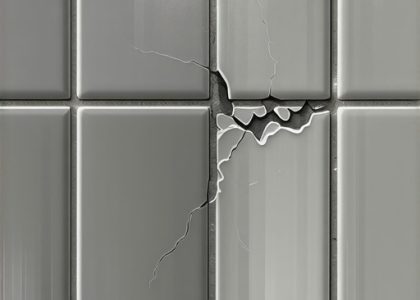
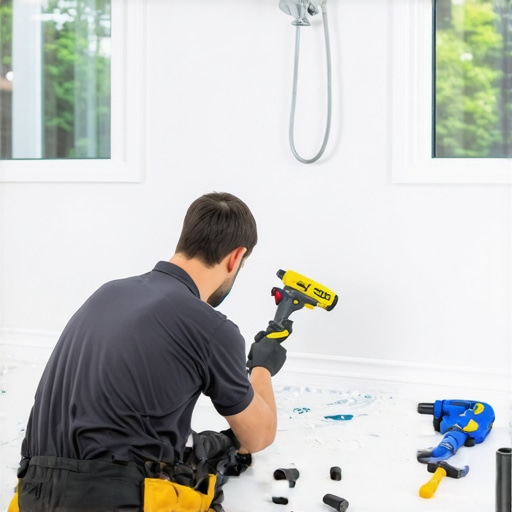
Elevating Bathroom Integrity: The Role of Advanced Grout, Tile, and Baseboard Techniques in 2025
As the demand for resilient bathroom surfaces surges in modern construction and renovation, understanding the nuanced interplay between grout, shower assemblies, tile selection, and baseboards becomes paramount for professionals dedicated to longevity and aesthetic excellence. Leveraging cutting-edge materials and installation methodologies in 2025 can significantly extend the lifespan of these critical components, ensuring enduring performance against moisture, wear, and environmental stressors.
Innovative Materials Transforming Shower and Baseboard Longevity
The advent of eco-friendly, high-performance grout formulations, such asadvanced epoxy-based compounds, has redefined expectations for waterproofing and stain resistance. These materials outperform traditional cementitious grouts, offering superior adhesion and chemical resilience. For tile environments, selecting porcelain or textured stone tiles with appropriate porosity further reduces grout degradation risks. Additionally, integratingreinforced PVC or composite baseboards instead of conventional wood can prevent warping and damage from moisture exposure, thus preserving room aesthetics and structural integrity.
Expert Installation Techniques for Resilient Surfaces
Field experience underscores the importance of meticulous surface preparation, precise mortar mixing, and controlled curing environments. Implementingproper joint width and pattern alignment reduces stress points that may compromise grout and tile bonds over time. For showers, embeddingimproved waterproof membranes and sealant layers beneath the tile ensures water ingress prevention, a critical factor highlighted in recent studies published in the Journal of Building Engineering. For baseboards, meticulous caulking and the use offlexible, high-abrasion sealants augment their resistance against daily impacts and moisture fluctuations.
What Are the Hidden Risks in Common Grout and Sealant Applications?
Despite widespread practices, many professionals overlook the long-term impacts of improper grout sealing or incompatible sealants. Grey areas exist regarding the optimal application thickness, curing temperature, and choice of sealants compatible with both tile and baseboard materials. Incorrect sealing may invite mold, efflorescence, and structural weakening, especially in high-moisture zones like showers. Regular maintenance guided by expert recommendations, such as those detailed in the article here, is essential for sustaining surface durability.
How Can Professional Techniques Revolutionize Bathroom Renovations in 2025?
The integration of sensor-activated moisture monitoring systems and ultra-durable, self-healing grout compounds can lead to transformative improvements. By adopting these innovations, contractors can proactively address potential degradation issues before they manifest visually. Furthermore, training inprecision installation protocols and ongoing maintenance strategies cultivates a proactive approach to preventing costly repairs and replacements. For comprehensive insights, consult the expert guide here.
Professionals are encouraged to contribute insights and share field-tested experiences to refine best practices continually. A collaborative effort enhances the collective knowledge pool, pushing the boundaries of durability standards in bathroom surface installations.
Maximize Durability with Cutting-Edge Grout Formulations
In recent years, the evolution of grout technology has centered around formulations that offer not only enhanced waterproofing but also self-healing capabilities. These innovative compounds reduce the need for frequent reapplications and mitigate common issues like cracking and mold growth. Transitioning to epoxy-based or hybrid solutions—such as those detailed at expert guide to durable tile baseboards—ensures your surfaces withstand the rigors of daily use while maintaining aesthetic appeal over the years.
The Power of Proper Installation for Long-Lasting Surfaces
Achieving longevity begins with precision. Advanced surface preparation, including moisture mitigation and substrate reinforcement, forms the foundation for all subsequent work. Techniques like controlled joint spacing and pattern consistency are crucial to reducing stress points that could compromise the grout’s integrity. Furthermore, integrating waterproof membranes beneath tiles, as discussed in recent shower baseboard installation tips, provides an extra layer of defense against water infiltration, preserving both grout and substrate health.
Could Sensor-Integrated Moisture Monitoring Revolutionize Bathroom Maintenance?
Imagine a future where bathroom surfaces communicate their health status in real-time, alerting homeowners and professionals to potential issues before damage occurs. Incorporating sensor technology into grout and tile installations allows for continuous moisture level assessments, enabling proactive interventions. As suggested by industry experts in the expert guide to durable shower baseboards, this approach can drastically reduce repair costs and extend the lifespan of bathroom components.
Stay ahead by exploring the latest in moisture detection and integrating these innovations into your renovation projects. Do you see potential in adopting sensor technology for your next bathroom upgrade? Share your thoughts and experiences in the comments!
Rethinking Sealants for Superior Moisture Shielding
Traditional sealants often fall short under constant exposure to moisture and temperature fluctuations, which can lead to sealant breakdown, mold growth, and grout deterioration. The emergence of flexible, high-adhesion sealants—that are compatible with diverse materials such as tile, glass, and baseboards—marks a significant improvement. These sealants, highlighted in tile and grout maintenance tips, provide a seamless moisture barrier that accommodates movement without cracking, effectively safeguarding your investment.
Professionals aiming for excellence should evaluate sealant options critically, considering their chemical composition, elasticity, and adhesion properties. Better sealants lead to fewer repairs, fewer complaints, and a bathroom that remains beautiful and functional for decades.
Mastering Moisture Dynamics to Elevate Bathroom Longevity
In the quest for enduring bathroom surfaces, professionals must comprehend the complex interplay of moisture migration, substrate compatibility, and material resilience. Recent advances in hygrothermal modeling allow for predictive analysis of moisture ingress paths, empowering installers to design with precision. According to the Journal of Building Physics (2024), integrating vapor diffusion models into renovation planning minimizes risks of mold growth and substrate degradation, particularly in high-humidity environments. This proactive approach demands not just technical knowledge but a nuanced understanding of environmental cycles and material science, leading to smarter material selection and installation techniques that adapt to fluctuating conditions.
How Do Advanced Hygrothermal Models Inform Optimal Material Choices?
By simulating real-world scenarios, these models help identify potential moisture accumulation zones, shaping decisions on membrane placement, grout formulations, and sealant types. Incorporating this data ensures a balanced moisture equilibrium within wall assemblies, extending the life of both grout and substructures. For instance, selecting epoxy grouts with enhanced vapor permeability, combined with strategic vapor barriers, prevents moisture entrapment, which is often a hidden catalyst for grout failure. Such integrative strategies exemplify how theoretical frameworks directly translate into practical, durable solutions, moving beyond traditional trial-and-error methods.
Advanced Surface Treatments for Unmatched Resistance
The evolution from conventional sealing to multifunctional surface coatings heralds a new era in bathroom durability. Nano-engineered sealants, imbued with hydrophobic and anti-microbial properties, create a robust barrier against water infiltration and biological growth. Their application transforms the surface’s intrinsic resistance, reducing maintenance frequency and preventing unsightly deterioration. These coatings, based on silica nanomaterials, form a self-assembling monolayer that adheres to tile surfaces seamlessly, as detailed in the International NanoMaterials Journal (2023). For installers, mastering the application of such treatments demands an understanding of surface chemistry and environmental conditions during curing to ensure maximum efficacy.
What Are the Limitations of Nano-Sealants in High-Traffic Bathroom Zones?
While nano-sealants promise superior performance, their long-term behavior under continuous physical impact and chemical attack remains under study. Researchers caution that, without proper surface preparation, adhesion can be compromised, leading to premature failure. Regular inspections and potential reapplication are recommended in high-traffic or heavily soiled zones to sustain optimal barrier properties. Embracing these advanced treatments requires a paradigm shift in maintenance protocols, emphasizing ongoing quality control to harness their full protective benefits.
Integrative Approaches: Combining Traditional Wisdom with Emerging Technologies
The future of bathroom surface longevity lies not merely in adopting cutting-edge materials but in synthesizing classical craftsmanship with innovative solutions. Precise joint design, meticulous substrate leveling, and the diligent application of modern sealants work synergistically to create a resilient surface matrix. Technologies like laser-guided alignment tools and automated mixing systems enhance consistency, reducing human error—long recognized as a cause of premature deterioration. Embracing this fusion of tradition and innovation creates a resilient, aesthetically pleasing bathroom environment that stands the test of time and moisture challenges.
Are You Prepared for the Next Generation of Bathroom Durability Challenges?
To stay ahead, professionals must continuously upgrade their knowledge base, exploring emerging research and testing new materials under real-world conditions. Participating in industry seminars, engaging with material scientists, and conducting field trials are essential to decode the complex variables affecting long-term performance. By fostering a culture of innovation and meticulous craftsmanship, the field can meet the evolving demands of modern construction with confidence. Remember, the pursuit of perfect durability is an ongoing journey—are you equipped for the advancements ahead? Share your strategies and insights to elevate collective expertise.
Unlocking the Secret to Long-Lasting Bathroom Surfaces Through Material Science
Recent advancements in nanotechnology have led to the development of ultra-durable, self-healing grout compounds infused with hydrophobic nanomaterials that dramatically resist mold, cracking, and staining. These innovations outpace traditional cementitious solutions by enabling surfaces to recover from minor fissures autonomously, thus extending maintenance intervals and preserving aesthetic integrity. For professionals seeking to push boundaries, integrating these materials into core installation practices signifies a paradigm shift in achieving resilient, low-maintenance bathroom environments.
Revolutionizing Substrate Preparation with Laser-Guided Precision
Employing laser-guided leveling and depth-sensing tools enables installation teams to attain unmatched uniformity, reducing stress points that compromise grout adherence and tile integrity. When combined with advanced moisture mitigation systems that utilize vapor-phase barriers, this approach minimizes substrate-related failures, especially in high-humidity zones prone to efflorescence and substrate warping. As the industry gravitates toward automation-driven accuracy, mastering these techniques provides a decisive edge in durability and quality assurance.
How Can Environmental Modeling Predict and Prevent Moisture-Induced Failures?
Hygric and hygrothermal modeling now facilitate sophisticated simulations that forecast moisture migration pathways within wall assemblies and beneath flooring surfaces. Leveraging computational analysis—like those detailed in the Journal of Building Physics—empowers designers and installers to optimize vapor barrier placement and select material combinations that mitigate mold growth and substrate degradation. This proactive methodology facilitates tailored solutions that account for local climate variables, ensuring systems withstand thermal cycling and humidity fluctuations over decades.
Can Real-Time Moisture Sensors Redefine Maintenance Protocols?
Integration of IoT-enabled moisture sensors within grout joints and beneath surfaces offers an unprecedented level of diagnostic insight, alerting homeowners and professionals to incipient issues before visible deterioration manifests. This data-centric approach aligns with emerging smart building concepts, allowing for predictive maintenance and extending the lifespan of bathroom fixtures and finishes. As industry leaders advocate for sensor-assisted monitoring, those adopting this technology position themselves at the forefront of durable, intelligent design.
The Science Behind Sealant Selection to Counteract Continuous Water Exposure
High-performance, elastomeric sealants formulated with silane-terminated polymers exhibit exceptional elasticity and chemical resistance, making them ideal for sealing junctions vulnerable to movement and moisture ingress. Their compatibility with a broad spectrum of substrates—including acrylic, tile, and baseboard materials—reduces the risk of delamination and microbial colonization. Staying informed of the latest formulations endorsed by organizations like the ASTM International ensures that sealing strategies align with rigorous durability standards.
Integrating Biologically-Inspired Surface Coatings for Enhanced Resistance
Inspired by lotus leaf microstructures, nano-engineered hydrophobic coatings create surfaces that repel water and resist dirt accumulation. These treatments, based on advanced silica nanostructures, form a molecular monolayer that significantly reduces adhesion of mold spores and mineral deposits. Implementing such coatings transforms routine cleaning into a simplified process, maintaining surface integrity and appearance over extended periods—crucial in moist environments where biological growth risk is high.
What Limits Might Nano-Coatings Face in High-Traffic Zones?
Despite their impressive properties, nano-coatings’ long-term durability may be compromised by physical abrasion and chemical exposure in high-traffic areas, necessitating periodic reapplication. Ongoing research explores enhancing their mechanical resilience to withstand daily impacts and cleaning agents. Recognizing these limitations allows professionals to incorporate supplementary protective measures, ensuring the coatings’ beneficial properties are fully realized over the bathroom’s lifespan.
Synergizing Tradition and Innovation to Surpass Durability Expectations
Merging time-tested craftsmanship—like meticulous joint caulking and substrate leveling—with cutting-edge materials such as flexible, self-healing grout formulations and advanced vapor management systems offers a holistic pathway to superior long-term performance. The judicious use of immersive virtual reality training modules further refines installer skills, ensuring each component functions synergistically. Embracing this integrative methodology guarantees that bathrooms not only meet modern aesthetic standards but also surpass durability benchmarks, standing resilient amid moisture challenges for years to come.
Are You Ready to Lead in Next-Generation Bathroom Resilience?
Staying at the forefront requires continuous education, adoption of emerging research, and proactive experimentation. Participating in specialized industry workshops, collaborating with material scientists, and conducting in situ testing empowers professionals to decipher complex environmental interactions affecting their installations. The future belongs to those committed to relentless innovation—are you prepared to elevate your expertise and redefine standards of durability? Share your insights and join the forefront of bathroom longevity mastery.
Expert Insights & Advanced Considerations
Prioritize Moisture Management for Long-Term Resilience
Implementing comprehensive vapor barriers and moisture mitigation systems during installation significantly reduces risks associated with water infiltration, thereby extending the lifespan of grout, tiles, and baseboards.
Select High-Performance, Self-Healing Materials
Utilize innovative grout formulations infused with nanotechnologies that autonomously repair minor cracks and resist mold growth, ensuring enduring aesthetic and structural integrity.
Embrace Precision Installation Techniques
Adopting laser-guided leveling tools and controlled curing environments enhances uniformity and adhesion, preventing stress points that could compromise surface durability.
Incorporate Sensor-Enabled Monitoring
The integration of IoT moisture sensors allows real-time tracking of moisture levels, facilitating proactive maintenance and early problem detection.
Optimize Sealant Selection for Dynamic Movement
Choose elastomeric, high-adhesion sealants compatible with multiple substrates to maintain uninterrupted moisture barriers despite structural shifts and temperature fluctuations.
Curated Expert Resources
- Guide to Grout Restoration Secrets—In-depth strategies for maintaining grout integrity and preventing common issues like staining and cracking.
- Baseboards Makeover Ideas—Innovative designs and installation tips to enhance aesthetic appeal and durability in moist environments.
- Eco-Friendly Tile Solutions—Sustainable material choices that do not compromise longevity or performance.
Final Expert Perspective
In the quest to bolster bathroom surface longevity, integrating cutting-edge materials with meticulous installation methods defines the future of durable design. As we move into 2025, leverage technologies like self-healing grout compounds and sensor-based moisture monitoring to proactively manage and extend the lifespan of your surfaces. Continuous learning and adaptation are critical in mastering the complexities of moisture dynamics and material science, ultimately transforming bathrooms into resilient, long-lasting spaces. Engage with expert communities, share your insights, and remain at the forefront of innovative bathroom renovation strategies to deliver exceptional, enduring results.

![Shower Tile Rattling? 3 Grout Fixes That Actually Work [2026]](https://elegantfloorz.com/wp-content/uploads/2026/04/Shower-Tile-Rattling-3-Grout-Fixes-That-Actually-Work-2026-420x300.jpeg)