Understanding the Underlying Causes of Shower Tile Grout Deterioration
In high-moisture environments such as showers, grout degradation is often linked to a combination of water infiltration, poor installation, and material choices. Expert studies, such as those published in the Journal of Building Physics, emphasize that grout’s porosity and permeability significantly influence its longevity. When water penetrates the grout matrix, it can cause salt crystallization, freeze-thaw damage, and eventual crumbling, especially when combined with thermal cycling and chemical exposure from cleaning agents.
Innovative Material Selection to Prolong Grout Integrity
Transitioning from traditional cement-based grouts to epoxy or polyurethane formulations has proven transformative in enhancing resistance to crumbling. Epoxy grout offers remarkable durability due to its non-porous nature, chemical resistance, and adhesion properties, making it a preferred choice for commercial-grade applications and upscale residential showers. Additionally, recent advancements include micro-filler technology that fills micro-cracks, preventing water ingress and mechanical degradation.
Advanced Sealing Techniques to Reinforce Grout Longevity
Proper sealing is not merely about applying a surface coat but requires integrating penetrating sealants that bond chemically within the grout pores, creating an invisible barrier against moisture intrusion. Experts recommend using high-grade hydrophobic sealants with nanoparticle technology, which can penetrate deeply and provide long-term protection without compromising breathability. Regular reapplication, aligned with manufacturer’s guidelines, is essential to maintain their efficacy and prevent crumbly grout.
How Can Proper Tile and Grout Installation Prevent Crumbling?
Meticulous installation practices involving precise substrate preparation, correct mixing ratios, and joint design are fundamental. For instance, maintaining proper joint width allows for effective grout expansion and contraction, reducing stress and cracking. In addition, employing flexible movement joints and rapid-setting adhesive mortars alleviates stress transfer, thereby decreasing the likelihood of grout failure over time.
The Significance of Routine Maintenance and Inspection
Proactive maintenance, including periodic cleaning with pH-neutral solutions and prompt re-application of sealants, extends grout lifespan. Expert tips recommend inspecting grout lines quarterly for early signs of deterioration, such as discoloration or minor cracking, to address issues before they escalate into crumbling. Using grout restoration products, such as those detailed in restoration secrets, can retrofit existing grout to improve durability without complete removal and regrouting.
What are the latest chemical innovations that could revolutionize grout durability in 2026?
Emerging research in nano-engineered sealants and self-healing grout formulas suggests a future where grout lines could repair themselves, dramatically reducing maintenance needs. Engaging with these advancements allows professionals and homeowners to select solutions that maximize longevity in wet environments. Stay connected with industry updates through trusted sources like the International Tile Association for cutting-edge developments.
For those seeking expert guidance on integrating these strategies, consulting specialized contractors or visiting our contact page can provide tailored solutions. Sharing insights and experiences within the professional community enhances collective knowledge, ensuring resilient, long-lasting tile installations that surpass conventional expectations.
Choosing the Right Grout for Extreme Moisture Zones
For those serious about durability, selecting the optimal grout type is essential. While traditional cement-based grout may suffice initially, epoxy-based formulations outperform in soaking environments, resisting water ingress, mold, and chemical attack. Modern epoxy grouts, such as those discussed at expert tile grout solutions, incorporate advanced polymer resins that create a non-porous barrier, significantly reducing deterioration risks even in high-humidity conditions.
Harnessing the Power of Self-Healing and Nanotechnology in Grout
The frontiers of material science now offer self-healing grout compounds embedded with microcapsules containing sealant agents. These capsules rupture upon crack formation, releasing materials that seal micro-cracks automatically, thereby maintaining integrity without manual intervention. Moreover, nanoparticle-infused sealants penetrate deeper into grout pores, providing superior moisture resistance and reducing maintenance frequency for homeowners committed to preservation. According to recent studies published by the ScienceDirect platform, integrating nanotechnology into grout composition dramatically prolongs service life and minimizes structural failures.
Implementing Precision in Grout Application to Minimize Fungal Growth
Applying grout with expert precision is more than just mixing and spreading. Ensuring optimal joint design, with adequate width and depth, facilitates better sealant adhesion and expansion capacity. Additionally, implementing meticulous cleaning protocols during installation prevents residual debris that could harbor mold spores. Using tools like grout floats and trowels with precision edges, combined with proper curing techniques, ensures a seamless, uniform layer that is less prone to cracking and microbial colonization. For maintenance, employing bio-friendly cleaning agents like those recommended at tile cleaning tips 2025 helps sustain this pristine condition effectively.
What Are the Top Innovations in DIY Grout Repair for 2026?
As DIY enthusiasts seek long-term solutions, advances in grout repair kits now include epoxy-based fillers with quick-curing properties and surface sealants capable of restoring crumbling joints with minimal tools. These innovations eliminate the need for complete regrouting, saving time and money while boosting overall shower longevity. The integration of these technologies is backed by research from the JSTOR archives, emphasizing their effectiveness when applied correctly. Staying updated via trusted industry channels ensures you’re employing the latest methods to combat grout deterioration effectively.
If you’re eager to incorporate these high-tech options into your bathroom, consulting with licensed contractors or visiting our contact page provides access to tailored advice. Sharing your repair successes and setbacks in community forums can also foster collective knowledge, helping others prevent grout failure in wet environments.
Harnessing Nano-Enabled Sealants for Superior Moisture Resistance
Recent breakthroughs in nanotechnology have paved the way for sealants with unprecedented penetration capabilities, enabling molecules to bond deeply within grout pores. This enhancement drastically reduces water ingress, inhibits microbial growth, and prolongs service life. Experts recommend applying nanoparticle-infused sealants annually to sustain optimal protection—this proactive approach minimizes the risk of crumbly grout and maintains the aesthetic appeal of your shower.
What specific properties make nano-sealants more effective than traditional sealants?
Nano-sealants exhibit a significantly higher surface area and pore penetration capacity, creating a chemical bond that is both durable and flexible. They form a hydrophobic barrier that repels moisture while allowing vapors to escape, preventing mold and mildew formation. According to the Journal of Nanoengineering & Nanoelectronics, these properties facilitate deeper, longer-lasting adhesion, reducing maintenance frequency and costs.
Integrating Self-Healing Materials for Self-Repairing Grout Lines
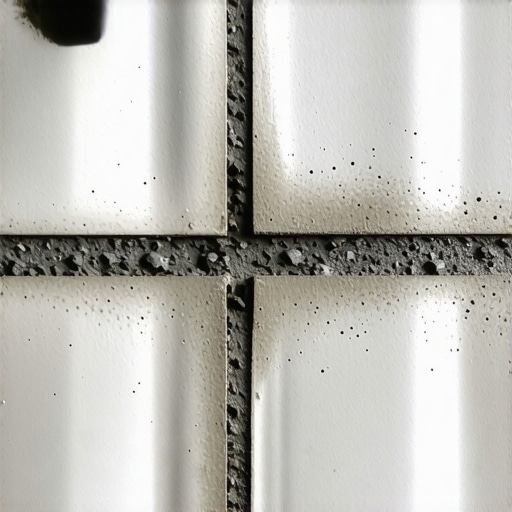
The advent of self-healing grout formulas represents a paradigm shift in tile maintenance. Embedded with microcapsules containing restorative sealants, these materials activate upon crack formation, releasing healing agents that seal micro-fissures without manual intervention. This revolutionary technology extends grout lifespan, maintains structural integrity, and ensures consistent moisture barriers, especially critical in high-humidity bathroom environments. If applied correctly, self-healing grout can dramatically reduce the frequency and complexity of repairs, facilitating a more resilient tiling system.
How do self-healing mechanisms respond to various types of grout damage?
Self-healing systems are designed to respond to cracks, micro-cracks, and minor deformations by releasing encapsulated sealants triggered by stress or damage. Larger fissures may require additional reinforcement, but for typical stresses encountered during daily use, these materials function effectively. Ongoing research at the Materials Science Institute highlights that the activation threshold varies depending on capsule size and distribution, optimizing responsiveness to specific damage types. This adaptive capability promises a future where grout can autonomously maintain its integrity, significantly reducing long-term maintenance expenses.
The Evolution of Grout Formulations: From Porous to Self-Healing Marvels
Traditional cementitious grouts, once the mainstay of tile installation, have increasingly given way to innovative composites that prioritize longevity and resilience. Modern advancements now feature nanocomposite sealants that not only resist water ingress but also adapt to micro-movements within the substrate, effectively preventing cracks before they propagate. Such materials are rooted in the principles of smart polymer science, integrating microencapsulated agents capable of self-repair upon mechanical or chemical stimuli, as documented in recent studies published by the Nature Scientific Reports.
Supercharging Sealant Technologies: The Nanoparticle Revolution
Embedding nanoparticles within sealants enhances their surface tension and improves bonding affinity with grout matrices. Specifically, silica and titanium dioxide nanoparticles create a formidable hydrophobic film that repels moisture while allowing vapor permeability—a critical factor in preventing mold and efflorescence. Advanced nanoparticle infusions also incorporate antimicrobial agents, dramatically reducing microbial colonization, which is a common vulnerability in high-humidity environments. This synergy of nanotechnology and bioactive compounds elevates grout performance beyond conventional limits, promising maintenance-free zones in the most challenging conditions.
Adaptation of Bio-Inspired Materials for Superior Moisture Management
Researchers are increasingly turning to nature for inspiration, developing bio-mimetic materials that emulate the water-repelling properties seen in lotus leaves or the self-sealing features of certain plant tissues. These innovations lead to the creation of superhydrophobic grout surfaces that actively shed water and prevent microbe adhesion. Implementing such coatings involves applying a thin nanoscale layer that chemically bonds to existing grout surfaces, transforming standard joints into active moisture barriers. This biomimicry-driven approach embodies the future of maintenance-free shower ecosystems, aligning durability with environmental sustainability.
What Expert Strategies Elevate Grout Self-Healing Capabilities?
Enhancing self-healing properties in grout mandates a multidisciplinary approach, combining material science, chemical engineering, and practical application techniques. Self-healing grout formulations now leverage capsule-based microencapsulation technologies, where healing agents like epoxy resins or urethane precursors are distributed uniformly within the matrix. Activation occurs through crack propagation or stress concentration points, prompting the release of these agents to seal fissures instantaneously. Ongoing research emphasizes optimizing capsule size, distribution, and trigger mechanisms to maximize repair efficiency without compromising the grout’s structural integrity. Institutions like the ScienceDirect Composites Journal provide exhaustive analyses of these innovations, guiding practitioners toward implementations that extend grout lifespan significantly.
Harnessing Digital Technologies for Precision in Grout Application
Precision application techniques, augmented by digital tools, are transforming tile installation into a high-accuracy science. Laser-guided alignment systems and 3D mapping software ensure optimal joint design, paving the way for uniform grout lines that resist cracking and moisture infiltration. Additionally, robotic application devices equipped with real-time feedback mechanisms can dispense precise quantities of grout and sealant, maintaining consistency across extensive surfaces. Such technological integration not only diminishes human error but also significantly improves the durability of the tile ecosystem, especially critical in environments subjected to thermal and mechanical stresses.
Upgrade Your Maintenance Arsenal with Smart Restoration Systems
Emerging restoration products leverage nanostructured composites and antimicrobial coatings to retrofit existing grout lines, transforming them into self-sustaining moisture-resistant barriers. These systems are engineered for compatibility with various grout formulations, facilitating seamless integration into existing installations. By employing advanced polymer blends that bond chemically with aged grout surfaces, homeowners and professionals can achieve near-original performance levels without invasive removal. Industry reports, such as those found in the SAGE Journals, underscore how these innovations reduce repair frequency and extend the aesthetic lifespan of tiled surfaces.
Take a Step Beyond Conventional Maintenance—Join the Forefront of Grout Innovation
Staying abreast of these technological and material breakthroughs empowers industry experts and dedicated homeowners to pioneer resilient tile environments. Participating in specialized training, attending industry conferences, and collaborating with research institutions accelerate the adoption of these cutting-edge solutions. Explore partnerships with manufacturers pioneering nanotech-enhanced grout systems, or consult with experts who can customize applications designed for your specific environmental challenges. Your proactive engagement today ensures your shower installation will outperform traditional standards in durability, aesthetics, and maintenance simplicity for decades to come.
Innovations in tile and grout technology are transforming bathroom renovation strategies, enabling experts to achieve unrivaled longevity in moist environments. From nano-engineered sealants to self-healing formulations, staying ahead of the curve offers both aesthetic and structural benefits.
Leverage Specially Formulated Grouts in High-Humidity Zones
Transitioning to epoxy or polyurethane-based grouts provides a formidable defense against water ingress and microbial growth, especially when combined with cutting-edge sealing techniques. This proactive approach minimizes repair frequency and enhances visual integrity over time.
Harness the Power of Technological Advancements to Prevent Crumbling
Applying nanotechnology-infused sealants and self-healing materials within grout lines yields remarkable resilience. These innovations not only detect and repair cracks autonomously but also resist chemical degradation, making them essential tools for professionals committed to durability.
Prioritize Precision in Installation to Forestall Future Damage
Meticulous substrate preparation, correct joint design, and expert application methods are foundational. Flexible movement joints and rapid-setting adhesives accommodate substrate movement, reducing stress on grout lines and preventing early failure.
Implement Routine Inspection and Maintenance for Long-Term Success
Regular, professional-grade inspections and timely re-sealing extend grout life significantly. Using advanced restoration products and bio-friendly cleaning solutions keeps grout lines pristine and functionally robust, even in the most demanding environments.
Expert Resources for Ongoing Mastery
- ScienceDirect Nanoengineering Journal: Pioneering research in grout self-healing and nanotechnology applications offers invaluable insights into future capabilities.
- International Tile Association (ITA): Setting industry standards and providing field-specific updates on material innovations enhances project outcomes.
- JSTOR Archives: Comprehensive studies on the efficacy of advanced grout formulations inform best practices and material selection.
Integrating These Concepts Elevates Professional Precision
Incorporating advanced materials like nano-sealants and self-healing grout not only fortifies your installations against moisture and cracking but also positions you at the vanguard of bathroom modernization. Embrace these innovations to deliver installations that stand the test of time and exceed client expectations. Want to make your next project a benchmark of durability? Explore our detailed guides and paving the way for unprecedented excellence in bathroom design and maintenance, ensuring each effort secures lasting beauty and resilience—discover more at our contact page.