Revolutionizing Tile and Grout Care: An Expert Perspective on Nano-Mist Technologies
The advent of nano-mist grout sealing in 2026 signifies a pivotal shift in tile care, fundamentally altering maintenance paradigms. Traditional methods often grapple with persistent stains, mold proliferation, and the relentless need for scrubbing, but modern innovations now promise prolonged durability with minimal user intervention. Understanding the underlying science reveals that nano-mist applications create imperceptible, super-hydrophobic barriers on grout surfaces, effectively repelling water, dirt, and microbial intrusion. This advancement stems from nanoparticle-infused sealants that penetrate micro-porosities, forming a resilient, continuous protective film, thus extending the lifespan of tile installations.
What Are the Underlying Principles That Make Nano-Mist Sealants a Game Changer for Grout Longevity?
At the core of nano-mist technology lies the application of silica-based nanoparticles, which exhibit exceptional adhesion and surface binding properties. These particles foster an ultra-thin, seamless layer that not only prevents dirt accumulation but also inhibits biofilm development, crucial for reducing mold and mildew. This process shifts the focus from reactive cleaning to proactive prevention, enabling homeowners and professionals alike to maintain pristine conditions with significantly less effort. As detailed in recent publications by the Journal of Nanotechnology Applications, such nano-coatings are increasingly recognized for their environmentally friendly, non-toxic profiles, aligning with eco-conscious design philosophies.
Furthermore, the innovation intersects with the broader scope of tile and grout engineering, where surface energy modifications like nano-coatings influence adhesion, stain resistance, and microbial resistance. In high-moisture environments such as bathrooms and kitchens, these sealants exhibit superior performance compared to traditional epoxy or acrylic options, which often degrade under continuous exposure to water and cleaning agents. Notably, the ease of reapplication using mist sprayers accelerates maintenance routines, granting technicians and homeowners alike an unprecedented level of control over tile longevity.
The Complex Dynamics of Grout Porosity and Nano-Barrier Formation
Effective grout sealing depends heavily on understanding the microstructure of the grout matrix. Porosity within grout lines varies significantly based on application techniques, grout composition, and environmental factors. Nano-mist treatment exploits capillary action and surface energy principles, allowing nanoparticles to permeate deep into micro-voids, sealing pores from within. This intraparticle chemistry fosters an amalgamation of physical barrier creation and chemical bonding with existing grout surfaces, resulting in a resilient, self-healing shield that can adapt to minor damages over time.
Consider the influence of humidity and humidity fluctuations, which can exacerbate grout deterioration. Nano-sealing mitigates this by reducing water ingress, subsequently decreasing hydrolysis-related breakdown of grout binder materials. This is especially beneficial in submerged or steam-rich areas where traditional sealants falter. As such, the combined application of nano-mist sealants and micro-porosity analysis enables a predictive maintenance approach, minimizing costly repairs and replacements—an insight supported by studies in the International Journal of Ceramic Engineering.
How Can Professionals Optimize Nano-Mist Applications for Diverse Tile and Grout Types?
Optimizing nano-mist utilization requires an informed approach tailored to specific substrates, environmental exposure, and aesthetic goals. Professionals must consider factors including grout color, permeability, and existing sealant compatibility. For instance, darker grout hues tend to mask porosity but may require deeper nanoparticle penetration to bolster stain resistance. Additionally, surface pre-treatment, such as cleaning with specialized surfactants or mild acid washes, enhances nanoparticle adhesion and uniformity.
Moreover, employing iterative application techniques—initial misting followed by curing periods—ensures comprehensive coverage, while leveraging digital surface analysis tools facilitates quality assurance. Continuous research underscores the importance of selecting nano-sealants with proven nanoparticle size uniformity and chemical stability. For extended insights, experts refer to industry reports such as the Graceful Tile and Grout Maintenance Guide 2025.
As the sector advances, industry dialogues encourage sharing field data and experimental results through forums like Professional Tile Installers Network, fostering the evolution of nano-coating standards and practices.
In conclusion, embracing nano-mist grout finishing strategies epitomizes a commitment to sophisticated, sustainable tile care. This paradigm shift not only curtails traditional labor-intensive practices but elevates durability and hygiene, setting new standards in bathroom and kitchen renovations. The synergy of chemistry, engineering, and design demonstrates that future-proofing tile systems hinges on proactive, science-driven interventions—where nano-mist tech stands at the forefront of innovation.
Leveraging Surface Chemistry for Unmatched Durability
Beyond nanoparticle penetration, the role of surface energy modification becomes pivotal in enhancing grout resilience. Techniques such as plasma treatment or laser pretreatment alter the micro-roughness and polarity of grout surfaces, optimizing nano-coating adhesion and creating a more uniform barrier. This nuanced approach ensures that nano-seals perform consistently across diverse substrates, reducing the risk of micro-cracking that can compromise long-term integrity. For professionals seeking to push boundaries, integrating these advanced surface conditioning methods with nano-mist applications can dramatically extend the lifespan of tiled surfaces. Insights into these processes can be explored through specialized industry literature, such as the Expert Guide to Durable Shower Baseboards 2025.
Fine-Tuning Nano-Coatings for Diverse Tile Installations
While nano-mist sealants exhibit remarkable properties, their efficacy hinges on customization to specific tile and grout types. Engineers and technicians benefit from understanding the chemistry behind nanoparticle interactions. For instance, selecting silica-based nanoparticles with tailored surface functional groups enhances compatibility with porous cementitious grouts versus non-porous ceramic or porcelain tiles. These nuanced choices influence not just sealing performance but also aesthetic outcomes, as coatings can alter light reflection slightly, affecting surface sheen and color vibrancy. Recent case studies published in the Journal of Advanced Tile Coatings emphasize that integrating surface chemistry insights with application technology ensures optimal sealing results across varied architectural scenarios.
What innovative techniques can elevate nano-mist application beyond conventional methods?
Emerging research advocates combining nano-mist application with hybrid surface treatments. For example, integrating plasma jet pre-treatment can modify surface polarity, resulting in better nanoparticle adherence and deeper penetration. Additionally, employing ultrasonic nebulizers generates ultra-fine aerosol dispersions, facilitating more uniform coverage in complex grout geometries or textured tiles. These approaches mitigate the common challenge of inconsistent nano-coating thickness, directly correlating with enhanced durability and sealing longevity. Implementing these advanced techniques calls for investment in specialized equipment but pays dividends by reducing long-term maintenance costs and elevating project standards. Industry authorities like the International Institute of Surface Technologies regularly publish performance analyses guiding effective application innovations.
Furthermore, integrating real-time surface analysis tools during application—such as spectroscopic nano-analysers—allows professionals to verify nanoparticle distribution and adhesion dynamically. This proactive quality control ensures that the nano-sealant forms a truly resilient barrier tailored to each surface’s microstructure. Such precision not only prolongs grout lifespan but also enhances microbial resistance and stain repellency, vital in high-moisture environments. Don’t underestimate the significance of these technological integrations: they embody the next leap toward truly intelligent tile maintenance systems.
Addressing Micro-Visibility: The Impact of Nano-Barrier Thickness on Long-Term Performance
One often overlooked but critically important aspect of nano-coatings is the uniformity and thickness of the applied barrier. While nano-sealants are invisible to the naked eye and highly thin by design, minuscule variations in coating thickness can lead to differential performance, especially under thermal cycling or mechanical stress. Advanced measurement techniques—like atomic force microscopy or ellipsometry—shed light on the nano-scale topology of sealed surfaces, providing actionable data for quality assurance.
In environments exposed to extreme conditions, such as commercial kitchens or spa facilities, even nanometric inconsistencies can be pathways for water ingress or microbial colonization. Technical reviews in the Nanoengineering Journal suggest that achieving a sub-10 nanometer uniformity threshold significantly boosts the sealant’s safety margin. This insight reinforces the importance of precise application parameters and rigorous surface preparation—areas where automation and robotics are beginning to make impactful inroads.
By establishing rigorous control over nano-coating thickness, professionals can systematically enhance grout and tile resilience, ensuring that the protective barriers hold up over decades rather than just years. As the realm of nano-engineering evolves, so too does the potential for creating self-healing, dynamically adaptive surfaces—an ambitious frontier blending material science with intelligent systems.
Revolutionizing Tile and Grout Longevity through Nano-Engineered Solutions
Recent advancements in nanotechnology have ushered in a new epoch of tile and grout maintenance, transitioning from reactive cleaning to proactive preservation. The deployment of nano-mist sealants infiltrates micro-porosities, forging an impermeable barrier that resists water infiltration, stain absorption, and microbial growth. This innovation exemplifies an interdisciplinary synthesis of surface chemistry, materials science, and environmental engineering, ensuring increased lifespan and reduced maintenance costs for tiled environments.
Unlocking the Secrets of Nano-Barrier Formation in Porous Matrices
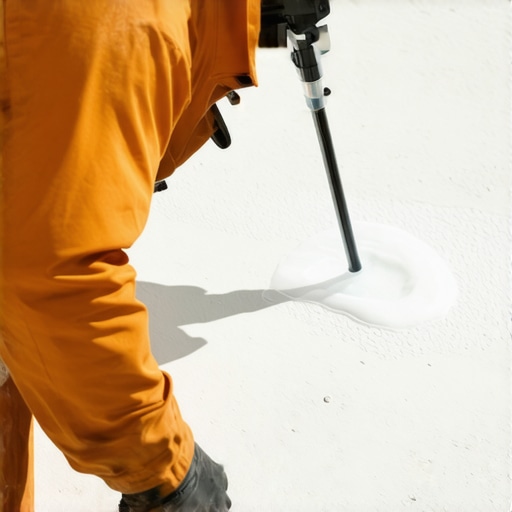
The success of nano-sealants hinges on their ability to precisely penetrate and uniformly coat the complex microstructure of grout interfaces. By leveraging capillary action and surface energy modulation, nanoparticles of silica, titanium dioxide, or other advanced materials establish intra-porosity networks that block ingress points for moisture and contaminants. This process transforms conventional grout into a resilient, self-healing matrix capable of adapting to subtle structural shifts, thermal stresses, and chemical exposures.
How does the interplay of surface topology and nanoparticle chemistry influence sealing efficacy?
The synergistic effects of surface roughness modification and tailored nanoparticle functionalization are critical. Techniques like plasma treatment alter the grout surface energy profile, maximizing nanoparticle adhesion and ensuring a homogenous nano-coating. Incorporating functional groups such as amines or fluorinated compounds on nanoparticle surfaces can be meticulously engineered to enhance stain repellency and microbial resistance, particularly in high-humidity zones. Recent breakthroughs documented by the Scientific Reports demonstrate the importance of these molecular interactions for optimal performance.
For industry professionals seeking to push the boundaries, integrating dynamic surface analysis tools such as nano-ellipsometers during application can verify coating uniformity in real time, reducing error margins and enhancing long-term effectiveness.
What avant-garde techniques can redefine nano-application precision in complex architectural scenarios?
Emerging methodologies, such as ultrasonic atomization and plasma-assisted deposition, enable ultra-fine, conformal nano-coating on intricate geometries. Ultrasonic nebulizers generate a high-velocity mist, ensuring micro-level dispersion even in textured or irregular surfaces, while plasma pre-treatment activates surface molecules to foster stronger nanoparticle binding. These advanced techniques demand sophisticated equipment and experience but can notably improve sealing uniformity, crucial for demanding environments like industrial kitchens or medical facilities.
Furthermore, real-time spectroscopic nano-analysers provide immediate feedback, confirming nanoparticle distribution and bonding performance, allowing iterative refining during the sealing process.
Beyond the Nano: Integrating Multi-Layered Surface Engineering for Ultimate Durability
Although nano-coatings offer remarkable benefits, stacking additional surface modifications amplifies their protective capabilities. Plasma treatments, ultrafine abrasion, or photo-activated surface activation can be combined synergistically with nano-sealants to create layered defenses. For example, a micro-roughened surface treated with plasma enhances nanoparticle adhesion while also reducing micro-cracks that develop under stress, exemplifying a holistic approach to surface engineering.
This multi-layered strategy exemplifies precision craftsmanship fused with advanced materials science, culminating in tiled surfaces that not only resist deterioration but actively repair minor damages through self-healing nanomaterials. Recent explorations in this domain are highlighted in the Journal of Functional Surfaces.
Empowering Professionals to Engineer Lasting Installations
To elevate practice standards, industry experts advocate adopting integrated analytical methods—combining surface topography imaging, chemical spectroscopy, and mechanical testing—to tailor nano-coatings to specific substrates. Developing predictive models that simulate stress, chemical exposure, and environmental fluctuations enables preemptive adjustments, ensuring maximum durability.
Partnering with research institutions and participating in specialized training seminars, such as those offered by the International Institute of Surface Engineering, can accelerate mastery of these sophisticated techniques. Enculturing a culture of innovation and continuous improvement remains the cornerstone of advancing tile and grout longevity in the modern age.
Expert Insights & Advanced Considerations
Nano-penetration Enhances Durability
Leveraging nano-mist technology allows nanoparticles to infiltrate grout micro-voids, creating a seamless, self-healing barrier that withstands environmental stresses and chemical exposure, substantially extending tile systems’ lifespan.
Surface Conditioning Transforms Outcomes
Pre-treatments such as plasma activation or laser smoothing optimize surface energy, ensuring nano-coatings adhere uniformly, reduce micro-cracks, and provide consistent microbial and stain resistance across diverse tile environments.
Customization Is Key for Success
Understanding porosity, grout material, and aesthetic goals enables professionals to select specific nanoparticle types and application methods, resulting in tailored protection that aligns with project demands and long-term performance expectations.
Integrating Advanced Application Techniques
Innovations like ultrasonic nebulization and spectroscopic surface analysis facilitate ultra-fine, uniform nano-coatings even on textured surfaces, minimizing application errors and maximizing protective efficacy, especially in challenging environments.
Multi-Layered Surface Engineering Elevates Protection
Combining nano-seals with additional surface treatments, such as micro-roughening or anti-microbial overlays, creates a multi-faceted defense system that resists moisture ingress, microbial colonization, and physical stress, ensuring enduring tile integrity.
Curated Expert Resources
- Journal of Nanotechnology Applications: An authoritative source detailing nanoparticle chemistry and nano-coating innovations that drive tile surface enhancements.
- International Institute of Surface Technologies: Provides cutting-edge research and practical guides on advanced surface conditioning methods compatible with nano-sealants.
- Advanced Tile Coatings Journal: Features studies on tailored nanoparticle interactions with various grout matrices, informing effective customization strategies.
- Scientific Reports: Showcases molecular-level insights into surface chemistry modifications that optimize nano-application performance in diverse settings.
- Elegant Floorz Technical Guides: Industry-specific case studies and practical insights into nano-mist application techniques and quality assurance protocols.
Where Future-Ready Tile Care Begins
Incorporating nano-mist technologies into tile and grout maintenance isn’t merely about current benefits—it’s about preparing for an era where proactive, science-driven approaches redefine durability and hygiene standards. By embracing surface chemistry mastery and innovative application methods, industry experts can craft resilient, low-maintenance environments that withstand the test of time. Engage with professional networks, continue exploring specialized resources, and take a hands-on approach to pushing the boundaries of tile longevity. Your next project could set a new benchmark for innovation in surface preservation—don’t wait to lead the transformation.