
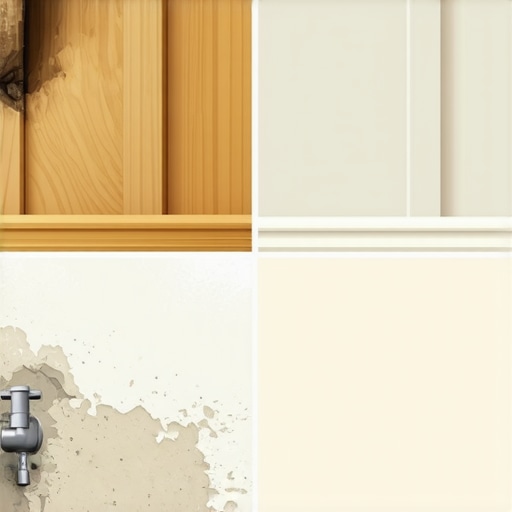
I have spent twenty five years on my knees with a moisture meter and a level. I have seen it all. I once walked into a luxury bathroom where the homeowner spent five figures on site finished white oak floors and matching baseboards. Within six months, those expensive mahogany baseboards were literally sprouting mushrooms. The installer did not account for the sheer volume of water vapor that a high pressure shower head produces. It was a hardwood heartbreak that could have been avoided with a little respect for the laws of physics and a basic understanding of capillary action. Most guys think a coat of semi gloss paint makes wood waterproof. It does not. Wood is a living, breathing material that wants to reach equilibrium with its environment. In a bathroom, that environment is a swamp. If you are building a bathroom or renovating one, you need to stop thinking about what looks pretty and start thinking about the chemistry of your trim. Your baseboards are the front line of defense against subfloor rot and drywall failure. When they fail, they do not just look bad; they compromise the structural integrity of the entire room. We are going to look at why wood is a liability in wet zones and what materials actually stand up to the test of time and steam.
The chemistry of cellular decay in wet zones
Wood baseboards fail in bathrooms because natural cellulose fibers absorb airborne water molecules and liquid splashes through capillary action. This process causes the wood to swell, distorting the cell walls and eventually leading to rot or fungal growth. Wood is inherently hydroscopic, meaning it wants to be at equilibrium with its environment, which is impossible in a high humidity shower area. When the wood fibers expand, they push against the paint or finish. Over time, this pressure causes the finish to crack at the joints. Once the seal is broken, water finds a direct path into the heart of the trim. This is why you see peeling paint and black mold at the bottom of the boards. It is not just a surface issue; it is a structural failure of the material itself. The lignin that holds wood cells together breaks down when saturated, turning your expensive molding into a soft, mushy mess. If you are dealing with showers that see daily use, wood is simply the wrong tool for the job. You can find more about high performance bathroom setups at showers that wow modern designs for 2025.
The myth of the waterproof paint barrier
Paint is not a structural waterproofing membrane. Homeowners believe that a thick layer of paint will protect wood from moisture, but paint is porous on a microscopic level. Even the best oil based enamels will eventually fail if the wood beneath them is expanding and contracting. Every nail hole and every mitered corner is a vulnerability. When you nail a wood baseboard into the wall, you are creating a series of tiny tunnels that lead straight to the raw wood. In a bathroom, steam penetrates these holes and begins the rot from the inside out. I have pulled off baseboards that looked fine on the outside, only to find the back side was a black, fuzzy colony of mold. This mold can spread to your drywall and even your studs. It is a silent killer of bathroom longevity. You are much better off using materials that do not rely on a thin film of paint for their survival. You can see better design options at chic baseboard designs that transform rooms in 2025.
“A floor is only as good as the subfloor beneath it; deflection is the enemy of every joint.” – Master Flooring Axiom
Why your subfloor is lying to you about humidity
The area where the wall meets the floor is a high stress zone for any building. Subfloors often act as a reservoir for moisture, pulling humidity from the air or from minor leaks and holding it against the bottom of your baseboards. If you have a concrete slab, it is constantly breathing out moisture vapor. If you have a plywood subfloor, it can trap spills and humidity under your flooring material. Wood baseboards sit right in this damp zone. They act like a wick, drawing moisture up from the floor level into the wall cavity. This is why I always insist on a 1/8 inch gap between the bottom of the baseboard and the finished floor. Most installers slam the trim right onto the tile, but that is a recipe for disaster. That gap, when filled with a high quality silicone sealant, creates a break that prevents capillary action from ruining your trim. If you want to see how to properly handle your floor transitions, check out baseboards makeover ideas to elevate your space.
Medium density fiberboard is a sponge in disguise
MDF is the worst choice for a bathroom. MDF consists of compressed wood fibers and glue, which react to moisture by swelling permanently and losing all structural rigidity. Unlike solid wood, which might shrink back down when it dries, MDF stays swollen once it gets wet. It loses its shape and the edges become fuzzy. If a toilet overflows or a shower leaks, MDF baseboards are garbage instantly. I have seen builders use MDF in bathrooms to save a few pennies, and it always ends in a phone call to me two years later. It is a cheap shortcut that leads to expensive repairs. If you are looking for long term value, stay away from fiberboard in any room where you might find a puddle of water.
PVC and the polymer revolution for wet walls
PVC baseboards are the gold standard for high moisture environments. Polyvinyl chloride is a thermoplastic polymer that is completely impervious to water, rot, and insects. You could literally submerge a PVC baseboard in a bucket of water for a decade and it would not change shape or grow mold. Modern PVC moldings are designed to look exactly like wood. They can be cut with standard saw blades, nailed just like pine, and painted to match your walls. The difference is the peace of mind. When you install PVC trim, you are installing a lifetime product. It is the only material I recommend for kids’ bathrooms or high traffic showers. It handles the humidity of a small, steamy room without any of the drama of natural wood.
Tile baseboards as the ultimate structural solution
If you want a floor that will outlast the house, go with a tile baseboard. Tile baseboards are created by cutting strips of the floor tile and installing them vertically along the wall, creating a continuous waterproof surface. This is the most professional way to handle a bathroom perimeter. Because the tile and the grout are designed for wet environments, you never have to worry about rot or peeling paint. It creates a cohesive look that makes small bathrooms feel larger. I often suggest this for people looking at showers with a style trendy ideas for small bathrooms. The transition from floor to wall is handled with a bead of silicone that matches the grout color, providing a flexible, waterproof seal that handles house settling without cracking.
“The integrity of a tile installation depends entirely on the management of moisture and movement at the perimeter.” – Master Flooring Axiom
The 1/8 inch gap that saves your drywall
One of the biggest mistakes I see is running baseboards tight to the floor. Maintaining a small expansion gap of approximately 1/8 inch between the trim and the floor prevents water from being trapped against the wall. This gap should be filled with 100 percent silicone caulk, never grout. Grout is rigid and will crack as the house shifts. Silicone is flexible and waterproof. It creates a gasket that keeps water from getting under your floor or behind your walls. This is especially important in showers where water is frequently on the floor. If you need to fix old, cracked lines, you can learn how to refresh grout without replacing it or look into grout restoration secrets for long lasting results.
Comparative analysis of moisture stable trim materials
| Material | Moisture Resistance | Durability | Installation Difficulty | Relative Cost |
|---|---|---|---|---|
| Solid Wood | Low | Medium | Moderate | High |
| MDF | Zero | Low | Easy | Low |
| PVC | High | High | Easy | Medium |
| Ceramic Tile | High | High | Hard | High |
| Natural Stone | Medium/High | High | Hard | Very High |
A step by step protocol for moisture proofing transitions
If you are replacing your baseboards, follow this checklist to ensure you do not have to do it again in five years. Precision matters here. The goal is to create a barrier that water cannot penetrate even during a flood event.
- Remove all old wood or MDF trim and inspect the drywall for mold.
- Clean the floor edge and remove any old adhesive or caulk.
- Cut your new PVC or tile baseboards to fit the perimeter.
- Apply a bead of waterproof adhesive to the back of the trim.
- Leave a 1/8 inch gap at the bottom using spacers.
- Secure the trim and fill all nail holes with exterior grade filler.
- Apply a high quality silicone sealant to the bottom gap and top edge.
- Wipe the joints clean to ensure a smooth, professional finish.
Proper maintenance is also key to keeping these areas clean. You should follow tile cleaning tips for a sparkling bathroom in 2025 to keep your new installation looking fresh. Using eco friendly tile solutions for sustainable homes in 2025 is also a great way to ensure you are using safe products in your home.
Professional secrets for a lasting bathroom perimeter
The secret to a great bathroom is not the tile you choose, but the stuff you do not see. It is the silicone behind the trim, the moisture barrier behind the drywall, and the decision to skip wood in favor of inorganic materials. I have seen guys try to use pressure treated wood for baseboards, which is a terrible idea because the chemicals can leach out and ruin your paint. Stick to PVC or tile. If you are unsure about what material works best for your specific layout, do not hesitate to reach out to a pro via contact us. Always check the manufacturer specifications for acclimation times if you are using a composite material. Even PVC can expand and contract with extreme temperature changes. By choosing a material that is naturally resistant to the stresses of a bathroom, you are protecting your home and your health from the hidden dangers of mold and rot. Take your time, do not skip the silicone, and respect the water. It always wins eventually if you do not plan for it.
Comments
One response to “Why Wood Baseboards Fail in Bathrooms and What to Use Instead”
This post really hits home for me. I recently tackled a bathroom renovation where I initially wanted to use traditional wood baseboards for aesthetic reasons. After reading your insights, I realize how crucial it is to prioritize moisture resistance in humid environments. I’ve seen firsthand how MDF baseboards deteriorate quickly when exposed to even minor leaks, and I imagine the situation only worsens with daily steam exposure. PVC sounds like a game-changer for durability and peace of mind. I’m also intrigued by the tile baseboards—has anyone here tried installing them DIY? I wonder if it’s feasible for a homeowner with basic skills, or if it really requires a professional touch to get that seamless, waterproof look. Overall, this article clarifies why “looks good” can be a costly oversight in wet zones. It makes me think, what are some creative ways to incorporate moisture-resistant trim into existing bathrooms without stripping everything out? Would love to hear everyone’s experiences and tips!