
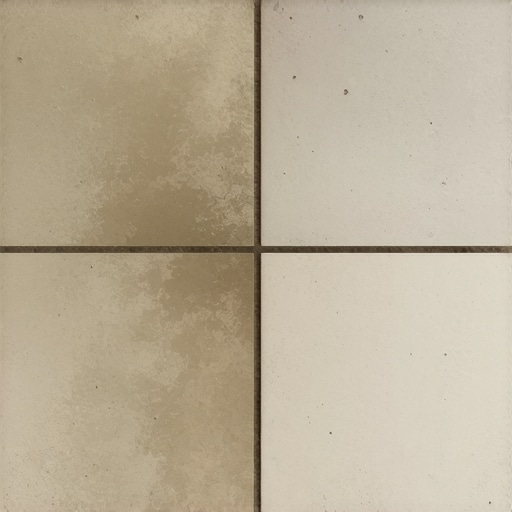
The subfloor secret that precedes the grout
Matching new grout to aged joints requires a deep understanding of cementitious hydration, pigment oxidation, and subfloor stability to ensure the repair does not fail or stand out as a visual scar. Most guys skip the leveling compound. They think the underlayment will hide the dip. It won’t. I spent three days grinding concrete on a job last month just so the floor wouldn’t click like a castanet. That job taught me that even the most perfect grout match is worthless if the subfloor is moving. If the subfloor deflects, your new grout will crack within weeks, making all your color matching efforts a total waste of time. When you are looking at ten year old grout, you are looking at a geological record of every cleaning chemical and footstep that has crossed that threshold. You cannot simply buy a bag of the same brand and expect it to work. The dye lots change every six months, and the atmospheric conditions in your home have fundamentally altered the chemical structure of the original material. I have spent twenty five years on my knees with a moisture meter and a level, and I can tell you that grout is a living thing. It breathes, it absorbs, and it fades. To get a match, you have to think like a chemist, not a decorator. You need to account for the porosity of the tile and the exact mineral content of the local water used for mixing. It is a grueling process that demands patience and a technical eye.
The chemistry of why your grout changed color
Grout discoloration occurs because calcium hydroxide migrates to the surface through capillary action, creating a white film known as efflorescence. Over a decade, this process, combined with UV exposure, breaks down the organic pigments in the grout. The dirt that accumulates is not just on the surface. It is embedded in the crystalline structure of the cement. When you try to match a new patch to this, you are fighting ten years of environmental physics. You must first perform a deep chemical cleaning to reveal the actual color of the surviving grout. If you don’t clean it, you are matching your new grout to a layer of grease and mop water. I always recommend checking out tile cleaning tips for a sparkling bathroom to understand the level of decontamination required. Once the surface is clean, you will often find the color is two shades lighter than you thought. The molecular weight of the pigments used in modern grouts is often different from what was available a decade ago, meaning the way they reflect light will never be identical. This is why we use test boards. We never mix a full bag and just hope for the best. We mix small, gram-measured samples and let them cure for a full seventy two hours. That is the only way to see the true final state of the hydration process.
“A floor is only as good as the subfloor beneath it; deflection is the enemy of every joint.” – Master Flooring Axiom
Why the original color code is now a lie
Original manufacturer color codes are often unreliable for aged grout repairs because the polymer binders in the original mix have likely yellowed or degraded. Even if you found a leftover bag in the garage from 2015, the moisture in the air has probably already started the shelf-life degradation process. This is why I tell people to stop looking at the labels and start looking at the sand. The sand in grout makes up the majority of its volume. If the original grout used a coarse silica sand and your new patch uses a fine marble dust, the refractive index will be different. Under the LED lights of a modern bathroom, that difference will look like a glaring mistake. For those looking for long-term solutions, reading up on grout restoration secrets for long lasting results is a better path than just buying a random bag of home center mix. You also have to consider the water-to-powder ratio. A wetter mix will cure lighter because the escaping water leaves more microscopic voids that scatter light. A drier mix stays darker. I measure my water with a syringe to ensure consistency. If you are off by even a few milliliters, the color shift will be visible to the naked eye. This is not a task for the lazy installer who just eyeballs the bucket.
The physics of sand and light refraction
Sand particles in cementitious grout act as prisms that determine how ambient light interacts with the pigmented cement paste. When you are matching old grout, you are trying to mimic the way light bounces off ten years of wear. The edges of the sand in the old grout have likely been smoothed by foot traffic and cleaning. New grout has sharp, jagged sand that reflects light more intensely. This creates a sheen mismatch that is often mistaken for a color mismatch. To combat this, I sometimes have to blend different types of grout to get the texture right. I might mix a sanded grout with a non-sanded version to hit that middle ground of smoothness. You should also look at how to refresh grout without replacing it if the structural integrity of the old joints is still high. If the old grout is crumbling, the matching process is the least of your worries. You have a subfloor problem or a moisture intrusion issue. In showers, this is common. The water behind the tile saturates the grout from the back, causing a permanent darkening that no cleaning can fix. You have to solve the leak before you ever pick up a grout float.
“Cement hydration is a slow-motion chemical reaction; the color you see at one hour is never the color you see at one week.” – Master Flooring Axiom
Preparing the joint for a surgical patch
Proper joint preparation involves mechanical removal of at least one eighth inch of the old grout to create a stable bonding surface. You cannot just smear new grout over the old surface like peanut butter. It will peel off. I use a diamond-tipped oscillating blade to carve out the old material without chipping the tile. This is dusty, miserable work. It smells like burnt stone and old soap. But if you don’t get deep enough, the new grout doesn’t have the mass to cure properly. It will dry too fast and turn into a chalky mess. While you are working on the floor, it is a good time to inspect the transitions. I often see beautiful tile jobs ruined by cheap trim. You might want to explore baseboards makeover ideas or chic baseboard designs to make sure the whole perimeter looks as good as your new grout lines. After the mechanical removal, you must vacuum the joints with a HEPA filter. Even a tiny bit of dust will act as a bond-breaker. I then wipe the joints with a damp sponge to prevent the dry tile from sucking the moisture out of my new grout mix too quickly. This is the zooming detail that separates a master from a handyman.
How hydration levels dictate the final shade
Hydration is the chemical reaction between water and portland cement that creates calcium silicate hydrate, the glue that holds the grout together. The rate at which this water evaporates determines the final pigment density at the surface. In a high humidity environment, the grout stays wet longer and cures darker. In a dry house, it flashes off and leaves a lighter, more pastel finish. If you are matching grout in a shower, you need to be aware of this. I often tell homeowners to keep the bathroom door closed and even put a piece of plastic over the repair to slow down the drying. This is especially true for showers that wow where large format tiles create thin, deep joints. Also, consider the water source. If you have hard water with high mineral content, those minerals will end up in your grout. I only use distilled water for matching. It eliminates the variable of iron or calcium staining the mix from the inside out. It sounds like overkill until you see a brown streak in your white grout because of the well water you used to mix the bucket.
| Factor | Effect on Grout Color | Restoration Strategy |
|---|---|---|
| UV Exposure | Fading of organic pigments | Use inorganic oxide pigments |
| Water Ratio | Lightens or darkens the cure | Measure water by weight, not volume |
| Traffic | Embedded carbon particulates | Deep acid clean before matching |
| Cleaning Agents | Chemical bleaching of dyes | Use pH neutral cleaners only |
| Subfloor Flex | Cracking and shadowing | Reinforce subfloor before patching |
The secret of using grout colorants for a perfect match
Grout colorants are epoxy-based stains that can be applied over existing grout to create a uniform appearance across old and new sections. When a physical match is impossible due to the age of the floor, colorants are the professional’s secret weapon. They don’t just sit on top; they soak into the pores and seal the grout. This is often the best choice for showers with a style where you want a consistent look but don’t want to rip out all the tile. The trick is to find a colorant that is one shade darker than your goal. These products tend to dry slightly lighter than they appear in the bottle. I apply them with a toothbrush, working the pigment into the grain of the grout. Once it’s done, the floor is essentially waterproofed. It stops the cycle of staining and makes the ten year old floor look like it was laid yesterday. It is a tedious process, but it beats the heartbreak of a mismatched patch that looks like a stripe of the wrong paint on a wall.
Mastering the light test on your samples
Light testing involves evaluating cured grout samples under multiple Kelvin temperatures to ensure the metamerism does not cause the color to shift significantly. A match that looks perfect under your work lights might look purple under the homeowner’s 2700k warm bulbs. I always bring a mobile lighting kit that can simulate different times of day. You have to wait at least twenty four hours before you make a judgment. Grout always looks darker when it is wet. It is the most common mistake rookies make. They see the wet mud in the bucket and think it’s too dark, so they add more powder. Then, when it dries, it looks like white chalk. Trust the chemistry. Follow the instructions. And for the love of the craft, don’t use too much water during the cleanup. If you soak the joints while you are sponging off the haze, you will wash the pigment right out of the top layer of the grout. This creates a blotchy, faded look that is impossible to fix without starting over. If you’re looking for more sustainable options during a full remodel, check eco-friendly tile solutions for the next project.
- Deep clean the existing grout with a professional-grade alkaline cleaner.
- Mechanically remove the top layer of old grout using an oscillating tool.
- Mix several test batches using gram scales and distilled water.
- Apply samples to a hidden area or a separate scrap tile board.
- Allow samples to cure for a full 72 hours before comparing.
- Evaluate the match under morning, afternoon, and artificial light.
- Seal the entire floor once the patch is complete to unify the sheen.