
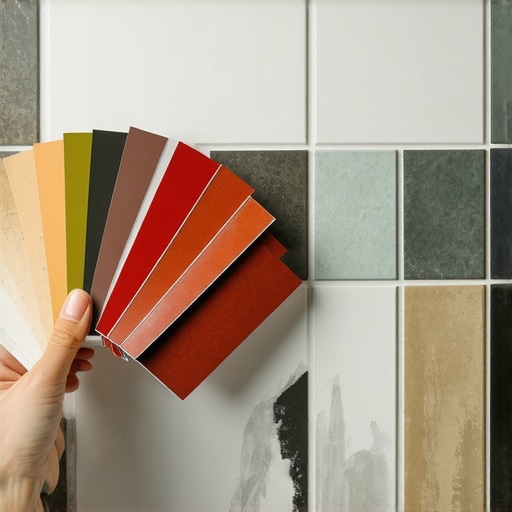
Most guys skip the leveling compound. They think the underlayment will hide the dip. It won’t. I spent three days grinding concrete on a job last month just so the floor wouldn’t click like a castanet. This fundamental failure in prep is why so many tile jobs fail early. When I walk into a bathroom where the owner wants to match new grout to old, discolored lines, I do not just look at the color. I look at the structural integrity of the installation. If the subfloor is flexing, no amount of color matching will save your showers or tile floors from cracking again. Most people view grout as a cosmetic filler. It is actually a structural component that manages the load distribution and moisture migration between tiles.
The ghost in the expansion gap
Matching new grout to old lines requires a deep understanding of pigment oxidation, efflorescence, and structural deflection. You must first identify if the existing discoloration is a result of surface dirt or chemical leaching from the concrete slab. Success depends on chemical analysis and precision cleaning. I have seen countless $20,000 tile jobs ruined because someone used a cheap premixed bucket of grout that did not account for the porosity of the existing material. You have to understand that grout is essentially a porous cementitious matrix. Over time, that matrix absorbs minerals from tap water, oils from skin, and polymers from cleaning agents. This changes the refractive index of the surface. If you simply buy the same color code from the store ten years later, it will not match. The original color has undergone a decade of UV degradation and carbonation.
“A floor is only as good as the subfloor beneath it; deflection is the enemy of every joint.” – Master Flooring Axiom
Why your subfloor is lying to you
Subfloor stability determines the longevity of grout lines and the success of any restoration project. If your joists are spaced too far apart, the deflection will cause the grout to powder and discolor prematurely. You must measure the L/360 rating before attempting a repair. When the floor moves, the grout cracks. Those microscopic cracks collect dirt and moisture, leading to the discoloration you are trying to match. In my 25 years, I have found that the bond strength of the thin-set often dictates how the grout ages. If you are working in a damp environment like Seattle or Houston, the vapor drive coming through the subfloor can push minerals into the grout, creating efflorescence. This white, powdery substance is not just an eyesore. It is a sign of moisture transport that must be addressed before you even think about matching colors. You should consider grout restoration secrets for long lasting results to ensure the repair holds.
The chemistry of pigment degradation
Grout pigments are often composed of iron oxides or synthetic phthalocyanines that react differently to pH-imbalanced cleaners. Acidic cleaners like vinegar will etch the calcium carbonate in the grout, leaving the pigment particles exposed and vulnerable. This creates a distorted color profile. To match this, you cannot use standard color charts. You need to create a test strip. I always tell clients that grout is a living material. It breathes. When you apply new grout next to old, the hydration rate will differ. The old grout is dry and thirsty. It will suck the moisture out of the new grout instantly, causing the new grout to cure too fast and turn a lighter shade. This is why you must pre-hydrate the old tile edges. You are managing the interfacial transition zone where the new molecules meet the old ones. If you fail here, the new joint will simply pop out within a year. For more on maintaining the look, check out tile cleaning tips for a sparkling bathroom in 2025.
| Grout Type | Porosity Level | Pigment Stability | Best Use Case |
|---|---|---|---|
| Sanded Cement | High | Moderate | Joints wider than 1/8 inch |
| Unsanded Cement | Very High | Low | Polished stone, narrow joints |
| Epoxy Grout | Zero | Extreme | Showers, high-traffic areas |
| High-Performance | Low | High | Commercial kitchens, baths |
Sampling against the reality of shadows
Color matching is an optical illusion that depends on ambient lighting and the angle of the tile bevel. You must evaluate your grout samples under the exact Kelvin temperature of the room’s LED bulbs. A color that looks perfect under 5000K daylight will look yellow and dingy under 2700K warm light. I always mix three different test batches and let them cure for 72 hours. Grout always looks darker when it is wet. Do not make the mistake of choosing a color while the mix is in the bucket. The physics of evaporation will change the final result. You also have to consider the baseboards. If you are matching grout near the perimeter, the shadow gap created by the baseboards will make the grout appear darker than it is in the center of the room. This is a common trap for amateurs. Take a look at chic baseboard designs that transform rooms in 2025 to see how trim impacts your flooring visuals.
The 1/8 inch that ruins everything
Grout joint width influences how light refracts off the pigment particles and how the human eye perceives color. A wider joint has more surface area for oxidative stress. If your original installer used a 1/8 inch spacer but the tiles have rectified edges, the depth of the joint will be shallow. This means the volume-to-surface-area ratio is low, leading to faster color loss. When I am matching these thin lines, I use a magnifying glass to check for hairline fractures. If the grout is failing structurally, matching the color is like painting a sinking ship. You have to scrape out at least two-thirds of the depth of the old grout to give the new material a mechanical bond. Anything less is just a smear coat that will peel off. I have spent decades seeing showers fail because guys tried to grout over old grout. It never works. You should learn how to refresh grout without replacing it properly before starting.
- Clean the old joints with an alkaline, non-acidic solution.
- Remove at least 3mm of old grout depth for mechanical adhesion.
- Pre-hydrate the existing tile edges to prevent flash-drying.
- Match the grout brand to ensure the chemical base is compatible.
- Always use distilled water for mixing to avoid mineral staining.
Regional humidity and the polymer bond
Atmospheric conditions in your specific geographic region will dictate the evaporation rate of the hydration water in your grout mix. In Phoenix, the low humidity will cause the grout to desiccate before the chemical bond is fully formed. This leads to a chalky, pale finish that will never match the original. Conversely, in the swampy humidity of Florida, the grout may stay wet too long, allowing polymers to migrate to the surface and create a shiny, dark film. You have to adjust your water-to-powder ratio based on the hygrometric state of your home. I always carry a hygrometer in my kit. If the ambient humidity is above 60 percent, I reduce the mixing water by 5 percent to compensate for the lack of evaporative cooling. This is the level of molecular zooming required for a perfect match. If you are renovating showers in these climates, consider showers that wow modern designs for 2025 for better moisture management.
“Grout is not a sealant; it is a structural buffer that must be managed at the chemical level.” – Master Flooring Axiom
The molecular reality of grout stains
Stains are not just on the surface. They are embedded in the crystalline structure of the Portland cement. When you are matching new grout to old, discolored lines, you are essentially trying to match a contaminant profile. Sometimes, it is easier to use a grout colorant or epoxy-based stain over the entire floor rather than trying to match a specific patch. This penetrating sealer fills the micropores and provides a consistent UV-stable finish. It effectively resets the color clock for the entire room. In my shop, I refuse to do partial matches on high-traffic entryways because the wear layer of the grout is too far gone. I tell the customer that we either do the whole floor or they live with the mismatch. It sounds blunt, but I have a reputation to protect. Flooring is a performance surface. If you want it to look good, you have to respect the physics of the installation.