
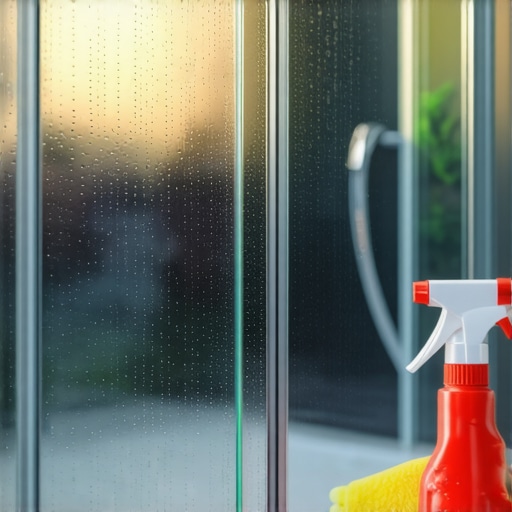
How to Remove Hard Water Stains from Glass Shower Doors
Most guys skip the leveling compound. They think the underlayment will hide the dip. It won’t. I spent three days grinding concrete on a job last month just so the floor wouldn’t click like a castanet. I see the same laziness with shower glass. People ignore the water chemistry until the minerals have etched into the silica so deep you would need a diamond polisher to fix it. I smell like oak dust and WD-40 because I treat every surface as a structural challenge. Glass is not just a clear barrier. It is an amorphous solid with microscopic pores that trap calcium and magnesium ions. If you do not treat these stains as a chemical bond, you are just moving dirt around. A shower is a performance environment. It requires the same precision as a moisture-metered subfloor installation.
The chemical reality of hard water on glass
To remove hard water stains you must use an acidic cleaning agent like white vinegar or citric acid to break the alkaline bond of calcium carbonate. These deposits are not just sitting on top. They are often chemically bonded to the glass surface. Hard water contains high concentrations of dissolved minerals, primarily calcium and magnesium. When water evaporates, these minerals remain behind, forming a crystalline structure. On a molecular level, the glass surface is not perfectly smooth. It has tiny peaks and valleys. These minerals settle into the valleys and harden. This is why a simple wipe with water does nothing. You need a pH-balanced approach to neutralize the alkalinity of the minerals without damaging the surrounding tile or grout. I have seen guys ruin a perfectly good modern shower design by using harsh abrasives that scratch the tempered glass. Once you scratch it, you create even more places for the minerals to hide.
Why vinegar is a mild acid for a major problem
White vinegar contains approximately five percent acetic acid which effectively dissolves the mineral scales found on glass shower doors. It is the standard tool for any flooring pro who cares about material integrity. You do not always need the strongest chemical in the shed. You need the right one. When acetic acid meets calcium carbonate, a chemical reaction occurs that produces carbon dioxide and water-soluble calcium acetate. This breaks the bond between the mineral and the glass. I recommend heating the vinegar first. Thermal energy accelerates the molecular vibration, making the acid work faster. Spray it on and let it sit for at least ten minutes. If you let it dry, you are just creating a new layer of film. Keep it wet. This is like waiting for thin-set to cure. You cannot rush the chemistry. While the vinegar works, check your chic baseboard designs near the bathroom door for moisture damage. Water has a way of migrating where it does not belong.
“A floor is only as good as the subfloor beneath it; deflection is the enemy of every joint.” – Master Flooring Axiom
The physics of surface tension on glass
Surface tension allows water to cling to the glass and evaporate in place which leads to the formation of permanent mineral deposits. If you can break that surface tension, you can prevent the stains from forming in the first place. This is why squeegees are not optional. They are structural maintenance tools. When you pull a squeegee across the glass, you are mechanically removing the mineral-laden water before evaporation can occur. It is the same reason we use a roller on vinyl flooring to remove air pockets. You are ensuring 100 percent contact and removal. For an extra layer of protection, consider a hydrophobic coating. These coatings use nanotechnology to fill the microscopic pits in the glass. This creates a surface so smooth that water beads up and rolls off. It is like the wax on a showroom floor. It does not just look good. It protects the structural integrity of the material. If you are dealing with a small bathroom, the humidity levels stay higher for longer, making this step even more vital.
How hard water destroys your grout lines
Hard water deposits can migrate from the glass to the surrounding grout and cause discoloration or structural weakening of the cementitious bond. Grout is naturally porous. It acts like a wick. When mineral-rich water runs down the glass and hits the tile, it seeps into the grout. Over time, the calcium buildup can cause the grout to become brittle and crack. This is why I always tell my clients that glass maintenance is actually grout maintenance. If you see white crusty buildup on your tiles, you need grout restoration secrets to fix the damage. You should also look at how to refresh grout without replacing it entirely if the damage is only on the surface. Never use a wire brush on your grout. It will shred the sealant and leave the material vulnerable to moisture. Use a stiff nylon brush and a dedicated alkaline cleaner if the stains are organic, or a mild acid if they are mineral-based.
| Cleaning Agent | pH Level | Mechanism of Action | Surface Safety |
|---|---|---|---|
| White Vinegar | 2.5 | Acidic Dissolution | Safe for Glass |
| Lemon Juice | 2.2 | Citric Acid Break Down | Safe for Glass |
| Baking Soda Paste | 8.3 | Mild Mechanical Abrasion | Use Caution |
| Commercial Descaler | 1.0 | Strong Acidic Reaction | Risk of Etching |
Protection protocols for the modern bathroom
The best way to manage hard water stains is a daily protocol that involves mechanical removal and chemical prevention. You cannot expect a floor to stay level if you do not prep the slab, and you cannot expect glass to stay clear if you do not prep the surface daily. I have a checklist I give to every homeowner after a bathroom remodel. It is about discipline. You spend thousands on tile cleaning tips and high-end materials, so do not let them rot because you are lazy. Many people think the thickest underlayment is best for floors, but too much cushion actually causes the locking mechanisms on LVP to snap under pressure. Similarly, using too much heavy wax on a shower door can actually trap dirt and make it look worse. Use thin, high-quality hydrophobic layers instead. Check your baseboards for swelling. If you see the paint peeling at the bottom of the wall, your shower is leaking or the humidity is too high. Look into baseboards makeover ideas that use PVC or composite materials for wet areas.
- Squeegee the glass after every single shower use.
- Spray a daily mist of diluted white vinegar to prevent bonding.
- Wipe down the metal tracks where water tends to pool and stagnate.
- Inspect the grout and sealant around the glass perimeter monthly.
- Apply a glass sealant every six months to maintain hydrophobicity.
The field report on mineral management
Maintaining a shower is a lot like maintaining a 3/4 inch solid oak floor. You have to respect the material. If you let moisture sit on oak, it cups. If you let minerals sit on glass, it etches. I have spent 25 years fixing the mistakes of people who thought they could cut corners. There are no shortcuts in structural engineering. If you are serious about a sustainable home, look into eco-friendly tile solutions that use recycled glass and low-VOC sealants. These materials often resist staining better than old-school ceramic. But even the best materials fail without a maintenance plan. Keep your pH levels in check, keep your tools clean, and never ignore a dip in the subfloor or a spot on the glass. It is all part of the same system. The house is a machine, and you are the operator. Treat it like one.
“A floor is only as good as the subfloor beneath it; deflection is the enemy of every joint.” – Master Flooring Axiom