
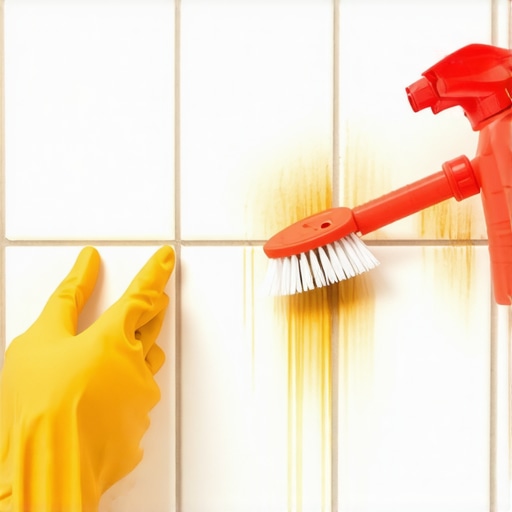
The iron oxidation nightmare in your shower
Removing rust stains from bathroom tiles requires a chemical strategy that breaks the molecular bond between oxidized iron and the tile surface. Most homeowners fail because they use bleach, which actually sets the stain through further oxidation. Effective removal utilizes acidic chelating agents like oxalic acid or lemon juice paired with salt to lift the iron particles out of the porous grout and tile microstructure.
I have spent twenty five years on my knees scrubbing floors that other guys said were ruined. I once walked into a high end bathroom where a cast iron tub leg had leaked a river of orange across a white Carrara marble floor. The homeowner was crying because a generic cleaner turned the stain from a light amber to a deep burnt sienna. It was a mess. Most guys would have told her to rip out the floor and start over. I spent three days with a custom poultice and a heat gun. You have to understand that rust is not just a surface mark. It is a chemical invasion. Iron oxide (Fe2O3) happens when water and oxygen meet metal. In a bathroom, this usually comes from leaky pipes, old shaving cream cans, or even high iron content in your well water. When that orange liquid hits your tile, it seeks out the microscopic pores. If you have unsealed grout, the rust travels deep into the cementitious matrix. It is like trying to get red wine out of a white shirt, but the shirt is made of rock. I am here to tell you that unless you understand the pH scale and the porosity of your specific material, you are going to make it worse. You cannot just scrub harder. You have to scrub smarter. If you are dealing with a total room overhaul, you might want to look at showers that wow modern designs for 2025 to see how better materials resist these issues.
Why bleach is the absolute worst choice for rust
Bleach is a powerful oxidizer that accelerates the formation of iron oxide, making rust stains darker and more permanent. When you apply sodium hypochlorite to a rust spot, you are providing the very oxygen needed to strengthen the chemical bond between the iron and the tile or grout. Always use acidic reducers rather than oxidizing cleaners for iron based discolorations.
It happens every week. Someone calls me saying they tried to bleach their grout and now the rust is glowing orange. It makes my skin crawl. Bleach is great for mold and bacteria because it kills organic life. Rust is not alive. It is a mineral. Adding bleach to rust is like throwing gasoline on a fire. The chemistry of rust removal depends on a process called chelation or reduction. You need something that can grab onto that iron molecule and pull it into a solution so it can be wiped away. This is why products containing oxalic acid or phosphoric acid work so well. They turn the insoluble iron oxide into a water soluble salt. If you are worried about the integrity of your floor, you need to be careful with the strength of these acids. High concentrations can etch the glaze on your porcelain or eat right through a natural stone tile. I always tell my apprentices to start with the weakest acid possible. Even a mix of lemon juice and salt can work on light stains because the citric acid acts as a mild chelator and the salt provides a gentle abrasive that won’t scratch the tile surface. If the grout is too far gone, you might need to check out how to refresh grout without replacing it before you decide to rip the whole thing out.
“A floor is only as good as the subfloor beneath it; deflection is the enemy of every joint.” – Master Flooring Axiom
The chemistry of the poultice method
The poultice method involves mixing an absorbent material with a chemical cleaner to create a paste that draws stains out of porous surfaces through capillary action. By keeping the cleaning agent in contact with the rust for several hours, the paste rehydrates the iron oxide and sucks it up into the drying medium, leaving the tile clean.
For those deep, stubborn stains that have lived in your tile for years, a simple spray and wipe will not cut it. You need a poultice. I make mine with baking soda and lemon juice or a professional grade rust remover mixed with powdered chalk. The goal is to create a peanut butter consistency. You spread it over the stain about a quarter inch thick. Then you cover it with plastic wrap and tape down the edges. This stops the acid from evaporating and forces it to work into the tile. As the paste dries over twenty four to forty eight hours, it pulls the iron particles out of the tile and into the paste. It is a slow process, but it is the only way to save a porous stone like travertine or marble. If you are working near the edges of the room, be careful not to get these acidic mixtures on your chic baseboard designs that transform rooms in 2025 as the acid can strip paint or finish off the wood. I have seen guys ruin a beautiful set of baseboards because they were sloppy with their rust remover. Precision matters in this trade. You can’t just slap chemicals around and hope for the best.
| Material Type | Rust Sensitivity | Recommended Acid | Max Dwell Time |
|---|---|---|---|
| Glazed Porcelain | Low | Phosphoric Acid | 15 Minutes |
| Natural Marble | Extreme | Non-Acidic Chelator | 24 Hours (Poultice) |
| Ceramic Tile | Moderate | Oxalic Acid | 10 Minutes |
| Cement Grout | High | Citric Acid / Salt | 30 Minutes |
The ghost in the expansion gap
Rust often originates from hidden metal components within the wall or subfloor, such as non-galvanized nails or old steel lath, which oxidize when moisture penetrates the tile joints. If you see rust bleeding out from behind baseboards or the bottom of a shower wall, it usually indicates a failure in the waterproofing membrane or the presence of corroding fasteners.
Sometimes the rust isn’t coming from a shaving cream can. It is coming from inside the walls. I have pulled up tiles where the installer used regular drywall screws instead of cement board screws. After five years of steam and water, those screws turn into rust bombs. They expand as they oxidize, which can actually crack the tile from the bottom up. This is why I am a stickler for the TCNA standards. You use the right fasteners or you don’t do the job. If you see rust stains appearing at the very edge of your floor, check your baseboards. Moisture can get trapped behind them and start eating away at any exposed metal. While you are fixing the source of the moisture, you might want to look at baseboards makeover ideas to elevate your space to ensure your new ones are installed with moisture resistant materials. You also need to keep your grout sealed. A good sealer is like a raincoat for your floor. Without it, your grout is just a sponge waiting to soak up dirty, iron filled water. For more on keeping things pristine, read about tile cleaning tips for a sparkling bathroom in 2025.
- Identify the source of the iron to prevent immediate re-staining.
- Test any acidic cleaner on a spare tile or hidden corner first.
- Apply the cleaning agent and use a nylon brush, never steel wool.
- Rinse the area with distilled water to neutralize the remaining acid.
- Reseal the grout once the tile is completely dry to prevent future penetration.
Professional secrets for long lasting grout protection
Protecting grout from rust involves applying a high quality penetrating sealer that fills the voids in the cementitious structure to block liquid absorption. For areas with high iron water, a topical sealer may provide an additional sacrificial layer that prevents the iron from ever making contact with the grout itself.
I tell my clients that a floor is a living system. It moves, it breathes, and it reacts to the environment. In a place like the humid South, moisture is always trying to get under your tiles. If your subfloor is damp, that moisture will rise through the grout lines, carrying minerals with it. This is called efflorescence, but when iron is involved, it becomes a permanent orange stain. You have to be proactive. After you clean the rust, you must neutralize the surface. Acid stays active for a long time. If you don’t rinse it well with a base like a bit of baking soda dissolved in water, the acid will continue to weaken the grout. Once it is neutral and dry, you apply a sealer. I prefer solvent based penetrating sealers for bathroom floors because they go deeper into the pores than water based ones. If you want to dive deeper into the technical side of this, check out grout restoration secrets for long lasting results. It will save you a lot of heartache in the long run. Don’t be the person who ignores their floor until the tiles start popping off. A little maintenance goes a long way. Use the right chemicals, respect the physics of the subfloor, and keep your bathroom dry. That is how you win against rust.
“A tile installation is only as waterproof as the person who installed the corners.” – Master Flooring Axiom