
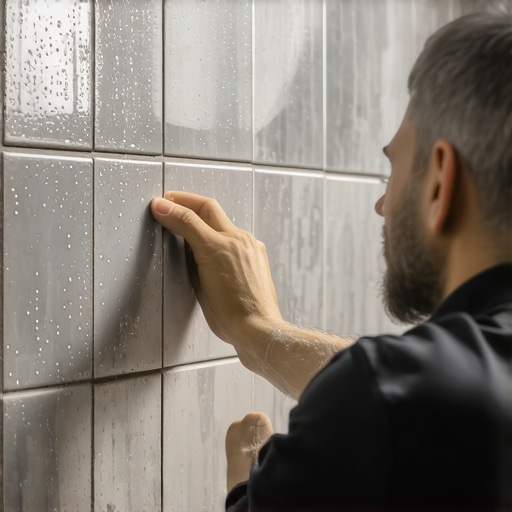
The granite shower catastrophe I fixed last month
I spent three days grinding concrete on a job last month just so the floor wouldn’t click like a castanet, but the real nightmare was in the master bath. The homeowner had installed ten thousand dollars of absolute black granite and it looked like a swampy mess within six months. They thought granite was bulletproof. It is a rock, sure, but it is also a series of interconnected microscopic tubes. I walked in and smelled the mildew before I saw the stone. The installer had skipped the sealer because he wanted to get to his next job. Most guys skip the leveling compound and the sealer because they think the underlayment or the natural beauty will hide the flaws. It won’t. I had to strip the entire surface with a heavy duty alkaline cleaner and spend forty eight hours running a dehumidifier just to get the stone dry enough to accept a bond. If you do not respect the physics of moisture, your stone will fail you. Every single time.
“A floor is only as good as the subfloor beneath it; deflection is the enemy of every joint.” – Master Flooring Axiom
Why your stone is basically a hard sponge
Granite is an igneous rock formed from the slow crystallization of magma below the Earth’s surface. This process creates a dense material, but it remains a network of pores that are hungry for moisture. When you use granite shower tiles without a proper barrier, you are inviting water to move through the stone via capillary action. This is not just about the surface looking wet. It is about the chemistry of the water reacting with the minerals inside the tile. Iron deposits in the granite can oxidize, leading to rust spots that are impossible to remove. The grout lines are even more vulnerable, acting as a highway for soap scum and skin oils to migrate behind the tile. If you live in a high humidity area like the Pacific Northwest, your stone never truly dries out unless you intervene with a high quality penetrating sealer. You need to understand the porosity of your specific slab before you ever turn on the shower head. Not all granite is created equal. Some have a higher absorption rate than others, which dictates how many coats of sealer you need to apply.
The chemical war against surface tension
Sealing a shower is about changing the surface tension of the substrate. You are not just painting a plastic coat over it. You are using fluoropolymers and silanes to create a hydrophobic environment. A topical sealer is a mistake in a shower because it will peel when exposed to constant steam. You need a penetrating sealer. These molecules are smaller than the pores of the stone. They sink in and line the interior of the pores with a chemical that repels water while still allowing the stone to breathe. This is the concept of vapor transmission. If you lock moisture inside the stone with a topical coating, the stone will eventually rot from the inside out. You can learn more about tile cleaning tips for a sparkling bathroom in 2025 to keep that surface clear before you seal. I always look for a sealer with a high solids content. If the product feels like water and smells like nothing, it probably is not doing much. You want something that bites into the stone.
| Granite Type | Porosity Level | Recommended Sealer Type |
|---|---|---|
| Absolute Black | Low | Solvent-based Penetrating |
| Kashmir White | High | Water-based Fluoropolymer |
| Blue Pearl | Medium | Solvent-based Penetrating |
| Giallo Cecilia | Medium-High | Water-based Fluoropolymer |
The 1/8 inch that ruins everything
Precision is everything in a shower. If your grout joints are even slightly off, or if you have a dip in the subfloor that allows water to pool, your sealer is going to work overtime until it fails. Most homeowners ignore the transition where the tile meets the baseboards or the shower pan. They use grout instead of a 100 percent silicone caulk in the corners. Grout will crack. It is a rigid material. When the house shifts, that grout line opens up a 1/8 inch gap that lets gallons of water behind your wall. You should look into chic baseboard designs that transform rooms in 2025 to see how to properly finish these edges with moisture resistant materials. I never sign off on a job until I have checked every change of plane for a flexible seal. A floor is a performance surface. It has to move. If you build it too rigid, it will snap. The same applies to your showers. They are dynamic environments with extreme temperature fluctuations. The stone expands and contracts. Your sealer needs to be able to handle that thermal stress without breaking its molecular bond with the granite.
The actual application of the barrier
Before you even think about opening a bottle of sealer, the stone must be clinical levels of clean. Any soap scum left on the surface will be trapped under the sealer forever. I use a ph neutral cleaner and a stiff brush. Once the stone is dry, you apply the sealer in manageable sections. Do not just dump it on the floor. Use a microfiber applicator and work it into the stone until the granite stops thirsty drinking. You wait about ten minutes, then you wipe off the excess. If you let the sealer dry on the surface, it will leave a hazy film that is a nightmare to buff out. This is where most DIY guys fail. They think more is better. No. The sealer belongs inside the stone, not on top of it. You need to wait at least twenty four hours before you let a single drop of water touch that floor. If you rush it, you are just washing your money down the drain. You can check showers that wow modern designs for 2025 to see how professional installations look when the stone is properly saturated and cured.
- Deep clean the granite and grout with a ph neutral solution.
- Run a dehumidifier for 24 hours to ensure zero moisture in the pores.
- Apply the first coat of penetrating sealer using a lint-free applicator.
- Wait 10 to 15 minutes for the stone to absorb the chemicals.
- Wipe away all excess liquid with a clean microfiber cloth.
- Repeat the process for high porosity stones after 2 hours.
- Allow a full 24 to 72 hour cure time before using the shower.
Protecting the integrity of the grout joints
Grout is the weakest link in your shower system. It is basically sand and cement. It is incredibly thirsty. If you do not seal your grout, it will act like a wick, pulling water into the thinset and eventually the backer board. I have seen showers where the tile was fine but the grout was so saturated it turned to mush. You need to use a sealer that is rated for both the stone and the grout. Some people try to use those grout pens to hide stains. That is a temporary fix for a structural problem. You should look at grout restoration secrets for long-lasting results if your lines are already looking grey and dingy. Once you have restored the grout, then you seal it. This creates a monolithic barrier. Think of it like a raincoat for your walls. If the raincoat has a hole in the pocket, you still get wet. The grout is the pocket. Seal it or regret it.
“Natural stone is a living material; neglect its maintenance and it will show its age within a season.” – Tile Council of North America Standards
The physics of the shower pan and slope
If your shower was not built with a proper pre-slope, no amount of sealer will save you. Water must move toward the drain. If water sits on your granite tiles for hours, it creates hydrostatic pressure. This pressure can eventually force water through even the best sealers. I always check the slope with a level before I even bid a sealing job. If I see puddles, I tell the homeowner they have a plumbing problem, not a stone problem. Your tile installation is a system. It includes the waterproofing membrane, the mortar bed, the stone, and the sealer. If one part fails, the whole thing is compromised. While you are upgrading your bathroom, consider how baseboards makeover ideas to elevate your space can help tie the bathroom into the rest of the home’s aesthetic without sacrificing the waterproof integrity of the wet areas. A good transition at the door is the difference between a professional finish and a hack job.
The final verdict on stone maintenance
You cannot use grocery store glass cleaners on granite. The ammonia and acid will eat right through your sealer in a week. You need to use cleaners specifically designed for natural stone. This preserves the life of the sealer. I tell my clients to reseal their granite showers every twelve months. It is a small price to pay to protect a massive investment. If you notice water no longer beads up on the surface, you are already late. You should also consider how to refresh grout without replacing it to keep the overall look sharp. Remember that a shower is a high stress environment. It is not a kitchen counter. The heat, the soap, and the constant water flow require a more aggressive maintenance schedule. If you have questions about specific products, you can always contact us for a professional consultation. Do not guess with your stone. It will buckle. It will stain. It will fail if you do not respect the chemistry. Take the time to do it right. Your subfloor will thank you.