
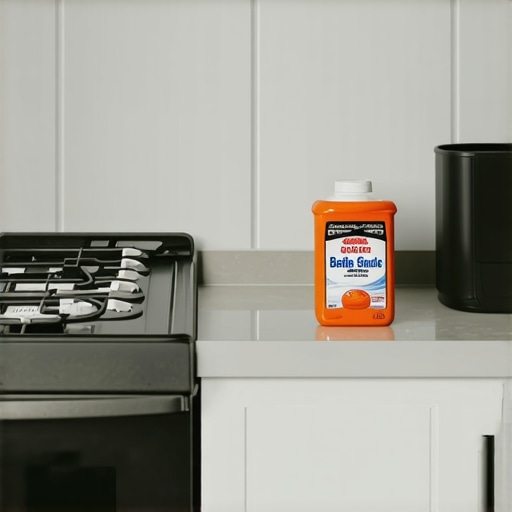
The Baking Soda Myth and Why It Fails to Deep Clean Your Grout Joints
I spent three days grinding concrete on a job last month just so the floor wouldn’t click like a castanet because the previous guy thought he could hide a half-inch dip with extra thin-set and a thick underlayment. It did not work. This same mindset of taking shortcuts is what leads people to believe that a little white powder from the kitchen pantry will solve their grout woes. I have been on my knees with a moisture meter and a scrub brush for over twenty five years. I have seen the grit under the nails and the dust in the lungs that comes from real floor work. When I walk into a house and smell that faint scent of vinegar and baking soda, I know I am looking at a floor that is slowly being eaten from the inside out. People treat their tile like it is a plastic countertop, but tile and grout are structural components. They are part of a system that includes the subfloor, the mortar bed, and the waterproofing membrane. If you treat that system with the wrong chemistry, you are not cleaning it, you are sabotaging the very bond that keeps your floor from shifting under your feet.
The fizzing distraction of sodium bicarbonate
Baking soda is a mild abrasive that lacks the surfactant power to lift oils and proteins from porous grout, often leaving behind a gritty alkaline residue that attracts more dirt over time while doing nothing to kill deep-seated mold spores. You see the bubbles and you think something is happening. That is just carbon dioxide gas being released as the base of the soda reacts with an acid like vinegar. It looks like a science project, but in the world of floor chemistry, it is a non-event. To clean grout, you need to break the surface tension of the water so it can penetrate the microscopic pores of the cement. Baking soda does not do this. Instead, the fine grains of sodium bicarbonate settle into the valleys of the grout texture. Once the water evaporates, those grains remain. They act as a magnet for the next round of dust, skin cells, and kitchen grease that hits the floor. You are effectively building a layer of grime-attracting grit into your floor. If you want real results, you should look into grout restoration secrets for long lasting results rather than trusting a box of baking powder.
The concrete sponge in your floor
Grout is a cementitious product that functions like a hard sponge, utilizing capillary action to pull moisture and contaminants deep into its internal structure where topical cleaners like baking soda cannot reach. Most people do not realize that grout is essentially Portland cement mixed with fine sand and pigments. When it cures, it forms a network of interconnected voids. At a molecular level, these voids are massive. When you spill something or use a dirty mop, the liquid is pulled down by gravity and surface tension into the center of the grout line. A paste of baking soda sits on the surface like a cap. It cannot travel into those pores. To truly clean these areas, you need a high-pH oxygenated cleaner or a specialized surfactant that can travel into the capillary network to emulsify the oils. Without this, you are just polishing the top of a dirty mountain. This is why tile cleaning tips for a sparkling bathroom in 2025 focus on chemical penetration rather than just surface abrasion.
“A floor is only as good as the subfloor beneath it; deflection is the enemy of every joint.” – Master Flooring Axiom
The structural cost of acidic cleaning
Vinegar and other acids dissolve the calcium carbonate in cement-based grout, leading to microscopic pitting and structural weakening of the joint which eventually causes the grout to crumble and allow water infiltration into the subfloor. When you mix that baking soda with vinegar, you are creating a chemical reaction that is fundamentally hostile to the cement binder in your grout. Cement is alkaline. When an acid hits it, a process called etching begins. It might look cleaner because you have literally stripped away the top layer of the grout, but you have also opened up the pores even wider. This makes the grout more absorbent and more prone to staining in the future. Over time, this erosion reaches the thin-set beneath the tile. Once the bond is compromised, the tile will begin to move. A moving tile leads to cracked grout and eventually to a full-scale floor failure. This is especially dangerous in showers that wow modern designs for 2025 where waterproofing is the only thing standing between your bathroom and a rotted floor joist.
How moisture ruins your baseboards and transitions
Excessive moisture from improper cleaning methods wicks into the bottom of baseboards and door casings, causing swelling and rot in MDF or wood components that are often overlooked until the damage is structural. When you are scrubbing grout with a wet paste, that water has to go somewhere. If the grout is not sealed, the water migrates sideways towards the wall. I have pulled up countless feet of baseboards where the bottom half inch was soft as bread because the homeowner was obsessed with bleaching their grout lines. This moisture trap also affects the transition strips between rooms. If you are looking to fix the aesthetic after such damage, you might need baseboards makeover ideas to elevate your space to cover the evidence of poor maintenance. It is a chain reaction. The grout fails, the moisture travels, the wood swells, and the mold begins to grow behind the walls where you cannot see it until you smell it.
| Cleaning Agent | pH Level | Mechanism | Structural Risk |
|---|---|---|---|
| Baking Soda | 8.3 | Mechanical Abrasion | Low to Moderate Residue |
| White Vinegar | 2.5 | Chemical Etching | High Erosion Risk |
| Oxygen Bleach | 10.5 | Oxidation/Emulsification | Low Risk |
| Neutral Cleaner | 7.0 | Surfactant Lifting | Zero Risk |
The chemistry of the 1/8 inch gap
The expansion gap at the perimeter of a room is the most critical 1/8 inch in flooring, yet it is frequently filled with grout or cleaning residue that prevents the floor from breathing. Flooring systems are dynamic. They move with temperature and humidity changes. Even tile expands and contracts. If you clog those perimeter gaps with dried baking soda paste and dirt, you create a rigid floor. When the floor needs to move and has no place to go, it tents. The tiles pop up off the floor like a bridge buckling in the heat. I have seen entire living rooms lift two inches off the slab because the installer didn’t leave an expansion gap or the homeowner filled it with debris while cleaning. Professional maintenance involves keeping these joints clear and using 100 percent silicone caulk in change-of-plane areas rather than hard grout. This is a core part of how to refresh grout without replacing it properly.
Professional protocols for grout maintenance
- Vacuum the floor first to remove all loose silica and dust that would otherwise turn into mud.
- Use a pH-neutral cleaner specifically formulated for natural stone or ceramic tile.
- Apply the cleaner and allow it to dwell for ten minutes to break down the surface tension.
- Agitate the grout lines with a stiff nylon brush, never a wire brush which can scratch the tile glaze.
- Use a wet vacuum to extract the dirty water rather than just moving it around with a mop.
- Rinse with clean distilled water to ensure no surfactant residue remains.
- Seal the grout with a high-quality penetrating sealer once the joints are completely dry.
The contrarian truth about underlayment and grout
While most people want the thickest underlayment, too much cushion actually causes the locking mechanisms on LVP to snap under pressure and causes grout in tile floors to crack through excessive deflection. You might think a soft, bouncy floor is comfortable, but for a grout joint, it is a death sentence. Grout has zero tensile strength. It cannot bend. If the subfloor flexes even a fraction of an inch because of a squishy underlayment, the grout will pulverize into dust. This is why I insist on a rigid substrate. We are talking about the physics of compression. When you step on a tile, that force must be transferred directly to a solid surface. Any air or foam in between is a point of failure. If you are concerned about the environment while building these systems, consider eco friendly tile solutions for sustainable homes in 2025 that prioritize both rigidity and sustainability.
“The selection of cleaning agents must consider the chemical composition of the grout to prevent long-term erosion of the cementitious matrix.” – Master Flooring Axiom
The molecular reality of sealing
Sealing grout does not make it waterproof but rather lowers the surface energy of the cement pores to repel oil and water based stains through a fluoropolymer or silane bond. Think of a sealer like a wax job on a car. It does not stop the car from getting wet, but it stops the water from sticking. When you use baking soda, you are often stripping away any existing sealer through abrasion. Once that sealer is gone, the grout is wide open. A professional penetrating sealer goes into the pores and lines them with a hydrophobic coating. This means that the next time you spill red wine, it sits on top of the grout line like a bead of mercury instead of soaking in. This is the only way to keep grout looking new. If you have already damaged your grout with DIY hacks, you may need chic baseboard designs that transform rooms in 2025 to hide the edges where the tile meets the wall while you plan a proper restoration. Stop the chemistry experiments in your bathroom. Use the tools designed for the job and respect the structural nature of the floor under your feet. It is not just a decoration. It is an engineering challenge that requires an engineering solution.
Comments
One response to “The Baking Soda Myth: Why It Isn’t Deep Cleaning Your Grout”
Reading this detailed breakdown of why baking soda is not an effective grout cleaner really resonated with me. I’ve tried using baking soda and vinegar in the past, thinking I was doing a good job, but ended up noticing the grout lines looked dull and sometimes even more stained over time. Your explanation about how grout functions like a sponge and how surface treatments like sealing can be compromised by improper cleaning is eye-opening. I especially appreciate the emphasis on the importance of chemical penetration versus surface abrasion. It makes me wonder, what are some of the best professional-grade solutions that homeowners can safely use to maintain their grout without risking long-term damage? Also, do you recommend any specific sealers that are both effective and easy to apply for DIYers? Always looking for ways to keep my tiles looking their best without causing more harm than good. Thanks for sharing such valuable insights—definitely changing my cleaning approach as a result.