
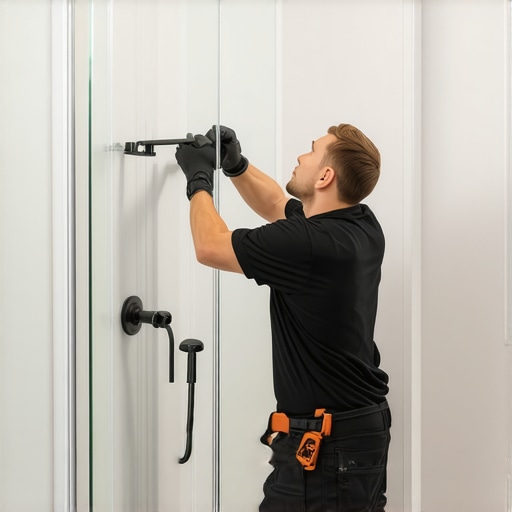
The Strategic Engineering Required to Anchor a Heavy Glass Shower Door
I have spent twenty five years with sawdust under my nails and a level in my hand. Most people look at a bathroom and see a place to wash. I see a high stakes engineering environment where moisture, gravity, and tension are constantly trying to destroy your investment. Last month, I spent three days grinding concrete on a job just so the floor would not click like a castanet. While I was there, I watched a glass contractor try to hang a frameless door using plastic wall anchors. I stopped him. You cannot hang eighty pounds of tempered glass on a prayer and some cheap plastic. That glass exerts massive shear force on the vertical plane. If you do not have solid blocking behind that tile, you are building a guillotine. A heavy glass door is a performance surface. It requires a mechanical bond that penetrates deep into the framing of the house. We are going to talk about the physics of the wall, the chemistry of the grout, and why your subfloor determines the fate of your shower door.
The structural reality of double blocking
To anchor a heavy glass shower door, you must install structural 2×6 blocking behind the tile substrate. Relying on plastic anchors or toggle bolts in cement board will lead to hinge failure and cracked grout. Professional shower installations require solid wood framing for mechanical fasteners. This is the only way to ensure the hinge screws have enough bite torque to resist lateral tension. Most frameless doors use half inch tempered glass. This material is dense. It does not flex. When that door swings, it creates a lever effect. Without a 2×6 or doubled 2×4 stud behind the tile, that lever will eventually pull the screws through the backer board. This movement is microscopic at first. You will see a tiny hairline crack in the grout. Then, the tile will delaminate. This is why planning for showers that wow starts long before the first tile is set. You need to know exactly where those hinges will land so you can beef up the skeleton of the wall.
“A floor is only as good as the subfloor beneath it; deflection is the enemy of every joint.” – Master Flooring Axiom
The physics of fastener tension in wet environments
Using stainless steel screws is mandatory for securing shower hardware because galvanized fasteners will eventually corrode due to capillary action. The fastener length must be at least three inches to penetrate the tile, the thin set, the waterproof membrane, and two inches of solid wood. This depth creates mechanical resistance. When you tighten a screw into a stud, you are creating tension. In a wet environment like a shower, moisture travels along the threads of the screw. If you did not use a 100 percent silicone sealant in the hole before driving the screw, you are inviting rot into your structural blocking. This rot softens the wood. A soft stud cannot hold a screw under tension. This is why I always tell homeowners that the hardware is only as good as the seal. If you are interested in eco friendly tile solutions, remember that the most sustainable thing you can do is build a shower that lasts fifty years instead of five.
Why grout is not a structural adhesive
Grout serves as a filler for joints between ceramic or porcelain tiles, but it possesses zero structural integrity for holding hardware. You must pre drill through the tile with a diamond core bit to prevent lateral pressure from cracking the glaze. Never attempt to drive a screw through a grout line. Grout is porous. It is designed to compress and expand slightly with temperature changes. It is not designed to bear the weight of a heavy glass door. If your door hinges are resting on grout instead of a solid tile surface, the grout will pulverize into dust within months. This leads to a loose hinge and a sagging door. If you find your grout is already failing, you might need grout restoration secrets to stabilize the area before attempting a heavy glass installation. The chemistry of the grout also matters. High performance epoxy grouts are much harder than standard cementitious grouts, but even they will fail if the underlying wall moves.
The one eighth inch that ruins everything
A plumb wall is the difference between a functional shower and a shattered door. If the vertical studs are out of plumb by more than one eighth of an inch, the heavy glass will not self center in the opening. This puts uneven stress on the hinge leaf. I have seen guys try to shim a hinge to make up for a crooked wall. That is a recipe for disaster. The shim creates a gap where water can collect. It also reduces the surface contact between the hinge and the tile. You want maximum friction there. If the wall is leaning out, the door will want to swing open on its own. If it leans in, the door will swing shut. This constant movement wears out the internal springs of the hinge. When you are looking at showers with a style, make sure the style includes a straight wall. If your contractor does not use a six foot level, fire him.
The information gain on underlayment cushion
While most people want the thickest underlayment, too much cushion actually causes the locking mechanisms on LVP to snap under pressure. This same logic applies to shower pans and thresholds. If you use a soft, foam based curb for your shower, you cannot anchor a heavy glass door to it. The weight of the glass will compress the foam, causing the door to sink and the tile to crack. You need a solid wood or concrete curb for the door to rest on. Even if the door is wall hung, the bottom sweep often touches the curb. Any deflection in that curb will break the water seal. I always build my curbs out of three stacked 2x4s, glued and screwed, then wrapped in a liquid waterproof membrane. This creates a rock solid foundation that will not move even if a three hundred pound person steps on it.
| Glass Thickness | Weight per Square Foot | Minimum Fastener Depth | Blocking Requirement |
|---|---|---|---|
| 3/8 inch | 4.9 lbs | 2.5 inches | Double 2×4 |
| 1/2 inch | 6.4 lbs | 3.0 inches | Solid 2×6 |
| 3/4 inch | 9.6 lbs | 4.0 inches | LVL Header |
Baseboards and moisture management near the shower
The baseboards outside the shower entry must be sealed to prevent wicking moisture from the bathroom floor. Using PVC baseboards or solid wood with a high quality finish is better than MDF which swells like a sponge. When you install a heavy door, water will occasionally splash out. If your baseboards are not prepared for this, they will rot and pull away from the wall. This creates a gap where mold can grow. I recommend checking out chic baseboard designs to see how to integrate water resistant materials into your aesthetic. A good baseboard installation should also include a bead of silicone at the floor line to keep water from getting under the flooring material. If you are doing a baseboards makeover, this is the time to ensure your bathroom can handle the humidity of a modern steam shower.
- Verify 2×6 blocking is installed at all hinge locations.
- Use a diamond bit to drill through tile, never a hammer drill.
- Fill all pilot holes with 100 percent silicone before inserting screws.
- Check that the wall is plumb within 1/8 inch over 6 feet.
- Ensure the threshold is solid wood or concrete, not foam.
- Use stainless steel fasteners to prevent rust bleeding.
The chemistry of the bond is just as important as the mechanical fastener. When you set the tile that will hold the door, you need a thin set with high polymer content. This provides a bit of flexibility. Concrete and wood expand at different rates. If your thin set is too brittle, the vibration of the door opening and closing will eventually break the bond between the tile and the wall. Think of the thin set as a shock absorber. It has to handle the energy of the door being slammed. I always use a notched trowel to ensure 95 percent coverage behind the