
The hidden reality of shower bench decay
I once walked into a luxury master suite where a custom marble shower bench was literally disintegrating. The homeowner thought they had a mold problem. They spent thousands on high-end cleaners. When I got down there with a scope, I realized the issue wasn’t just dirt. The shower bench had a slope of less than one percent, meaning water sat there for hours after every use. That standing water created a chemical reaction between the minerals in the city water and the fatty acids in their expensive soaps. It created a layer of lithified soap scum so thick it was actually eating into the stone. Most guys skip the leveling compound. They think the underlayment will hide the dip. It won’t. I spent three days grinding concrete on a job last month just so the floor wouldn’t click like a castanet, and shower benches require that same level of structural precision to stay clean.
The chemical bond of soap scum and tile
To clean soap scum off a shower bench effectively, you must use an acidic cleaner to break the ionic bond between calcium ions and fatty acid salts. Professionals recommend a mixture of white vinegar and dish soap or a dedicated phosphoric acid cleaner for ceramic surfaces. Apply the solution, allow it to dwell for fifteen minutes, and scrub with a stiff nylon brush. This process targets the molecular structure of the film. Soap scum is not just a surface stain. It is a complex metallic soap. When you use traditional bar soap, the sodium or potassium salts of fatty acids react with the calcium and magnesium in your water. This creates an insoluble white curd. On a flat surface like a shower bench, this curd settles into the microscopic pores of your tile and grout. If you are dealing with porous materials, you might need grout restoration secrets for long-lasting results to fix the damage caused by years of neglect. The surface tension of the water keeps these minerals trapped against the tile until the water evaporates, leaving behind a hardened shell that resists standard wiping.
The physics of the shower bench trap
The shower bench is a unique engineering challenge because it is a horizontal plane in a vertical environment. In a standard shower stall, gravity is your friend. On a bench, gravity works against you if the pitch is not perfect. According to the Tile Council of North America, every horizontal surface in a wet area must have a slope to ensure positive drainage. If your bench is perfectly level, it is actually failing. Even a 1/32 inch dip in the center of a bench can hold enough water to foster a colony of serratia marcescens, that pink bacteria people often mistake for mold. This bacteria feeds on the fatty acids in the soap scum. When you clean, you aren’t just looking for a shine. You are performing a mechanical debridement of a biological and chemical film. You need to understand the material you are working with. Ceramic and porcelain are dense and can handle stronger acids. Natural stone like marble or travertine is calcium-based. If you put vinegar on marble, you will etch the surface. You will essentially be melting the stone to get the soap off. For those high-end surfaces, you must use a pH-neutral highly concentrated stone soap and a lot more mechanical agitation. You should also look into tile cleaning tips for a sparkling bathroom in 2025 to keep up with modern chemical advancements.
“A floor is only as good as the subfloor beneath it; deflection is the enemy of every joint.” – Master Flooring Axiom
The mechanical approach to scum removal
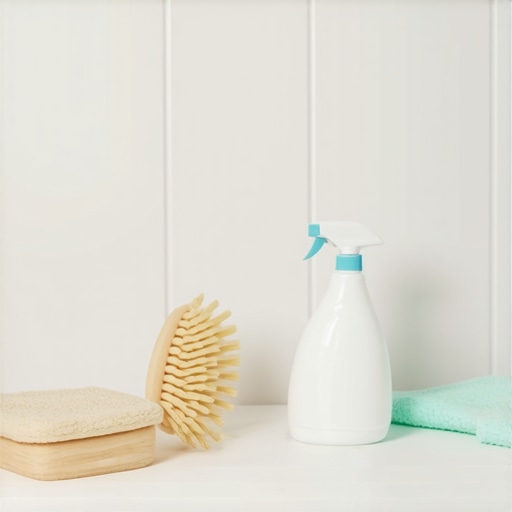
Cleaning is fifty percent chemistry and fifty percent physics. You can have the strongest acid in the world, but without the right abrasive, you are just moving liquid around. I always tell people to ditch the soft sponges. You need a brush with a high density of stiff nylon bristles. Do not use steel wool or metal scrapers. These will leave microscopic metal fragments in your grout that will eventually rust, turning your white grout a nasty shade of orange. For the corners where the bench meets the wall, you need a detail brush. This is where the baseboards of the shower live. While traditional wood baseboards don’t belong in a shower, the tile transitions serve the same aesthetic purpose. If you want to see how these transitions should look, check out chic baseboard designs that transform rooms in 2025 for inspiration on clean lines. When scrubbing, use circular motions. This ensures the bristles enter the grout joints from every angle. Grout is a sand-based product. It is full of little valleys. If you only scrub left to right, you are only cleaning the peaks of the sand grains.
| Cleaner Type | PH Level | Best Surface Use | Dwell Time |
|---|---|---|---|
| Distilled Vinegar | 2.5 | Ceramic/Porcelain | 10-20 Minutes |
| Phosphoric Acid | 1.0 | Heavy Build-up | 5 Minutes |
| Neutral Stone Soap | 7.0 | Marble/Travertine | 10 Minutes |
| Baking Soda Paste | 9.0 | Light Scrubbing | 15 Minutes |
The role of water hardness in your region
In regions with hard water, such as the Southwest or parts of the Midwest, soap scum is an aggressive enemy. The high concentrations of calcium carbonate in the water supply act as a catalyst for scum formation. If you live in Phoenix or San Antonio, you are fighting a losing battle unless you address the water itself. A water softener can reduce the mineral content, but it won’t eliminate the oils from your body or the waxes in your soap. This is why the bench is so vulnerable. It is the one place where you sit and scrub, depositing a high concentration of organic matter and cleaning products directly onto a flat surface. If your shower is looking dated because of these mineral deposits, you might want to explore showers that wow modern designs for 2025 to see how newer materials handle these environmental stressors. Modern installations often use large-format tiles on benches to minimize the number of grout lines. Fewer grout lines mean fewer places for the scum to anchor itself. If you are struggling with old grout, you can learn how to refresh grout without replacing it to save yourself a full renovation.
The precise steps for a deep clean
Follow this checklist for the best results on a standard ceramic or porcelain bench. 1. Rinse the bench with hot water to soften the outer layer of wax. 2. Apply your chosen cleaning agent liberally across the entire surface. 3. Scrub the grout lines first with a narrow brush. 4. Scrub the tile faces with a wider, stiff-bristled brush. 5. Rinse with cold water to close the pores of the grout. 6. Dry the surface completely with a microfiber towel. 7. Apply a grout sealer if the water no longer beads on the surface. Drying is the most overlooked step. If you leave the bench wet after cleaning, you are just providing a fresh canvas for new minerals to settle. It will buckle. Not the tile itself, but the integrity of the sealant will fail under constant saturation. You need to treat your shower bench like a piece of fine machinery. Keep it dry and keep it lubricated with the right sealers. If you are designing a new space, consider showers with a style trendy ideas for small bathrooms to see how integrated benches can be built for better drainage. Always remember that a clean floor is a safe floor. Soap scum is incredibly slippery. Removing it isn’t just about the look. It’s about preventing a fall on a hard, tiled surface.
“Every tile installation is a moisture management project first and an aesthetic project second.” – TCNA Technical Manual
Long term protection and maintenance
Once you have the bench clean, you have to keep it that way. The best way to prevent soap scum build-up is to switch to a liquid body wash. Liquid soaps are usually synthetic detergents that do not react with hard water minerals in the same way that traditional tallow-based bar soaps do. They don’t leave that sticky residue. Additionally, keeping a small squeegee in the shower and wiping the bench after every use will eliminate ninety percent of your cleaning labor. This prevents the water from evaporating in place and leaving its mineral cargo behind. If your tile is truly beyond repair, you might consider eco-friendly tile solutions for sustainable homes in 2025 which often feature smoother, more non-porous surfaces that resist staining. For those looking to update their entire bathroom aesthetic beyond the shower, baseboards makeover ideas to elevate your space can help tie the whole room together. Never underestimate the power of a clean transition. The gap between your shower and the floor is a prime spot for moisture to seep into your subfloor. Keep your caulking fresh and your tile clean, and your bathroom will last a lifetime.