
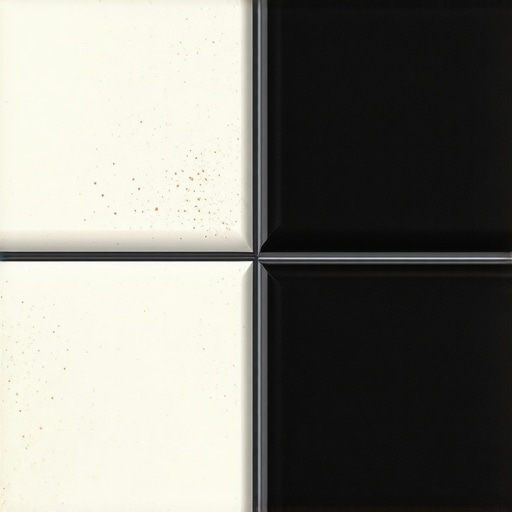
The pristine showroom trap
Choosing dark grout over white prevents permanent staining and reduces visible maintenance because dark pigments mask the inevitable accumulation of minerals, body oils, and organic particulates. White grout is a porous, cementitious material that acts as a linguistic record of every spill and shower. While it looks clean in a showroom, the reality of high-traffic moisture environments makes white grout a liability for any homeowner seeking long-term durability. Most guys skip the leveling compound. They think the underlayment will hide the dip. It won’t. I spent three days grinding concrete on a job last month just so the floor wouldn’t click like a castanet, and that same level of detail must apply to your grout selection. If your subfloor has even a 1/8 inch deflection over 10 feet, those white grout lines will crack, and every crack will fill with black dust that you can never scrub out. If you already have a disaster on your hands, you might need to learn how to refresh grout without replacing it before the situation worsens.
Why your subfloor is lying to you
A stable grout joint requires a subfloor that meets the deflection standard of L/360 for ceramic and L/720 for natural stone to prevent the microscopic shifting that pulverizes cement bonds. When a subfloor moves, the grout is the first sacrificial element. In my 25 years on my knees, I have seen homeowners blame the grout color when the real culprit was a bouncy plywood layer. A dark grout hides the hairline fractures that appear when the subfloor isn’t stiff enough. White grout highlights every failure. You see a black line in a white field and you know the bond has broken. We use structural adhesives and modified thin-sets to mitigate this, but physics always wins. If you are building showers that wow modern designs for 2025, you have to start with the framing. If the joists are undersized, no amount of bleach will keep that white grout looking white because it will constantly be sucking up moisture from the structural gaps.
“A floor is only as good as the subfloor beneath it; deflection is the enemy of every joint.” – Master Flooring Axiom
The molecular failure of white cement
Standard cementitious grout is a network of interconnected capillary pores that absorb liquids through suction, leading to deep-seated staining that surface cleaners cannot reach. White grout is primarily composed of white portland cement and fine sand. It lacks the carbon or iron oxide pigments that provide a barrier of visual density. When water hits the tile, it carries soap scum and dead skin cells into these pores. Over time, a chemical reaction occurs. Efflorescence, which is the migration of salt to the surface of a porous material, creates a white crust on dark grout, but on white grout, it looks like a dingy yellow film. You cannot win against the chemistry of hydration. Using tile cleaning tips for a sparkling bathroom in 2025 is helpful, but it is a reactive measure. Proactive flooring architecture demands that we select materials that do not fight against their own chemical nature.
The 1/8 inch that ruins everything
Small grout joints are harder to fill and more prone to adhesive failure, while wide joints with white grout create a massive surface area for mold colonization. If you go with a 1/16 inch joint, you need a non-sanded grout. If you go wider, you need sand for structural integrity. White sanded grout is basically a sandpaper sponge. It catches every fiber from your mop. It catches the dye from your new blue jeans. This is why I always push my clients toward charcoals, coffees, or deep greys. Dark grout uses high-grade pigments that fill those capillary voids during the curing process. When you look at showers with a style trendy ideas for small bathrooms, you will notice that the most durable designs use contrast. A dark grout line acts as a frame for the tile, making the ceramic pop while hiding the sins of daily life.
| Grout Type | Porosity Level | Pigment Stability | Recommended Use |
|---|---|---|---|
| White Cementitious | High | Low | Low-traffic walls only |
| Dark Cementitious | Medium | High | Floors and showers |
| Epoxy Grout | Zero | Extreme | Commercial kitchens |
| Urethane Grout | Low | Very High | Residential bathrooms |
Dark pigments and the physics of shadows
Dark grout creates a visual depth that hides the variations in tile thickness and the shadows cast by slightly uneven edges known as lippage. No tile is perfectly flat. When light hits the floor from a window or a vanity light, white grout shows the shadow of every high edge. This makes the floor look cheap. Dark grout absorbs that shadow. It creates a uniform field of color that makes a 12×24 porcelain tile look like a solid slab. This is a trick used by high-end architects to mask the realities of site-built construction. If you are working on eco-friendly tile solutions for sustainable homes in 2025, consider using recycled glass tile with a charcoal grout. The dark lines will accentuate the translucency of the glass without requiring the harsh chemicals needed to keep white grout from turning orange.
When baseboards meet the grout line
The junction between the floor tile and the baseboard is a major site of moisture infiltration and requires a color-matched 100 percent silicone sealant rather than hard grout. Many installers make the mistake of grouting the perimeter. This is a failure of engineering. Houses breathe. They expand and contract. When you grout that corner, it will crack within six months. Using a dark grout allows you to use a dark silicone that blends into the shadows of the baseboard. For those looking for baseboards makeover ideas to elevate your space, consider how a dark floor transition creates a grounded, sophisticated look. You can also explore chic baseboard designs that transform rooms in 2025 to see how dark trim or dark grout lines provide a cohesive boundary for the room.
“Grout is not a glue; it is a filler that must accommodate the movement of the entire building envelope.” – TCNA Technical Bulletin
The regional humidity factor
High humidity regions like the Gulf Coast or the Pacific Northwest accelerate the growth of pink mold and black mildew in white grout lines due to constant vapor pressure. In these climates, white grout is a full-time job. The moisture stays trapped in the cement pores for days. Dark grout still gets dirty, but the organic growth is not visually dominant. You can use grout restoration secrets for long-lasting results to seal these areas, but the best defense is a dark pigment. In dry climates like Arizona, white grout faces a different enemy. The heat can cause the grout to cure too fast, leading to soft, chalky lines that shed dust every time you sweep. Darker grouts often have better polymer additives that retain moisture during the cure, leading to a harder, more resilient surface.
A checklist for a bulletproof installation
- Verify subfloor stiffness exceeds L/360 for ceramic tiles.
- Choose a high-performance grout with hydrophobic properties.
- Ensure the tile is fully acclimated to the room temperature for 48 hours.
- Use distilled water for mixing dark grout to avoid mineral bloom.
- Always use a color-matched silicone for the perimeter expansion gaps.
- Wait a full 72 hours before the first wet cleaning of the floor.
The chemical bond of modified thin-set
Using a polymer-modified thin-set provides the necessary shear strength to ensure that the grout stays locked within the tile joints rather than popping out under foot traffic. The relationship between the adhesive and the grout is symbiotic. If the thin-set fails, the grout fails. I have seen countless DIY jobs where people used premixed mastic in a shower. This is a recipe for disaster. Mastic re-emulsifies when wet. It turns back into glue, and that glue seeps through the grout lines. If you have white grout, it will turn a disgusting brown. If you have dark grout, you might not see it, but the structural failure is still there. Always use a cement-based, modified thin-set that meets ANSI A118.4 standards. This ensures that the bond is permanent and that your grout choice is supported by a rock-solid foundation. For any questions on specific materials, you should contact us to speak with a professional who knows the chemistry of these products. It is the difference between a floor that lasts five years and one that lasts fifty.
Comments
One response to “The Case for Dark Grout: Why White Grout is a Maintenance Nightmare”
I completely agree with the post about the advantages of dark grout, especially in high-moisture environments. From my experience renovating bathrooms, white grout quickly becomes dingy and moldy in regions with high humidity, despite regular cleaning. The chemical composition and porosity of white cementitious grout make it prone to deep staining that simple surface cleaning can’t fix. I’ve found that using dark pigmented epoxy or cement-based grout not only improves durability but also makes maintenance much easier because it masks the typical stains and discoloration. Plus, the visual effect of dark grout lines adds a sleek, modern look to the tile layout. I’m curious, has anyone used recycled glass tiles with dark grout? I love the idea of eco-friendly solutions that also offer long-lasting aesthetics. What tips do you have for maintaining darker grout, especially for homeowners who might be concerned about staining or discoloration over time? It seems like choosing the right grout can really make or break the longevity and look of a tile installation.