
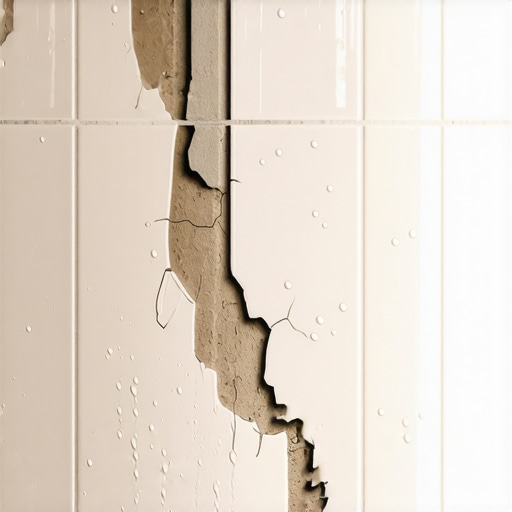
The hidden structural risks of layering tile in wet environments
I spent three days grinding concrete on a job last month just so the floor wouldn’t click like a castanet. That is the reality of professional work. Most guys skip the leveling compound. They think the underlayment will hide the dip. It won’t. I have seen the same shortcut mentality applied to wet environments where installers try to save time by tiling over existing ceramic. It is a catastrophe waiting to happen. You are essentially building a skyscraper on a foundation of wet cardboard. When you walk into a bathroom and see a double layer of tile, you aren’t looking at a renovation. You are looking at a ticking time bomb of moisture and weight that will eventually compromise the integrity of your home. I have spent 25 years on my knees with a moisture meter and a level, and I can tell you that the molecular reality of a wet environment does not care about your budget or your timeline. A floor is a performance surface, not a decoration.
The structural lie of a double layer
Tiling over old tile in wet environments is a high-risk gamble that creates a moisture trap between layers. This practice leads to mold growth, structural rot, and adhesive failure because the secondary layer prevents the primary substrate from breathing or draining correctly. Professionals advise against this shortcut in showers or high-moisture zones because it violates the fundamental physics of moisture management. When you add a second layer of tile, you are doubling the weight on the subfloor. A standard ceramic tile installation weighs approximately 5 pounds per square foot. By doubling this, you risk exceeding the deflection limits of your floor joists. Most residential floors are engineered to a limit of L/360, which means the floor can only bend 1/360th of its span. When you exceed this, the floor bows. When the floor bows, the grout cracks. When the grout cracks, the water wins. This is why showers with a style must start with a clean, single-layer substrate that can handle the specific load requirements of the room.
“A floor is only as good as the subfloor beneath it; deflection is the enemy of every joint.” – Master Flooring Axiom
Why water finds the path of least resistance
Water migration in a bathroom occurs through capillary action and vapor transmission, meaning moisture will always find the gap between two layers of tile. Once water is trapped between the old tile and the new thin-set, it has no way to evaporate. This leads to hydrostatic pressure that eventually pops the top layer of tile off the bottom layer. In a shower, the constant cycle of heating and cooling causes the materials to expand and contract. Because the two layers of tile are likely different materials with different thermal expansion coefficients, they will move at different rates. This creates shear stress on the bond line. If you are dealing with failing grout in an existing installation, you should investigate grout restoration secrets before you ever consider covering it up with a new layer of tile. Covering the problem is not solving the problem. It is burying it. The moisture will remain, and the mold will flourish in the dark, anaerobic environment between the tiles.
The physics of weight and deflection
Floor deflection is the vertical movement of a floor system under a load, and adding multiple tile layers can cause joists to sag. This sag creates a concave surface that prevents proper drainage toward the shower waste. If the floor is not perfectly flat and rigid, the locking mechanisms of the installation will fail. This is particularly dangerous in regions with high humidity like the Gulf Coast or the Pacific Northwest, where the wood framing members are already subject to atmospheric moisture. The extra weight can lead to long-term structural fatigue. Most homeowners do not realize that their floor is a system, not a stack of parts. Every component, from the joist to the subfloor to the thin-set, must work in harmony. When you add an unnecessary layer of tile, you disrupt that harmony.
Comparing substrate bond strengths
The chemical bond of modified thin-set is designed to penetrate a porous substrate. When you apply it to a glazed tile, the bond is purely mechanical and significantly weaker. The following table illustrates why traditional substrates are superior to layering tile.
| Substrate Type | Bond Strength (PSI) | Moisture Resistance | Risk Factor |
|---|---|---|---|
| Cement Backer Board | 350+ | High | Low |
| Exterior Grade Plywood | 200+ | Medium | Moderate |
| Glazed Ceramic Tile | 40-60 | Zero | Critical |
| Sand-Cement Bed | 300+ | High | Low |
The 1/8 inch that ruins everything
Tile lippage and uneven transitions occur when you layer materials, creating trip hazards and aesthetic failures at the door threshold. Most bathroom doors are cut for a single layer of flooring. When you add a second layer, the floor height rises by at least half an inch. This forces you to trim the door, adjust the toilet flange, and rethink your baseboards makeover ideas to hide the awkward height difference. If the original tile was not perfectly level, the new layer will telegraph every hump and dip. You will end up with sharp edges, known as lippage, which catch your feet and make the floor impossible to clean properly. I have seen countless DIY jobs where the homeowner thought they were saving money, only to spend three times as much later fixing the height issues at the transitions.
Why your existing grout is a ticking time bomb
Degraded grout in an old shower floor is often a sign of underlying moisture damage or subfloor movement. If you tile over this, you are sealing in the failure. Before doing anything, you must understand how to refresh grout properly to see if the original installation is even stable enough to support itself. If the grout is crumbling, the thin-set underneath is likely turning to powder. Tiling over powder is like building on sand. The new tile will feel solid for a month, then you will start to hear the dreaded ‘crunch’ when you step on it. That crunch is the sound of your investment shattering. In wet environments, the grout also acts as a primary defense against mold. When you layer tile, you create a sandwich of organic material that mold loves. You will never be able to scrub the mold out because it is living under the surface.
“The installation of ceramic tile over existing ceramic tile is only recommended when the original installation is perfectly bonded and the surface is prepared via mechanical scarification.” – TCNA Technical Bulletin
The professional demolition checklist
If you are considering a bathroom renovation, you must follow a strict protocol to ensure a long-lasting result. Do not take shortcuts. Use this checklist to evaluate your project.
- Check for hollow sounds by tapping the old tile with a mallet.
- Measure the moisture content of the subfloor using a pin-less meter.
- Verify that the floor joists meet the L/360 deflection standard.
- Remove the toilet and check the condition of the wax ring and flange.
- Inspect the baseboards for signs of water wicking or rot.
- Ensure the shower pan is slope-tested for at least 24 hours.
Regional moisture impacts on flooring
In humid climates like Florida or Louisiana, the vapor drive is a constant battle. Moisture moves from the warm, humid outside to the cool, air-conditioned inside. If you have two layers of tile, you create a vapor barrier that traps this moisture in the subfloor. This leads to dry rot in the plywood and a total failure of the bond. In dry climates like Arizona, the wood subfloor can shrink so much that it pulls away from the tile. Adding a second layer only increases the tension on those joints. No matter where you live, you need to account for local building codes and moisture requirements. If you are unsure about the state of your current floor, you should contact us for a professional evaluation before you lay a single piece of new tile.
Final architectural verdict
The physics of flooring are uncompromising. While the temptation to tile over an old surface is strong, the dangers of moisture entrapment, structural overload, and bond failure are too great in a wet environment. You must strip the room back to the studs or the subfloor. You must ensure the substrate is flat, dry, and rigid. Only then can you build a floor that will last for decades. Avoid the hacks who promise a one-day makeover. A real floor takes time, precision, and a deep respect for the materials used. If you want a floor that stands the test of time, do it right the first time. Tear it out. Clean it up. Build it back better.”