
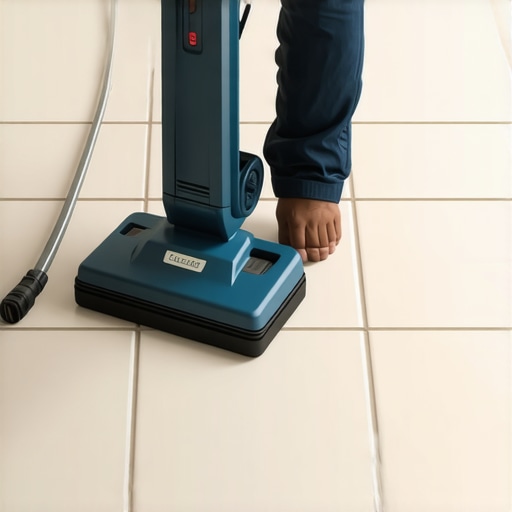
The Easiest Way to Clean Grout Lines Without Scrubbing on Your Knees
Most guys skip the leveling compound. They think the underlayment will hide the dip. It won’t. I spent three days grinding concrete on a job last month just so the floor wouldn’t click like a castanet. That same logic applies to your grout. People treat it like a minor detail, but it is a structural necessity that holds your tile installation together. When you see black, gunky grout lines in a shower or across a kitchen floor, you are looking at a failure of maintenance and a misunderstanding of chemistry. I have spent 25 years on my knees with a moisture meter and a level. I know exactly how a cementitious matrix behaves when it gets saturated with dirty mop water. It is not pretty. Grout is basically a concrete sponge. It is full of microscopic pores that act like straws, sucking in every bit of grease, bacteria, and grey water you push over it. If you want to clean it without ruining your joints or your back, you have to stop thinking about elbow grease and start thinking about molecular displacement.
The porous reality of cementitious joints
Grout lines are porous structures made of cement and sand that absorb liquids through capillary action rather than repelling them. To clean these lines without scrubbing, you must utilize chemical reactions or thermal energy to lift the trapped particulates out of the microscopic voids in the grout matrix. It is a game of physics. When you use a traditional mop, you are just moving dirt from the tile surface and depositing it into the lowest point of the floor, which happens to be the grout line. This creates a build-up of organic matter that hardens over time. You need to break that bond. If you want to understand the long-term health of your floor, you should look into grout restoration secrets for long lasting results. This isn’t just about looks. It is about preventing the moisture from reaching the thin-set and compromising the bond to the subfloor.
“A floor is only as good as the subfloor beneath it; deflection is the enemy of every joint.” – Master Flooring Axiom
Oxygen bleach technology for deep penetration
Oxygen bleach solutions release concentrated oxygen bubbles that physically lift dirt and organic stains from the deep pores of grout lines. Unlike chlorine bleach, which can damage the pigment in your grout and eat away at the binders, oxygen bleach is pH neutral and safe for the structural integrity of the cement. You mix the powder with warm water, pour it onto the grout lines, and let it sit for at least thirty minutes. You can see the bubbles working. The chemical reaction does the work that your brush used to do. It is about dwell time. If you don’t give the chemical time to work, you are just wasting money. This is the same principle we use when prepping a slab for a moisture barrier. You can’t rush the chemistry. For those looking for more general maintenance, these tile cleaning tips for a sparkling bathroom in 2025 provide a great roadmap for keeping things tidy between deep cleans.
The chemistry of alkaline versus acidic cleaners
Alkaline cleaners are the most effective tools for breaking down grease and organic matter without etching the surface of natural stone or tile. Most people reach for vinegar, but vinegar is an acid that can slowly dissolve the lime in the cement grout, leading to sandy, crumbling joints over time. You want a high pH cleaner that can saponify fats. In a kitchen environment, the grout is usually full of cooking oils. An alkaline pre-spray will turn those oils into a water-soluble soap that you can simply rinse away. It is efficient. It is smart. If you are dealing with a shower, you might have mineral build-up, but you still need to be careful with acids. If you are planning a renovation, check out these showers that wow modern designs for 2025 to see how modern materials can mitigate these issues from the start.
How steam creates a thermal shock on dirt
High temperature steam vapor penetrates the microscopic pores of grout to melt grease and kill bacteria through thermal shock. This method uses almost no water, which is vital because saturating your grout can lead to moisture wicking up into the baseboards or even the subfloor. I have seen countless cases of mold behind baseboards because someone used too much water while cleaning their tile. Steam is different. It is a dry heat that expands the pores of the grout, allowing the pressurized vapor to push the dirt out. It is the closest thing to a magic wand in the flooring industry. While you are at it, consider how your trim looks. You might want to explore some baseboards makeover ideas to elevate your space if the old ones have been damaged by years of wet mopping.
The 1/8 inch that ruins everything
Proper spacing and joint width are the primary factors that determine how much dirt a grout line will collect over its lifespan. Wider joints are harder to keep clean because they have more surface area for foot traffic to impact. This is why I always recommend the smallest allowable joint for the tile type. If the joint is too wide, it becomes a gutter. If it is too narrow, the grout won’t have enough body to stay put. It is a delicate balance. If your grout is beyond saving, you might need to know how to refresh grout without replacing it before you decide to tear everything out. Sometimes a professional-grade colorant can seal the surface and make it look new again while providing a waterproof barrier.
Technical Comparison of Cleaning Methods
| Method | pH Level | Effort Level | Drying Time |
|---|---|---|---|
| Oxygen Bleach | Neutral (10-11) | Low | Medium |
| Steam Vapor | N/A | Low | Instant |
| Acidic Cleaners | Low (2-3) | Medium | Medium |
| Alkaline Degreaser | High (12-13) | Low | Medium |
While most people want the thickest underlayment, too much cushion actually causes the locking mechanisms on LVP or the grout lines in tile to snap under pressure. This is a hard truth. You want a stable, flat surface. The same applies to grout cleaning tools. Don’t use stiff wire brushes. They will scratch the tile and gouge the grout. Use a soft nylon brush if you must, but if you’ve used the right chemistry, a microfiber mop should pick up the slurry without any resistance. You should also be aware of the environment. If you care about the planet, look into eco-friendly tile solutions for sustainable homes in 2025 which often feature denser, less porous materials.
Grout Maintenance Checklist
- Vacuum the floor to remove dry debris before any liquid touches the surface.
- Apply the cleaning solution and allow for a 20 minute dwell time.
- Extract the dirty solution with a wet-vac rather than spreading it with a mop.
- Rinse the area with clean, distilled water to remove chemical residues.
- Seal the grout once it is completely dry to prevent future staining.
If you are struggling with a small bathroom, the layout can make cleaning even harder. Check out showers with a style trendy ideas for small bathrooms to find configurations that make maintenance easier. And if you are ever in doubt about the condition of your subfloor or the chemistry of your tile, feel free to contact us for expert advice. We have seen it all. From the rot caused by a leaking pan to the expansion gaps that were filled with caulk instead of grout. We know how to fix it. If you need more info on how we handle your data, see our privacy policy. Remember that a clean floor starts with a solid foundation. If your baseboards are looking rough, you can find chic baseboard designs that transform rooms in 2025 to finish off the look. Stick to the science. Stop scrubbing and start using the physics of cleaning to your advantage.