
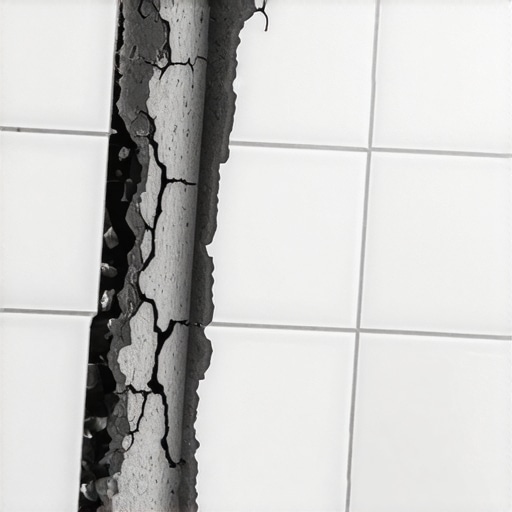
The Hidden Cost of Choosing Cheap Porcelain Tile for Showers
Most guys skip the leveling compound. They think the underlayment will hide the dip. It won’t. I spent three days grinding concrete on a job last month just so the floor wouldn’t click like a castanet. That job was supposed to be a simple porcelain install, but the homeowner bought what I call bottom-shelf clay. It was warped right out of the box. Every piece had a crown or a dip. You cannot hide physics. When you buy cheap tile, you aren’t just saving money, you are buying a future failure that starts at the subfloor and ends with a sledgehammer. My hands are still vibrating from that grinder, but I saved the job. Most installers wouldn’t. They would just slap it down, collect the check, and change their phone number before the first leak appeared. A shower is a pressurized environment. It is a chemical and mechanical war zone. If you treat it like a cheap craft project, the water will find the weakness. It always does.
The myth of the bargain bin tile
Cheap porcelain tile often carries hidden manufacturing defects like excessive warpage and high water absorption rates that lead to structural failure. These budget options lack the molecular density required to withstand constant moisture exposure. While the price tag per square foot looks attractive, the long term costs include grout cracking and water intrusion. I have seen it a thousand times. You go to a big box store and see a beautiful 12 by 24 tile for ninety nine cents. You think you won the lottery. What you actually bought was a batch of seconds that failed the factory quality control check. These tiles are often not rectified, meaning their edges are not perfectly square. This forces the installer to use wider grout lines to hide the variance. Wider grout lines mean more maintenance and more potential points of ingress for moisture. If you want a result that lasts, look into eco-friendly tile solutions for sustainable homes in 2025 where quality is prioritized over raw volume. High quality porcelain is fired at higher temperatures for longer periods. This creates a vitrified body that is almost entirely non porous. Cheap tile is often fired too fast. The core remains somewhat soft and thirsty. In a shower, a thirsty tile is a ticking time bomb.
Why water always wins against poor ceramics
The water absorption rate of a tile determines its lifespan in a wet environment like a walk-in shower or steam room. True porcelain must have a water absorption rate of 0.5 percent or less according to international standards. Cheap imitations often exceed this, absorbing water into the body of the tile and causing it to swell or detach from the thinset. When moisture penetrates the tile body, it begins a process of degradation that is invisible from the surface. You might notice the grout looks darker in certain spots even after the shower has dried. That is the tile holding onto water. This moisture eventually breaks down the bond of the mortar. I once pulled up a floor where the tiles came up whole because the back of the tile was saturated with water. The thinset was still stuck to the floor, but the tile had simply let go. This is why showers that wow modern designs for 2025 rely on high density materials. If the material cannot reject water at a molecular level, it has no business being in a shower. We measure this using the boiling water test. We weigh the tile dry, boil it for five hours, let it sit in water for twenty four hours, and weigh it again. If it gains too much weight, it is a fail. Cheap tile producers skip these rigorous tests to keep costs down.
“A floor is only as good as the subfloor beneath it; deflection is the enemy of every joint.” – Master Flooring Axiom
The chemical bond of modern thinset
The relationship between the tile backing and the polymer modified thinset is the only thing preventing a structural failure. Cheap tiles often have a dusty, chalky residue on the back from the manufacturing process that prevents the mortar from ever making a clean mechanical bond. When I am on my knees installing, I back butter every single piece. This is a step the cheap guys skip because it takes time. If you have a low quality tile with a dusty back, the thinset just skins over. It looks like it is stuck, but it is just sitting there. Eventually, the expansion and contraction of the house will pop that tile loose. This is especially true in areas with temperature swings. The tile expands at one rate, the subfloor at another. If the chemical bond is weak because of poor tile quality, the system fails. You need a mortar with high polymer content to bridge that gap, but even the best glue can’t stick to dirt. I always tell people that the tile is just the skin. The mortar and the waterproofing membrane are the muscle and bone. If the skin is falling off because it was poorly made, the whole body suffers. This is why proper prep is more important than the actual laying of the tile.
Technical Specifications Comparison
| Feature | Cheap Grade Porcelain | Premium Grade Porcelain |
|---|---|---|
| Water Absorption (ASTM C373) | Above 0.5% | Below 0.05% |
| PEI Wear Rating | PEI 2 or 3 | PEI 4 or 5 |
| Warpage Allowance | Up to 1.5mm | Less than 0.5mm |
| Breaking Strength | 250 lbf | 450+ lbf |
| Edge Quality | Pressed (Variable) | Rectified (Precise) |
The grout failure point
Grout is the most vulnerable part of any tile installation and its performance is directly tied to the stability of the tile edges. When cheap tiles are unevenly sized, the grout lines must be wider to accommodate the mistakes in the material, leading to faster erosion and staining. Wider grout joints are prone to pinholes and shrinkage cracks. Once a crack forms, water travels behind the tile via capillary action. This is where the real damage starts. The wood framing begins to rot. Mold begins to grow in the wall cavity. By the time you see a stain on the ceiling downstairs, you are looking at a ten thousand dollar repair. You can try how to refresh grout without replacing it but if the tile is moving because it is low quality, no amount of new grout will save it. The grout is not a waterproof barrier; it is a filler. If the tiles are shifting even a fraction of a millimeter because they are thin and brittle, the grout will pulverize. I recommend high performance epoxy grouts for showers, but they are difficult to install. Most budget contractors won’t use them. They use the cheap sanded stuff that turns into a sponge the second it gets wet.
The 1/8 inch that ruins everything
Lippage is the term for when one edge of a tile is higher than the adjacent tile, and it is a hallmark of cheap, warped porcelain. In a shower floor, lippage is not just an eyesore; it prevents proper drainage and creates standing pools of water that breed bacteria. When water cannot flow freely to the drain because a warped tile is acting as a dam, you get slime. You get soap scum buildup that is impossible to clean. This is why tile cleaning tips for a sparkling bathroom in 2025 emphasize the importance of a flat surface. If your floor is a series of mini speed bumps, you will never get it clean. I have seen homeowners trip on lippage in the shower. It is dangerous. To fix it, you have to use leveling clips, but clips can only do so much. If the tile is bowed like a banana, the clip will just snap the tile if you try to force it flat. Cheap manufacturing uses shorter cooling cycles, which causes the tile to warp as it leaves the kiln. You might save five hundred dollars on the tile, but you will spend two thousand extra on the labor trying to make it look decent, and it still won’t be perfect.
The connection to baseboards and transitions
Transitions between the shower tile and the bathroom floor must be handled with precision to prevent moisture from escaping into the subfloor of the main room. A poor tile choice in the shower often leads to sloppy transitions at the curb, where moisture can wick into the nearby drywall and baseboards. I always look at the baseboards first when I suspect a shower leak. If the wood is swollen or the paint is peeling near the shower, the tile system has failed. You should look at chic baseboard designs that transform rooms in 2025 to see how modern installs integrate moisture resistant materials at these critical junctions. If you use cheap, porous tile in the shower, the moisture will migrate. It will find your baseboards makeover ideas to elevate your space and ruin them from the inside out. I have replaced entire bathroom floors because a cheap shower pan leaked into the joists. The tile looked fine on top, but the structure was mush. It is all connected. You cannot isolate a bad tile job; it will infect the whole room.
“Standard ceramic tile is for walls; porcelain is for floors. If you confuse the two in a wet area, you are building a slip and slide.” – Tile Council of North America Standard
Pre installation checklist for homeowners
- Check the box for the PEI rating to ensure it is at least a 4 for floor use.
- Run your hand across the surface of two tiles held back to back to check for bowing.
- Verify that the tile is rectified if you want narrow grout lines under 1/8 inch.
- Ensure the water absorption rate is clearly labeled as 0.5 percent or lower.
- Ask for a shade variation rating of V2 or higher to avoid a flat, cheap appearance.
- Check for a COF (Coefficient of Friction) of 0.42 or higher for wet area safety.
- Inspect the tile edges for micro chips that indicate a brittle, low quality body.
The ghost in the expansion gap
Every shower installation requires an expansion gap at the perimeter where the walls meet the floor to allow for the natural movement of the house. If you fill this gap with hard grout instead of 100 percent silicone sealant, the grout will crack as soon as the house settles. Cheap installers love grout because it is fast. They don’t want to spend the time masking off lines for a clean silicone bead. When the house moves, the tile needs room to breathe. If the tile is cheap and brittle, and there is no expansion gap, the tile will tent. This means the tiles push against each other until they pop off the floor in a V shape. It sounds like a gunshot when it happens. I have walked into bathrooms where the entire floor had lifted three inches off the subfloor because the installer didn’t leave a gap at the walls. This is basic engineering. You have to account for thermal expansion. A hot shower can raise the temperature of the tile by forty degrees in minutes. That heat causes the molecules to vibrate and expand. If they have nowhere to go, they destroy the bond. If you want to see what a professional result looks like, browse showers with a style trendy ideas for small bathrooms to see how proper spacing is maintained. Professionalism is found in the gaps you cannot see.
Long term maintenance and the true cost
The true cost of cheap tile is measured in the hours spent scrubbing and the eventual cost of a total demolition and replacement. High quality porcelain is almost maintenance free because its surface is so dense that mold and mildew cannot find a foothold. Cheap tile has microscopic pits on the surface. These pits collect body oils, soap film, and hard water minerals. Over time, the tile looks dull and dirty no matter how much you scrub. If you find yourself constantly looking for grout restoration secrets for long lasting results, the culprit might be the tile itself shedding minerals into the grout line. It is a cycle of failure. You buy cheap, you clean more, you repair often, and you replace early. A high quality porcelain shower can last fifty years. A cheap one might look okay for five before the cracks and stains become unbearable. If you are planning a renovation, do yourself a favor and spend the extra two dollars a square foot. It is the cheapest insurance policy you will ever buy. If you have questions about specific materials, you can always contact us for a technical breakdown. Don’t let a bargain ruin your home’s foundation.