
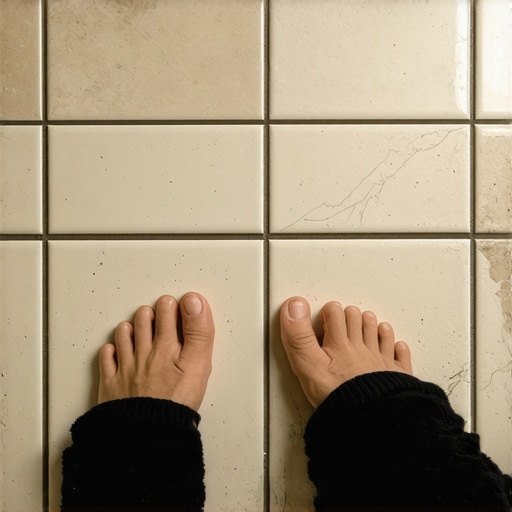
I spent three days grinding concrete on a job last month just so the floor wouldn’t click like a castanet. While I was working in that dusty basement, I noticed the homeowner cleaning the upstairs bathroom with a mixture of white vinegar and water. It is a common sight. People believe that natural cleaners are safer for their homes. However, from the perspective of a master installer with 25 years in the dirt, I can tell you that vinegar is one of the most effective ways to destroy a tile installation from the inside out. You see, a floor is not just a surface. It is a structural assembly where chemistry and physics meet. When you introduce a low pH acid like vinegar to a cementitious grout line, you are initiating a chemical reaction that dissolves the very binder holding your floor together.
The chemistry of grout failure and acetic acid
Vinegar contains acetic acid which chemically reacts with the calcium carbonate found in cement-based grout to cause pitting and erosion. This reaction transforms the solid mineral structure of the grout into a water-soluble salt known as calcium acetate. Over time, the grout becomes porous, loses its pigment, and eventually crumbles into dust. This structural degradation is especially dangerous in high-moisture areas like showers where the integrity of the grout prevents water from reaching the subfloor. If you are worried about your current grout state, you might want to look into grout restoration secrets for long-lasting results to save the installation. The molecular reality is that Portland cement is alkaline. When an acid meets a base, the result is neutralization, which in this case means the destruction of the grout’s crystalline matrix. This is not a theory. It is basic chemistry that I have seen ruin thousands of dollars in high-end tile work.
Why your subfloor is lying to you
Subfloor deflection and moisture levels are the hidden killers of tile grout that vinegar only exacerbates. Even if your subfloor feels solid, microscopic movements under load put stress on the grout joints. When vinegar has already weakened those joints by eating away the cement paste, the floor begins to crack. I have walked onto jobs where the tile looks fine but the grout is turning to sand because of a combination of a bouncy subfloor and acidic cleaning. Most guys skip the leveling compound and think a thick underlayment will hide the dip. It won’t. If the subfloor has more than 1/8 inch of deviation over 10 feet, your grout is already at risk. Adding vinegar to the mix just accelerates the timeline of failure. This is why we adhere to strict standards.
“A floor is only as good as the subfloor beneath it; deflection is the enemy of every joint.” – Master Flooring Axiom
Moisture in the slab also plays a role. If a concrete slab has a high vapor emission rate, it can push salts to the surface of the grout. This is called efflorescence. When you spray vinegar on efflorescence, you might think you are cleaning it, but you are actually reacting with the salts and creating a more porous surface that will trap even more dirt in the future.
The ghost in the expansion gap
Expansion gaps at the perimeter of a room are required by the TCNA to prevent tile tenting and grout popping. These gaps are often hidden by baseboards, but they are the lungs of your floor. When you use excessive liquid cleaners like vinegar and water, the moisture seeps under the baseboards and into the expansion gap. If those baseboards are made of MDF, they will swell and rot. You can see some baseboards makeover ideas to elevate your space if yours have been damaged by over-cleaning. The liquid doesn’t just evaporate. It sits in that 1/4 inch gap and creates a micro-environment for mold. In regions with high humidity like Houston or Florida, this moisture trap becomes a breeding ground for spores. The acid in the vinegar can also etch the finish on your baseboards, leaving them dull and prone to chipping. Most people don’t realize that the floor and the wall trim are a single system. If you compromise the grout at the edge, you compromise the whole room.
The 1/8 inch that ruins everything
Narrow grout joints are more susceptible to acid erosion because there is less material to act as a buffer against the vinegar. When you have a 1/16 inch or 1/8 inch joint, even minor surface etching can lead to a total loss of the bond between the tile and the grout. For those looking for tile cleaning tips for a sparkling bathroom in 2025, it is better to use pH-neutral cleaners specifically formulated for stone and tile. Let’s look at the data regarding material durability and pH levels.
| Material Type | Typical pH Resistance | Recommended Cleaner pH | Acclimation Time |
|---|---|---|---|
| Cement Grout | 7.0 to 10.0 | 7.0 (Neutral) | 72 Hours |
| Epoxy Grout | 3.0 to 12.0 | 6.0 to 8.0 | 24 Hours |
| Natural Marble | 8.0 to 9.0 | 7.0 (Neutral) | 48 Hours |
| Porcelain Tile | 3.0 to 14.0 | 5.0 to 9.0 | 24 Hours |
As the table shows, cement-based grout is significantly more sensitive than epoxy versions. If you have epoxy grout, you might get away with vinegar for a while, but it still isn’t recommended. The acid can eventually dull the resinous finish of the epoxy, making it look aged and yellowed.
Why your shower is a chemical laboratory
Shower environments combine heat, high moisture, and body oils to create a complex cleaning challenge that vinegar cannot solve safely. When you spray vinegar on showers, the steam helps the acid penetrate deeper into the grout pores. This leads to a faster breakdown of the sealers. If you are designing a new space, you should check out showers that wow with modern designs for 2025 to see how to incorporate better materials. Once the sealer is gone, the vinegar begins to eat the grout. Then, the water from your daily shower gets behind the tile. This is how you end up with a moldy mess behind the walls.
“Cementitious grout is a porous material that is susceptible to acid attack. Acidic cleaners can dissolve the cement paste, leading to erosion and darkening of the grout joints.” – Master Flooring Axiom
I have seen showers where the bottom three rows of tile were literally held on by the strength of the thin-set alone because the grout had been completely dissolved by years of “natural” cleaning. It is a slow death for a bathroom.
The safe path to clean grout
Protecting your investment requires a shift from acidic home remedies to professional-grade maintenance protocols. You should never use vinegar on natural stone like marble, limestone, or travertine, as it will etch the surface instantly. For ceramic and porcelain, the risk is mostly to the grout. If your grout is already looking dingy, you can find out how to refresh grout without replacing it using proper alkaline cleaners. Here is a checklist for proper maintenance:
- Use a pH-neutral cleaner for daily maintenance.
- Seal your grout every 6 to 12 months with a high-quality penetrating sealer.
- Dry your shower walls with a squeegee after every use to prevent mineral buildup.
- Avoid using stiff wire brushes that can mechanically damage the grout surface.
- Address any cracked or missing grout immediately to prevent water infiltration.
If you follow these steps, your floors will last a lifetime. If you keep using vinegar, you are just counting down the days until you have to call me for a full tear-out. Most homeowners think they are saving money, but they are actually creating a future expense. It is much cheaper to buy a $15 bottle of neutral cleaner than to pay $5,000 for a new shower floor. If you have questions about your specific flooring type, you can always contact us for expert advice. We have seen every mistake in the book and we know how to fix them correctly. Don’t let a kitchen condiment ruin your beautiful home. Stick to the science and your floors will stay solid for decades.