
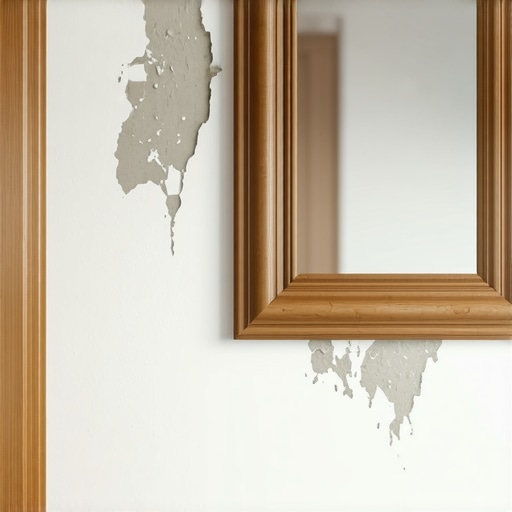
I once walked into a luxury bathroom where the two hundred dollar a linear foot mahogany baseboards were curling off the wall like a dried up orange peel because the homeowner insisted on natural wood next to a steam shower. It was a mess of black mold and failed adhesive. I have spent twenty five years with sawdust under my nails and a moisture meter in my pocket, and if there is one thing I know, it is that wood and high humidity bathrooms are a recipe for structural failure. Most people see baseboards as a simple aesthetic border. I see them as a sacrificial barrier that usually fails because the installer ignored the laws of physics. When you put standard wood trim in a room where the relative humidity swings from thirty percent to ninety percent every morning, you are inviting a slow motion disaster into your walls. You cannot fight the hygroscopic nature of wood. It will win every time.
The humidity trap behind your baseboards
Standard wood trim in high humidity bathrooms fails because wood is a hygroscopic material that naturally absorbs and releases moisture to reach equilibrium with its environment. This movement causes the wood to expand and contract across its grain, eventually breaking paint seals and inviting rot. When we talk about bathrooms, we are talking about extreme environments. Your showers generate steam that penetrates the smallest gaps in your grout and settles behind your baseboards. This creates a dark, damp microclimate where fungi thrive. I have pulled back trim that looked fine on the outside only to find the drywall behind it turned to mush. It is not just about the wood. It is about the entire wall assembly failing because a cosmetic choice ignored the moisture load of the room. This is why understanding the chemistry of your materials is the only way to build a bathroom that lasts more than five years.
“A floor is only as good as the subfloor beneath it; deflection is the enemy of every joint.” – Master Flooring Axiom
Why cellulose fibers hate your steam shower
The cellular structure of wood consists of tracheids and vessel elements that act like microscopic drinking straws designed to transport water. Even after a tree is harvested and dried to a six percent moisture content, those cells remain active in their ability to absorb vapor. In a bathroom, these cells gorge themselves on steam. The technical term is the fiber saturation point. Once the cell walls are saturated, the excess water sits in the cell cavities. This leads to dimensional instability. You might notice your miters opening up or the trim bowing away from the wall. This is not a defect in the wood. It is the wood doing exactly what it was evolved to do. If you use standard pine or MDF, you are using a sponge. MDF is particularly egregious because it uses urea-formaldehyde resins as a binder. Once that binder gets wet, the wood fibers swell and never return to their original shape. It is a one way trip to the dumpster. For those looking for better options, you should check out baseboards makeover ideas to elevate your space to see how professional grade materials differ from builder grade junk.
The hidden chemistry of wood rot
Fungal decay in wood trim requires four specific elements to thrive which are oxygen, favorable temperatures, moisture, and a food source. In a bathroom, you have all four in abundance. The cellulose and lignin in your baseboards are the buffet. When the moisture content of the wood hits twenty percent, the decay fungi wake up. They secrete enzymes that break down the structural polymers of the wood. You see this as soft spots or discoloration. Most guys try to hide this with a fresh coat of paint. That is a coward’s move. Paint just traps the moisture inside, accelerating the rot through a process called hydrostatic pressure. The vapor wants to escape but the latex film holds it back until the pressure causes the paint to blister and peel. If you are dealing with tile and showers, you have to realize that the grout line at the floor is not a waterproof seal. It is a porous bridge that wicks water directly into the bottom of your trim. [IMAGE_PLACEHOLDER] To prevent this, you need a different strategy.
| Material Type | Moisture Resistance | Expansion Rate | Service Life in Bathrooms |
|---|---|---|---|
| Solid Pine | Low | High | 3 to 5 Years |
| MDF (Fiberboard) | None | Extreme | 1 to 2 Years |
| PVC (Solid) | Absolute | Low | 50+ Years |
| Fired Tile | Absolute | Zero | 100+ Years |
Durable alternatives that actually survive
Switching to non-porous materials like solid PVC or porcelain tile baseboards eliminates the risk of rot and dimensional instability. I always tell my clients that if they want the look of wood, they should use a high-density cellular PVC. It cuts like wood and nails like wood, but it will not rot if you submerge it in a bucket of water for a month. Another superior option is using tile as your baseboard. By continuing the floor tile four inches up the wall, you create a continuous waterproof basin. This is how they built bathrooms in the old days before we got lazy with cheap trim. When you use tile, you eliminate the rot point entirely. If you are worried about aesthetics, modern tile options can mimic the look of wood perfectly without any of the headache. Keeping these surfaces clean is also easier, as outlined in these tile cleaning tips for a sparkling bathroom in 2025. I have seen too many beautiful showers that wow modern designs for 2025 ruined by a cheap piece of pine trim that rotted out within twenty four months.
The science of the perimeter seal
The most neglected part of a bathroom installation is the transition between the floor and the wall where moisture infiltration is most likely to occur. Professionals do not just nail trim to the wall and walk away. We use a three part defense. First, we ensure the waterproofing membrane from the shower floor extends up the wall. Second, we use a bead of high quality silicone sealant at the bottom of the baseboard. Notice I said silicone, not acrylic caulk. Acrylic shrinks and cracks. Silicone remains flexible and handles the micro-movements of the house. Third, we back-prime every single piece of trim. If you only paint the front, you are leaving the back exposed to the damp air trapped in the wall cavity. It is a basic rule of physics. If you do not seal all six sides of a board, you are not protecting it. You are just hiding the problem. For more inspiration on how to execute this correctly, look at chic baseboard designs that transform rooms in 2025 to see how pros handle these transitions.
“Water is the most persistent force in nature; your bathroom is merely a temporary container for it.” – Master Flooring Axiom
Installation checklist for wet environments
- Verify the subfloor moisture content is below twelve percent before installing any trim.
- Apply a high quality oil-based primer to all six sides of the wood if you must use natural materials.
- Leave a tiny one sixteenth inch gap between the trim and the tile floor to be filled with flexible silicone.
- Use stainless steel or hot-dipped galvanized finish nails to prevent rust bleed through the paint.
- Ensure the bathroom ventilation fan is rated for the square footage of the room to move moist air out fast.
The 1/8 inch that ruins everything
The gap between your baseboard and the floor is where most bathroom failures begin due to capillary action pulling water upward. If your trim sits flush against a wet floor, it will suck up water like a wick. I always use a spacer during installation to keep that trim off the floor. That small gap is then filled with a color matched 100 percent silicone sealant. This creates a gasket that prevents water from getting under the trim or into the wall. It also allows the floor and wall to move independently. Houses breathe. They shift. If you lock your trim down tight without a flexible joint, something is going to snap. It is usually the bond between your grout and the wall. By respecting the physics of expansion and the chemistry of moisture, you build something that lasts. Stop buying the cheap stuff at the big box store and start thinking like an engineer. Your bathroom will thank you in a decade when it is still standing without a trace of mold. “