
The physics of a flat plane in a wet environment
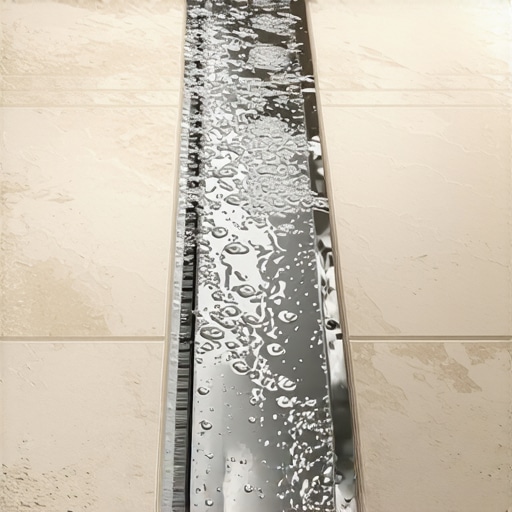
Most guys skip the leveling compound. They think the underlayment will hide the dip. It won’t. I spent three days grinding concrete on a job last month just so the floor wouldn’t click like a castanet. That job was for a curbless shower with a linear drain. When you go curbless, the margin for error disappears. You are no longer just laying tile; you are engineering a drainage system that must defy the natural tendency of water to sit, soak, and destroy. A linear drain is a long, narrow trough that replaces the traditional center drain. It allows the entire floor to slope in a single direction toward one wall. This eliminates the need for the four-way envelope cut required by circular drains. If your subfloor is out of level by even an eighth of an inch over ten feet, your linear drain will fail. I smell like oak dust and grinded concrete today because I refuse to let a floor fail. Water is a patient enemy. It finds every microscopic void in your thin-set. It exploits every crack in your grout. When we talk about curbless showers, we are talking about the intersection of hydraulic engineering and structural rigidity.
The geometry of a single plane
Linear drains for curbless showers allow for the use of large format tiles because they only require a single slope toward the drain. This geometric simplicity eliminates the complex centering required by traditional drains. You no longer have to cut your beautiful 24 by 48 inch porcelain into small triangles to fit a funnel shape. The single slope is easier to walk on and provides a safer environment for those with mobility issues. However, that single slope must be precise. The TCNA recommends a slope of one quarter inch per foot toward the drain. If you miss this mark, you get puddles. Puddles lead to bio-slime and mold. I have seen million-dollar bathrooms ruined because the installer didn’t understand the physics of the pitch. When the water hits the tile, it needs a clear path to the trough. Any lippage or uneven tile edges will act as a dam. You need a flat surface, not just a level one.
“A floor is only as good as the subfloor beneath it; deflection is the enemy of every joint.” – Master Flooring Axiom
When the subfloor fights back
The structural integrity of your subfloor determines the lifespan of a curbless shower installation. If you are working on a wooden subfloor, you must calculate the deflection. Most standard floors are built to L/360 standards. For a curbless shower with large format tile, you need L/720. This means the floor must be twice as stiff. You might need to sister the joists or add a layer of exterior grade plywood. If the floor flexes, the waterproofing membrane will eventually tear. Once that membrane tears, the wood underneath starts to rot. I have replaced entire bathroom floors because the previous guy didn’t want to spend the time reinforcing the joists. It is a messy, expensive mistake. In a concrete slab, the challenge is the recess. You have to chip out the concrete to create the slope. This is where the grinding comes in. You need a smooth, consistent transition from the main bathroom area into the shower zone. If you have questions about the structural requirements, you should reach out via the contact us page for professional guidance.
| Feature | Linear Drain | Traditional Center Drain |
|---|---|---|
| Slope Direction | Single Plane | Four-Way Pitch |
| Tile Compatibility | Large Format Porcelain | Small Mosaic Only |
| Installation Complexity | High (Requires Recess) | Moderate |
| GPM Capacity | Up to 10-15 GPM | 5-7 GPM |
| Aesthetic Appeal | Modern and Minimalist | Traditional and Busy |
The chemical reality of the wet zone
Waterproofing a curbless shower requires a contiguous barrier that extends far beyond the actual shower area. In a curbless setup, the entire bathroom floor is effectively a wet zone. You cannot just waterproof the shower pan and call it a day. I prefer a sheet-applied membrane like those from Schluter or Laticrete. These membranes are made of polyethylene and are chemically bonded to the substrate using non-modified thin-set. The thin-set must meet ANSI A118.1 standards to ensure a permanent bond. When you apply the membrane, you have to be careful about the ‘perched water table.’ This happens when water gets trapped in the mortar bed above the waterproofing layer. To prevent this, your drain must have integrated weeping holes. If you are interested in modern designs that incorporate these technical features, check out showers that wow modern designs for 2025 for inspiration. The chemistry of the bond is what keeps your house from rotting. Don’t go cheap on the adhesive. A five-dollar bag of big-box store thin-set has no place in a high-end shower. You want the high-polymer stuff that can handle the thermal expansion and contraction of a hot shower.
Why your flow rate matters
The drainage capacity of a linear drain must exceed the total output of all shower heads and body sprays combined. People love those massive rain-heads that dump ten gallons of water a minute. If your linear drain is only rated for eight gallons per minute, you are going to flood your bathroom. This is a simple matter of hydraulic volume. The waste line under the drain must be at least two inches in diameter. In some high-flow situations, you might even need a three-inch line. You also have to consider the friction loss in the trough itself. Most linear drains are made of 304 or 316 grade stainless steel. These alloys are resistant to the corrosive chemicals found in shampoos and soaps. If you live in a coastal area with high salt content in the air, 316 stainless is the only choice. It has more molybdenum which prevents pitting. For more on how to maintain these high-end finishes, look into tile cleaning tips for a sparkling bathroom in 2025.
The hair trap and the reality of maintenance
Maintenance for linear drains is more frequent than center drains because the shallow trough collects debris quickly. Every linear drain has a hair trap. It is a small basket inside the trough. If you don’t clean it every week, the water will back up. It is a gritty, nasty job. You pull the grate, lift the basket, and clear out the bio-slime and hair. If you ignore this, the drainage speed drops and you end up with a puddle at your feet. The grout around the drain also takes a beating. Because the water flows over a larger surface area toward the trough, the grout stays wet longer. This can lead to mineral deposits and staining. You can find some useful info on how to refresh grout without replacing it if yours starts to look dingy. I always suggest using an epoxy or high-performance cementitious grout. These are less porous and more resistant to the bacteria that thrive in wet environments. If the damage is already done, read up on grout restoration secrets for long lasting results. A clean drain is the difference between a luxury experience and a plumbing nightmare.
- Check subfloor levelness with a 10-foot straight edge.
- Calculate total shower head GPM before purchasing a drain.
- Ensure the waterproofing membrane extends at least 12 inches past the shower entry.
- Use only high-performance thin-set for large format tile.
- Clean the internal hair basket every 7 to 10 days.
- Seal all grout lines if not using epoxy grout.
The ghost in the expansion gap
Proper expansion gaps at the perimeter of the room are mandatory to prevent tile tenting in large bathrooms. When you carry the floor from the shower into the rest of the bathroom, the tile needs room to move. Every material expands and contracts with temperature changes. If you grout the tile tight against the wall, the floor has nowhere to go. It will buckle. It will crack. I have seen beautiful floors pop up like a tent because the installer forgot the movement joints. You cover these gaps with baseboards. If you are looking for ways to finish the room properly, chic baseboard designs that transform rooms in 2025 offers great options for a clean look. The transition from the wet area to the dry area must be handled with a capillary break. This is usually a bead of silicone or a specific metal profile that stops water from migrating through the grout into the dry part of the house. If you are doing a small space, you might find showers with a style trendy ideas for small bathrooms useful for managing these transitions in tight quarters.
“Waterproofing is not a suggestion; it is a structural mandate for every curbless entry.” – Tile Council of North America Standard
The final verdict on the floor
Linear drains are the peak of modern bathroom design, but they are not for the lazy installer. They require a level of precision that most people are not willing to provide. You have to be a mechanic, a chemist, and a mathematician all at once. If you get the slope wrong, the water stays. If you get the waterproofing wrong, the house rots. If you get the subfloor wrong, the tile cracks. But when you get it right, it is a thing of beauty. A flat, continuous floor that flows into a sleek stainless steel trough is the hallmark of a master craftsman. It takes patience and a lot of grinding. It takes a willingness to get your hands dirty and your boots covered in dust. But that is what it takes to build a floor that lasts a lifetime. Do not cut corners. Do not trust the builder-grade shortcuts. Build it right or do not build it at all.