
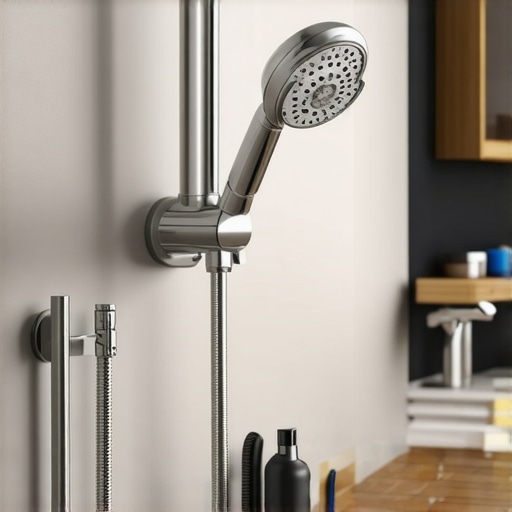
I have spent twenty five years on my knees with a moisture meter and a level. I have seen the same story play out in a hundred different bathrooms. It starts with a small drip. You think it is just the shower head. You ignore it. Then one day you notice the tile in the hallway feels soft. You see the baseboards starting to pull away from the wall. You pull up a plank and find a nightmare of black mold and rotting plywood. Most guys skip the leveling compound and they think the underlayment will hide the dip. It won’t. I spent three days grinding concrete on a job last month just so the floor wouldn’t click like a castanet. That job was the result of a slow leak at the shower arm that had been draining into the wall cavity for two years. The homeowner thought it was a minor nuisance. It ended up costing them fifteen thousand dollars in structural repairs. Flooring is not a cosmetic choice. It is a performance surface. When water gets behind your tile it attacks the very foundation of your home. Fixing a leaky shower arm is not just about stopping a drip. It is about protecting the structural engineering of your entire floor system.
The silent killer behind the wall
Shower arm leaks often occur at the threaded connection hidden inside the wall cavity where the arm meets the drop ear elbow. This moisture bypasses the tile and grout, saturating the wall studs and eventually the subfloor below. To fix this, you must apply PTFE tape to the threads and ensure the escutcheon is sealed. When you look at a shower arm, you are looking at a mechanical junction that must withstand constant thermal expansion and contraction. The metal pipe heats up when you shower and cools down when you are done. This microscopic movement can loosen a connection that was not seated correctly. If that connection is even slightly loose, water will follow the path of least resistance. It will travel down the pipe, through the hole in the backer board, and begin the slow process of destroying your home. Water has a surface tension of approximately 72 dynes per centimeter at room temperature. This tension allows it to cling to the underside of the pipe and crawl backward into the wall. Once it hits the fiberglass insulation or the wood studs, it is game over. The moisture stays trapped. It cannot evaporate. It just sits there, feeding the fungi that eat wood fiber.
“A floor is only as good as the subfloor beneath it; deflection is the enemy of every joint.” – Master Flooring Axiom
Why your subfloor is lying to you
A subfloor can appear solid while the layers beneath it are turning into compost. If you have a concrete slab, the water from a shower arm leak will pool at the bottom of the wall plate. It will then migrate under your flooring through capillary action. If you have a wood subfloor, the OSB or plywood will soak up the water like a sponge. It will swell and lose its structural integrity. This is why you see baseboards makeover ideas to elevate your space being ignored because people are too busy replacing rotten wood. The baseboard is often the first indicator of a problem. If the bottom of the baseboard looks swollen or the paint is bubbling, you have a moisture intrusion issue. You cannot just paint over it. You have to find the source. In a shower, that source is frequently the arm connection. People spend thousands on showers with a style trendy ideas for small bathrooms but they use a cheap five cent plastic nipple to connect the plumbing. That is a recipe for disaster. You need a brass or stainless steel drop ear elbow secured tightly to a 2×4 blocking. If that elbow moves when you touch the shower arm, your seal will eventually fail.
| Sealant Type | Best Use Case | Failure Point |
|---|---|---|
| PTFE Tape | Standard NPT threads | Over wrapping causes cracks |
| Pipe Dope | High pressure water | Messy and can degrade plastic |
| Silicone Sealant | External escutcheon | Not a thread sealer |
| Anaerobic Resin | Industrial plumbing | Permanent and hard to remove |
The anatomy of a drop ear elbow
The drop ear elbow is the unsung hero of your shower. It is a 90 degree fitting that has ears or tabs for screws. These screws must be driven into a solid wood block. If the plumber just let the pipe hang in the air, the weight of a heavy rain shower head will create a lever effect. That lever effect puts immense pressure on the threads. Over time, the brass will fatigue. Or worse, the constant vibration of water hammer will unscrew the arm millimeter by millimeter. This is where the chemistry of the sealant comes into play. PTFE or Polytetrafluoroethylene is a synthetic fluoropolymer of tetrafluoroethylene. It is hydrophobic and has one of the lowest coefficients of friction of any solid. When you wrap it around the threads, it acts as a lubricant and a filler. It allows you to tighten the arm further into the elbow while filling the microscopic valleys between the threads. Without it, you are relying on metal to metal contact. Metal is not perfectly smooth. At a molecular level, it looks like a mountain range. Those mountains leave gaps. Water will find those gaps. If you are dealing with older homes, you might even see galvanic corrosion where different metals have reacted to each other, creating a brittle bond that snaps the moment you try to unscrew the arm. This is why I always tell people to check their grout restoration secrets for long lasting results because often the grout is failing because the wall behind it is moving due to water damage.
The 1/8 inch that ruins everything
Precision is the difference between a floor that lasts fifty years and one that lasts five. When you install a shower arm, the hole in the tile should be just large enough for the pipe. But it should not be so tight that the pipe touches the tile. You need a small gap for expansion. However, that gap must be covered by the escutcheon plate. Most people forget to caulk the top and sides of the escutcheon. They leave it open. When you wash the walls, water runs down the tile and goes right behind the plate into the wall. This is a common failure point in tile cleaning tips for a sparkling bathroom in 2025 that people overlook. You have to keep the water on the surface of the tile. Once it gets behind the tile, it is no longer in a waterproof environment. Even the best grout is only water resistant, not waterproof. If you have a leak at the arm, the water sits on the back side of the tile. It saturates the thinset. The thinset loses its bond. Now your tiles are loose. Now your grout is cracking. It is a domino effect. You can find more about maintaining these surfaces in how to refresh grout without replacing it but if the leak is active, no amount of refreshing will help. You have to stop the water at the source.
“Moisture management is the primary directive for any wet area installation to prevent structural decay.” – Tile Council of North America Standard
A step by step guide to the fix
Fixing the leak requires a methodical approach. Do not just grab a pair of pliers and start twisting. You will scratch the finish or snap the pipe. Follow these steps to ensure a professional seal.
- Remove the shower head and the escutcheon plate to expose the connection.
- Use a strap wrench or a cloth wrapped around the arm to unscrew it counter clockwise.
- Inspect the internal threads of the drop ear elbow with a flashlight for cracks or debris.
- Clean the threads of the shower arm with a wire brush to remove old tape or pipe dope.
- Wrap new PTFE tape clockwise around the threads three to five times.
- Hand tighten the arm into the wall and then give it one final quarter turn with a wrench.
- Run the shower and check for leaks behind the wall using a small mirror.
- Apply a bead of silicone to the escutcheon before sliding it back against the tile.
If you find that the wood behind the pipe is soft, you have a bigger problem. You might need to open the wall from the other side. This is especially true in humid climates like Houston or Florida where mold grows in days. In dry climates like Phoenix, the wood might just rot and crumble. Regardless of where you live, the physics of a leak remain the same. Gravity always wins. The water will always go down. It will always find your subfloor. If you are unsure about the state of your bathroom structure, you should contact us for a professional evaluation. We see these failures every day. We know that a beautiful floor is only possible if the plumbing is sound. Do not let a simple threaded connection destroy your investment in showers that wow modern designs for 2025. Take the time to do it right. Use the right tape. Use the right torque. Protect your subfloor. Your home depends on it.