
I spent three days grinding concrete on a job last month just so the floor wouldn’t click like a castanet. Most guys skip the leveling compound because they think the underlayment will hide the dip. It won’t. I have seen the same lazy logic applied to plumbing. People ignore a tiny drip behind a shower handle because they cannot see it. They think the tile is a shield. But by the time they notice the baseboards in the hallway turning soft and grey, the subfloor is already a soggy mess of delaminated plywood and mold. I have spent 25 years on my knees with a moisture meter and I can tell you that a leaking shower handle is not a plumbing annoyance, it is a structural engineering crisis. If you do not understand the physics of how water moves through a wall cavity, you are asking for a five-figure renovation bill.
The hidden decay in your wall cavity
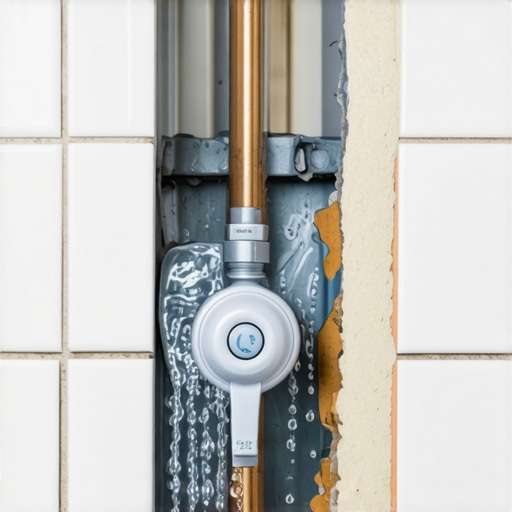
The primary cause of shower handle leaks behind the wall is typically a degraded O-ring or a cartridge that has suffered from mineral scaling. Over time, hard water deposits build up on the internal seals, preventing a watertight closure. When the pressurized water bypasses these seals, it does not always drip into the tub; it often sprays backward into the wall framing. This pressurized spray hits the wood studs and the back of the drywall, leading to catastrophic rot that remains invisible for months or years. This is why understanding the mechanics of your plumbing is just as important as knowing how to install a floor correctly.
When we talk about moisture, we have to talk about capillary action. This is the process where liquid water moves through narrow spaces without the help of gravity. In a shower, water can travel up and around the shower valve if the hole in the tile is too large or if the escutcheon plate is not sealed correctly. If you want to keep your bathroom in top shape, you should look into tile cleaning tips for a sparkling bathroom in 2025 to ensure your surfaces are not hiding early signs of moisture intrusion.
“A floor is only as good as the subfloor beneath it; deflection is the enemy of every joint.” – Master Flooring Axiom
The physics of water migration and subfloor integrity
Water from a shower leak follows the path of least resistance, which is usually down the vertical studs and onto the bottom plate of the wall. Once the water reaches the floor level, it begins to saturate the subfloor, often moving far beyond the bathroom. I have seen leaks from a master shower ruin the hardwood in a bedroom thirty feet away because the water traveled along the tongue and groove of the oak planks. The chemistry of the wood changes when it stays wet. The lignin, which acts as the glue for the wood fibers, begins to break down, and that is when you get the dreaded ‘soft spot’ in your floor.
Many homeowners assume that because they have waterproof flooring, they are safe. This is a dangerous misconception. While the surface of a luxury vinyl plank might be waterproof, the locking mechanisms and the subfloor underneath are not. In fact, while most people want the thickest underlayment, too much cushion actually causes the locking mechanisms on LVP to snap under pressure. This happens even faster when the subfloor is swollen from a plumbing leak. If your grout is looking dingy or cracked, you need to learn how to refresh grout without replacing it before water finds a way into the substrate.
The chemical failure of porous grout lines
Grout is a cementitious product that is naturally porous, meaning it acts like a hard sponge when it is not sealed properly. If your shower handle is leaking behind the wall, the moisture can actually wick through the grout from the inside out. This leads to efflorescence, which is that white, chalky powder you see on your tiles. It is actually mineral salts being carried to the surface by escaping moisture. Once the grout begins to crumble, the structural bond of the tile is compromised. You might notice the tiles clicking or moving when you press on them near the handle.
If you find that your grout is already failing, you should check out these grout restoration secrets for long-lasting results. Maintaining the integrity of your grout lines is a vital defense against water reaching the wall studs. When water sits behind the tile, it creates a hydrostatic pressure that can eventually pop tiles off the wall entirely. This is why we use modified thin-set with polymers; it creates a stronger chemical bond that resists moisture better than old-school mortar, but even the best thin-set will fail if the wall behind it is a swamp.
| Component | Failure Mode | Structural Consequence |
|---|---|---|
| Rubber O-Ring | Compression Set | Pressurized Wall Spray |
| Plumbing Cartridge | Mineral Scaling | Constant Drip in Stud Bay |
| Escutcheon Plate | Sealant Decay | Surface Water Intrusion |
| Grout Line | Micro-cracking | Capillary Moisture Migration |
| Subfloor | Delamination | Floor Joist Rot |
The 1/8 inch that ruins everything
Precision in the depth of your shower valve is the difference between a dry home and a moldy nightmare. If the plumber sets the valve just 1/8 inch too deep in the wall, the handle cartridge will not seat properly against the trim kit. This creates a tiny gap where water from the shower head can splash into the wall every single day. I have seen people try to fix this with a thick bead of caulk, but that is a rookie mistake. An over-caulked escutcheon can actually trap water inside the wall by blocking the weep hole at the bottom of the plate, forcing the water to stay in contact with the drywall.
You need to be aware of how your fixtures interact with your walls. If you are planning a remodel, looking at showers that wow modern designs for 2025 can give you ideas on how to integrate high-quality valves and waterproofing systems. Modern designs often prioritize accessibility and waterproofing, such as linear drains and solid-surface walls, which eliminate many of the grout issues we see with traditional tile. A well-designed shower is an investment in the longevity of your entire house.
Baseboards as an early warning system
Your baseboards are often the first place where a hidden shower leak becomes visible to the naked eye. Because baseboards are usually made of MDF or solid wood, they are highly sensitive to moisture. When water travels down the wall from a leaking handle, it pools behind the baseboard. You might notice the paint bubbling or the wood starting to swell and pull away from the wall. If you see this, do not just replace the trim. You need to open the wall and find the source of the water. If you are looking to update your trim after a repair, consider baseboards makeover ideas to elevate your space to ensure your new install is both stylish and functional.
- Inspect the escutcheon plate for a tight seal against the tile surface.
- Check the grout lines around the shower handle for hairline fractures.
- Look for discoloration on the ceiling directly below the bathroom.
- Feel the baseboards for any soft spots or swelling.
- Monitor the water meter when no faucets are running to check for slow leaks.
“The installation of a waterproof membrane is not a suggestion, it is a structural necessity for the longevity of the framing.” – TCNA Technical Handbook
The structural reality of long term leaks
When a shower handle leaks for months, the moisture eventually reaches the floor joists, which are the bones of your home. In many older homes, these joists are solid wood, but in newer builds, they are often engineered I-joists made of OSB and laminated lumber. These engineered products are strong, but they act like a sponge when they get wet. Once the web of an I-joist is saturated, it loses its structural capacity, leading to sagging floors and cracked tiles in the rooms above. This is the nightmare scenario every installer dreads. If you catch the leak early, you can avoid this level of destruction. If you have questions about your specific situation, you should contact us to talk to a professional who understands the intersection of plumbing and flooring. Do not let a small drip turn into a structural failure. Every day you wait is another day the water is winning the war against your subfloor.
Comments
3 responses to “The Real Reason Your Shower Handle is Leaking Behind the Wall”
This article really hits home on the importance of addressing even minor leaks behind showers. I once had a small dribble that I ignored for a few weeks, thinking it was just a slow drip. By the time I noticed the baseboards warping and paint bubbling, the damage was extensive, and I had to redo the entire wall cavity. It’s incredible how water can travel unseen for so long, causing rot and mold. I appreciate the detailed breakdown of the failure modes and the emphasis on proper installation depth. It made me wonder, how often do DIY homeowners actually test for hidden leaks before they lead to bigger problems? Also, what are some reliable tools or methods to catch these issues early, especially in older homes where plaster or drywall might hide the damage? Investing in moisture meters seems like a smart move, but I’d love to hear other practical tips from those who have managed to detect leaks early and save themselves costly repairs.
This article really underscores a point that many homeowners overlook—the importance of paying attention to tiny leaks, especially behind walls. I had a similar experience where a seemingly minor drip went unnoticed for months, only to find extensive rot once I finally opened up the wall. The part about capillary action and moisture migration really hit home; it’s fascinating how water travels in such sneaky ways, especially when grout and seals are compromised. I’ve started using a moisture meter regularly in areas that are hard to see, and it’s been a game-changer in early detection. I wonder if there are any other non-invasive methods or devices that can help homeowners monitor water intrusion continuously without tearing into walls? Also, have others found particular brands or types of moisture meters that are especially reliable for this purpose? Staying ahead of leaks seems crucial to avoid those costly structural repairs down the line.
This article drives home a crucial point about the hidden dangers of seemingly minor leaks behind shower handles. It’s alarming how quickly these small issues can escalate into major structural problems if neglected, especially with water migrating along studs and into the subfloor. I’ve personally dealt with a similar situation where a tiny leak caused significant damage over time. Using a moisture meter regularly, especially in less accessible areas, is a smart preventative step. I’m curious, do any of you have experience with continuous water monitoring devices that can alert homeowners to leaks before they cause damage? The investment in such systems seems justified given the risks involved with wall and subfloor rot. Also, what’s everyone’s take on the best methods to ensure proper installation depth and sealing to avoid the dreaded 1/8 inch misfit? It seems critical in minimizing water intrusion from the start, yet it’s surprising how often this gets overlooked. Would love to hear more tips or personal experiences on early leak detection and prevention.