
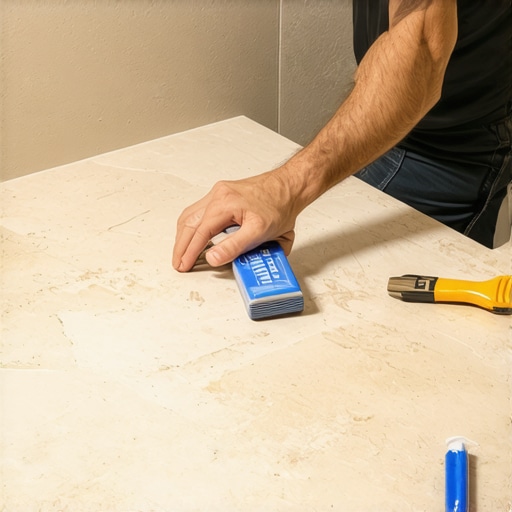
The Right Way to Seal a Natural Stone Shower Bench
I can still smell the mix of damp cedar and rotting plywood from a job I took last November. The homeowner had a beautiful slab of honed Carrara marble for her shower bench, installed by a guy who probably spent more time on his hair than on his moisture meter. Within six months, the marble was shadowed with dark, ugly spots. It was not dirt. It was moisture trapped beneath the surface, feeding a colony of mold that was eating the subfloor from the top down. Most guys skip the leveling compound and the deep sealing process, thinking the stone is impenetrable. It is not. I spent three days grinding down the damage and rebuilding the waterproofing assembly just so the bench would not crumble under its own weight. Natural stone is a sponge, and if you do not treat it with the respect the physics of water demand, you are just building a very expensive mold farm.
The hidden physics of porous stone
Natural stone shower benches require a penetrating sealer to block capillary action and prevent hydrostatic pressure from driving moisture into the stone pores. Effective waterproofing depends on the surface tension of the sealant being higher than the porosity of the igneous or metamorphic rock used in the shower installation. You have to understand that stone is a collection of microscopic tunnels. When you step into a shower, the steam and the direct spray are looking for a place to go. If you have not occupied those tunnels with a high quality fluoropolymer, the water will move in. This is not just about keeping the stone looking pretty; it is about the structural integrity of the entire shower assembly. Most homeowners do not realize that stone can hold onto water for weeks. This leads to what we call efflorescence, where minerals are carried to the surface and leave a white, crusty residue that ruins the finish. You need to treat the stone at a molecular level before you ever turn on that faucet.
“A floor is only as good as the subfloor beneath it; deflection is the enemy of every joint.” – Master Flooring Axiom
Why solvent based sealers outperform water based alternatives
Solvent based sealers utilize smaller molecular chains to achieve deeper penetration into dense stones like granite or quartzite compared to water-based sealers. This chemical bond ensures that the hydrophobic barrier remains intact even under the alkaline environment of soap scum and hard water common in modern showers. I have seen too many DIY kits that use water based sealers. They sit on the surface like a cheap wax and peel off after three months of scrubbing. A solvent based sealer acts like a chemical injection. It travels down into the stone and stays there. This is especially vital for the bench. Unlike a wall tile, the bench is a horizontal surface where water sits. Gravity is working against you every second. If that water stays on the surface long enough, it will find a way through. You need a sealer that can withstand the constant cycle of heating and cooling without cracking or lifting away from the stone matrix.
The TCNA standards for stone saturation
Tile Council of North America standards dictate that natural stone installations must account for absorption rates and moisture vapor transmission to prevent substrate failure. Properly sealing a stone bench involves managing the bond coat and ensuring the waterproofing membrane remains continuous behind the tile and grout layers.
“Stone tile shall be sealed with a high quality penetrating sealer to mitigate the risks of staining and microbial growth within the stone assembly.” – TCNA Handbook for Ceramic, Glass, and Stone Tile Installation
Following these rules is not optional. If you ignore the TCNA guidelines, you are basically guessing. I have seen installers try to use basic grout as a sealant. Grout is a filter, not a barrier. If you want to keep your shower looking new, you need to look into grout restoration secrets for long lasting results. The chemistry of the grout and the chemistry of the stone sealer must work together. If the sealer is incompatible with the grout, the whole system fails at the joints, which is the most vulnerable part of the bench.
The myth of the waterproof grout joint
Waterproof grout does not exist in a natural stone shower because cementitious grout is inherently porous and allows vapor transmission into the thin-set bed. Using epoxy grout or high performance modified sealers is the only way to achieve a low absorption rate and protect the shower bench substrate from moisture intrusion. People think because they paid for a “waterproof” LVP or a “waterproof” grout that they are safe. That is a lie told by marketing departments. Water will find the smallest gap. In a shower bench, that gap is usually where the stone slab meets the wall. I always advocate for a 1/4 inch per foot pitch on the bench top. This uses gravity to move the water off the stone and into the drain before it has a chance to soak into the grout lines. If your bench is perfectly level, it is actually failing. You need that slight slope to keep the surface tension from breaking and allowing the water to pool.
Stone sealer comparison matrix
| Sealer Type | Chemical Base | Penetration Depth | Lifespan | Best For |
|---|---|---|---|---|
| Topical Coating | Acrylic/Urethane | Surface only | 6-12 Months | Low-moisture walls |
| Penetrating Sealer | Silanes/Siloxanes | Deep | 3-5 Years | Natural stone floors |
| Nano-Technology | Fluoropolymers | Molecular | 5-10 Years | Shower benches and steam rooms |
The moisture trap under the slab
Trapped moisture beneath a sealed stone slab causes spalling and discoloration when the vapor drive cannot escape through the topical barrier. A contrarian approach suggests that sealing the underside of a stone bench overhang is a mistake, as it prevents the stone from breathing and forces efflorescence into the visible surface. This is the information gain most guys miss. They think more sealer is better. They seal the top, the sides, and the bottom. Then they wonder why the stone starts to delaminate. You have to leave an exit path for the moisture that inevitably gets behind the stone through the wall joints. If you seal every side, you have created a plastic bag. When the shower gets hot, that water turns to vapor, and if it cannot get out, it will blow the face off your marble. It is a slow motion explosion of chemistry and physics that ruins thousands of dollars in material.
Baseboard transitions in wet environments
Shower baseboard transitions require silicone-based caulking and waterproof backing to prevent wicking into the drywall or framing outside the wet area. Integrating chic baseboard designs with a natural stone bench requires a zero-threshold approach where the waterproofing membrane extends at least six inches past the splash zone. When you are looking at baseboards makeover ideas to elevate your space, you have to think about how they interact with the floor. In a bathroom, the floor is a flood zone. The baseboards need to be either a high density material or protected by the same sealing protocols as your bench. I have seen beautiful wood baseboards turn black with rot because they were installed right up against a stone bench that was wicking water like a straw. You need a physical break, a bead of high quality silicone that matches the grout, to stop that transfer of moisture.
Cleaning protocols for stone longevity
Stone cleaning protocols involve using pH-neutral cleaners to avoid etching the calcite found in marble and limestone shower benches. Routine maintenance with the correct chemistry preserves the integrity of the sealer and prevents the accumulation of mineral deposits and mold spores on the stone surface. If you use a standard bathroom cleaner from a big box store, you are eating your sealer for breakfast. Those cleaners are acidic. They strip the fluoropolymers right out of the stone pores. This is why people think sealers don’t work. They seal it once, then scrub it with bleach, and the sealer is gone in a week. You should check out tile cleaning tips for a sparkling bathroom in 2025 to understand the modern approach. It is about gentle, consistent removal of oils and soaps without breaking down the chemical barrier you worked so hard to install.
Checklist for a professional grade finish
- Verify the stone is bone dry using a moisture meter before applying any chemicals.
- Apply the first coat of solvent-based penetrating sealer using a lint-free microfiber applicator.
- Allow the sealer to dwell for fifteen minutes without letting it dry on the surface.
- Buff off the excess sealer with a clean cloth to prevent a sticky residue or hazy finish.
- Wait twenty-four hours before applying a second coat to ensure maximum molecular saturation.
- Perform a water bead test forty-eight hours later to confirm the hydrophobic barrier is active.
- Seal the perimeter joints with a color-matched 100 percent silicone sealant rather than grout.
If you follow these steps, you are doing more than ninety percent of the installers out there. You are not just making a shower bench; you are engineering a surface that will last for decades. Most people want the easy way out. They want the spray-on sealer that promises a lifetime of protection. It does not exist. A real seal takes time, the right chemicals, and an understanding of how stone behaves when it gets wet. You are building against the constant pressure of water. Do not let a single 1/8 inch gap ruin your hard work. Keep your tools clean, your stone dry, and your sealers high grade. If you need more help with the design aspect of your project, you can always contact us for expert advice on material selection. Building a shower right is a labor of love and a mastery of physics. Don’t cut corners where the water flows.
“, “image”: {“imagePrompt”: “A close-up shot of water beading perfectly on a honed marble shower bench, showing the hydrophobic effect of a professional-grade sealer. The stone has a slight pitch for drainage, and the grout lines are clean and sharp.”, “imageTitle”: “Water Beading on Sealed Marble Bench”, “imageAlt”: “Professional sealing of a natural stone shower bench showing water resistance”}, “categoryId”: 0, “postTime”: “”}