
The physics of protection in your shower
I spent three days grinding out failed grout on a job last month just so the tiles would not rattle underfoot. Most guys skip the prep work and assume the sealer will do the heavy lifting for a decade. It will not. I once walked into a luxury bathroom where the marble was turning a muddy grey because the installer used a cheap silicone-based spray instead of a deep penetrating fluoropolymer. The owner thought their floor was fine because it looked clean, but the subfloor was already rotting. Grout is not a solid wall. It is a dense, stony sponge. If you do not understand the molecular level of your bathroom surfaces, you are just waiting for a structural failure. Showers are the most aggressive environments in a home, and grout is the first line of defense against the slow rot of moisture. Let us talk about why your grout is failing and how the water-drop test reveals the truth about your bathroom health.
The mechanism of the water-drop test
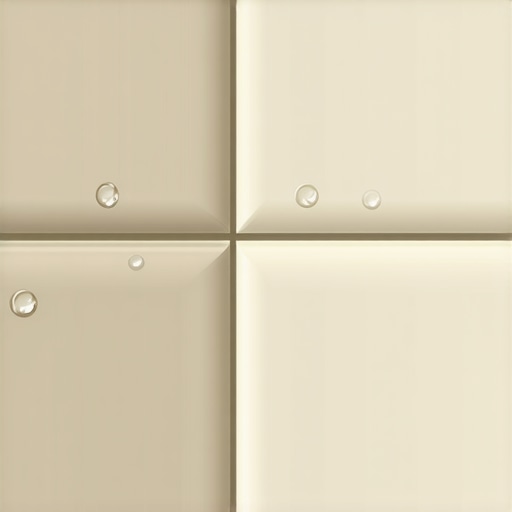
The water-drop test determines the integrity of your grout sealer by measuring the surface tension and absorption rate of liquid on the cementitious surface. To perform this, place three drops of water on a grout line. If the water beads up, the sealer is active. If it vanishes, it is failing. You must perform this test in multiple areas, especially near the drain and the corners where water pools. The physics here is simple but absolute. A sealed grout joint has a low surface energy that repels the high surface tension of water. When that chemical barrier wears down through friction or harsh cleaning, the grout returns to its natural state as a porous network of capillary channels. Once water enters those channels, it carries soap scum, skin cells, and bacteria deep into the substrate where you cannot reach it. This is why you need tile cleaning tips for a sparkling bathroom in 2025 that focus on preserving the chemical bond rather than just scrubbing away the surface dirt.
The microscopic reality of cementitious grout
Cementitious grout consists of a matrix of Portland cement and sand that creates a rigid but porous structure at the microscopic level. These pores are large enough for water molecules to penetrate through capillary action unless they are chemically blocked by a sealer. Most people think grout is like plastic. It is not. Under a microscope, grout looks like a dried sponge made of rock. When you mix grout, the water eventually evaporates, leaving behind a network of tiny tunnels. If you do not fill those tunnels with a penetrating sealer, water will find its way to the backer board. This is where the structural engineering of your shower starts to collapse. If the moisture reaches the thin-set, it can weaken the bond between the tile and the wall. This leads to the hollow sound you hear when you tap a loose tile. Properly maintaining your seal is part of the grout restoration secrets for long lasting results that most homeowners ignore until it is too late.
“A floor is only as good as the subfloor beneath it; deflection is the enemy of every joint.” – Master Flooring Axiom
The chemistry of sealer degradation
Sealer degradation occurs when the chemical bonds of the fluoropolymer or silicone resins are broken down by acidic cleaners, high heat, and mechanical friction. This process strips the protective layer from the grout pores and leaves the cement vulnerable to staining and water intrusion. You might think you are doing a good job by bleaching your shower every week. In reality, you are killing your sealer. Bleach is a high-pH base that can eat away at certain resin types. Acidic cleaners are even worse, as they actually dissolve the calcium carbonate in the grout itself. When the sealer is gone, the grout becomes a magnet for pigment. This is why white grout turns orange or black. It is not just surface mold, it is a deep-seated infestation within the stony matrix. If you want showers that wow modern designs for 2025, you have to treat the chemistry of the grout with more respect than a bottle of generic supermarket spray.
| Sealer Type | Chemical Base | Typical Lifespan | Best For |
|---|---|---|---|
| Penetrating | Fluoropolymer | 3 to 5 Years | Natural Stone and High Moisture |
| Topical | Acrylic or Urethane | 1 to 2 Years | Low Traffic Walls |
| Epoxy Grout | Two-Part Resin | 20+ Years | Commercial and Wet Areas |
The invisible threat of subfloor moisture
Subfloor moisture refers to the accumulation of water vapor or liquid behind the tile layer that can lead to mold growth and structural decay. When grout seals fail, water migrates into the wall cavity where it cannot easily evaporate. This is the ghost in the expansion gap. I have seen plywood subfloors that felt like wet cardboard because a shower pan had a pinhole leak and the grout was not sealed. The humidity in a bathroom is a constant pressure. In high-moisture regions, this vapor pressure is even more intense. You need to ensure that your shower is not just looking good but is actually performing as a waterproof vessel. This applies to the perimeter too. People often forget that the transition from tile to the hallway involves baseboards makeover ideas to elevate your space, but if that transition is not caulked properly, water will wick right into the drywall behind your beautiful new trim.
The 1/8 inch that ruins everything
The expansion gap is the small space left at the perimeter of a tile installation or between different planes of a shower to allow for structural movement. If this gap is filled with rigid grout instead of flexible caulk, the grout will inevitably crack. Movement is a fact of life in any building. Your house breathes. It expands in the summer and shrinks in the winter. If your shower corners are grouted, they will crack. Those cracks are superhighways for water. The water-drop test will fail instantly at a crack. You must use 100 percent silicone caulk in all change-of-plane joints. This includes where the wall meets the floor and where two walls meet. Rigid grout has zero tensile strength. It cannot handle the torque of a house settling. If you ignore this, you are inviting moisture to live in your walls. This is why showers with a style trendy ideas for small bathrooms must prioritize flexible joints over a uniform look of grout everywhere.
“Grout is not waterproof; it is water-resistant at best. The waterproofing layer is what actually saves your house.” – TCNA Handbook Wisdom
The maintenance checklist for a dry substrate
- Perform the water-drop test every six months.
- Clean with pH-neutral stone and tile cleaners only.
- Inspect all corner joints for hairline cracks in the caulk.
- Ensure the bathroom fan runs for 20 minutes after every shower.
- Re-seal grout lines as soon as darkening is noticed during the test.
- Check the integrity of chic baseboard designs that transform rooms in 2025 near the shower door.
Why your subfloor is lying to you
A subfloor might appear dry on the surface while holding significant moisture content within its core. Only a moisture meter or a failed sealer test can accurately diagnose the presence of trapped water before it causes rot. I have been on jobs where the tile looked perfect, but the grout was soft. That is a sign that the thin-set underneath is perpetually wet. It is like a slow-motion car crash. You do not see the impact until the wheel falls off. In the case of flooring, the wheel falling off is a tile popping loose or a smell of mildew that won’t go away. This is especially true with eco-friendly tile solutions for sustainable homes in 2025 which often use recycled materials that can be more sensitive to moisture cycles. You must protect the investment by staying on top of the sealer. If you need help with a restoration, you should contact us before the damage becomes structural. I would rather see you spend fifty bucks on a bottle of high-end sealer now than five thousand on a new subfloor and tile job next year. The water-drop test is your early warning system. Do not ignore it.
Comments
One response to “The Water-Drop Test: How to Tell if Your Shower Grout is Still Sealed”
I really appreciate the detail in explaining how grout porosity impacts long-term integrity. The analogy of grout looking like a dried sponge under a microscope really stuck with me because it highlights how critical proper sealing is, especially in high-moisture environments like showers. I’ve had my own experience where I neglected to re-seal grout lines regularly, and over a year, I started seeing dark streaks and loose tiles. Performing a simple water-drop test could have alerted me sooner to reapply sealer and prevent future issues. I think many homeowners underestimate how much water can seep through unsealed grout and eventually weaken the substrate behind the tiles. Do any of you have tips on the best types of sealers for high-traffic showers, especially with natural stone that may be more porous and sensitive? Also, how often do you recommend performing the water-drop test as part of a maintenance routine?