
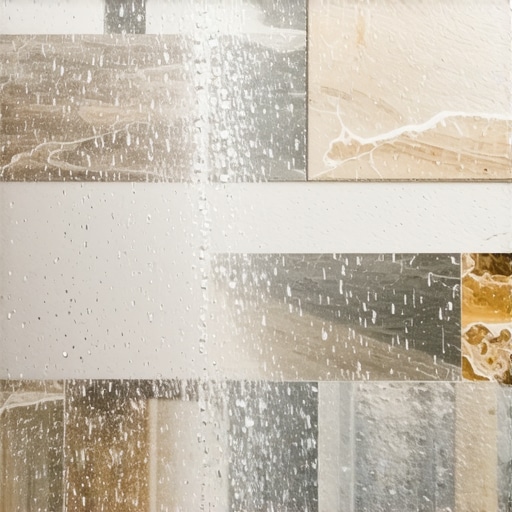
The Water Drop Test and the Survival of Your Natural Stone Shower
I spent three days grinding concrete on a job last month just so the floor would not click like a castanet. Most guys skip the leveling compound. They think the underlayment will hide the dip. It won’t. When it comes to natural stone showers, that same laziness leads to catastrophic structural rot. I once walked into a luxury master bath where the travertine was literally weeping. The homeowner thought stone was indestructible. They were wrong. Natural stone is a sponge. If you are not testing the integrity of your sealer, you are inviting thousands of dollars in water damage into your wall cavity. My hands are permanently stained with thin-set and my knees have seen better decades, but I know a failing shower when I smell one. It smells like damp earth and regret. We are going to look at the physics of stone porosity and why your expensive shower might be one month away from a total teardown.
The physics of the water drop test
The water drop test involves placing several beads of water on different areas of your stone shower floor and walls to observe their behavior. If the water beads up, your sealer is intact. If the water soaks in and darkens the stone within minutes, your protection has failed. This simple diagnostic determines if your stone is currently hydrophobic or if it has become a thirsty, porous liability. You need to perform this test every few months because chemical cleaners and friction from feet strip away the protective molecular layer of your sealer. Do not just test the center of the floor. Test the corners where water tends to pool and the grout lines where the most movement occurs. If the stone darkens, the moisture is no longer on the surface. It is inside the mineral structure. This is how efflorescence starts. This is how the subfloor begins its slow descent into rot.
The molecular reality of porous rock
Natural stone like marble, slate, and travertine consists of a complex network of microscopic capillaries. These are literal tunnels that run through the stone. When you see a beautiful slab of Carrara, you are looking at a pressurized map of geological history. That history includes a lot of empty space. Water molecules are small enough to enter these capillaries through surface tension. Once inside, they do not just sit there. They carry minerals. They feed mold spores. They react with the iron deposits in the stone and cause rust spots that no amount of scrubbing will ever remove.
“A floor is only as good as the subfloor beneath it; deflection is the enemy of every joint.” – Master Flooring Axiom
This axiom applies to showers with even more intensity. If your subfloor flexes even a fraction of an inch, the grout cracks. Once the grout cracks, the water bypasses the stone entirely and heads straight for the plywood or the concrete slab. You need to understand that stone is a performance surface that requires constant vigilance. It is not a set and forget material like ceramic or porcelain. It is alive in a chemical sense, reacting to every splash of shampoo and every drop of hard water.
The failure of the surface sealer
Most homeowners assume a sealer is a physical shield like a sheet of plastic. It is not. High quality penetrating sealers are designed to sit just below the surface to fill those capillaries I mentioned. They work by changing the surface tension of the stone so that water is repelled rather than absorbed. However, these chemicals are not permanent. They are organic compounds that break down. Alkaline soaps and acidic body washes act as solvents that slowly eat away at the sealer. When the sealer fails, the stone loses its ability to shed water. This is why you should check out tile cleaning tips for a sparkling bathroom in 2025 to ensure you are not using chemicals that destroy your protection. Using the wrong cleaner is the fastest way to turn your stone shower into a liability. I have seen people use vinegar on marble. It is painful to watch. The acid etches the stone instantly, opening up the pores and inviting deep staining.
Why your subfloor is lying to you
You might think your shower is fine because there are no leaks in the ceiling below. That is a dangerous assumption. Subfloors can hold a massive amount of water before they finally show a visible drip. By the time you see a stain on the drywall downstairs, the joists are already soft. The water travels along the path of least resistance, often following the plumbing lines. In regions with high humidity like the Gulf Coast, this trapped moisture never dries out. It creates a perpetual greenhouse effect behind your tile. This is why a proper waterproofing membrane like those mentioned in showers that wow modern designs for 2025 is vital. The stone and grout are just the decorative skin. The real work is done by the liquid applied or sheet membranes behind them. If those were installed incorrectly, or if the stone is soaking up too much water, the system will eventually fail.
| Stone Type | Porosity Level | Water Drop Test Frequency | Expected Sealer Life |
|---|---|---|---|
| Carrara Marble | High | Every 3 Months | 6-12 Months |
| Granite (Dark) | Low | Every 12 Months | 3-5 Years |
| Travertine | Very High | Every 2 Months | 4-6 Months |
| Slate | Medium | Every 6 Months | 1-2 Years |
| Sandstone | Extreme | Monthly | 3 Months |
Grout is not a waterproof membrane
Grout is a cementitious product that is inherently porous and will allow water to pass through it over time unless it is specifically modified with epoxy or high performance additives. Even then, grout can develop hairline cracks that are invisible to the naked eye but wide enough for water molecules to seep through. This is why the water drop test must include the grout joints. If the grout darkens immediately when wet, it is absorbing water. This moisture then sits against the thin-set and the waterproofing membrane. If you have an older shower, you should look into grout restoration secrets for long lasting results. Restoring the grout and applying a high quality sealer can extend the life of your shower by years. It is much cheaper than a full tear out. I have spent countless hours scraping out old, moldy grout. It is a miserable job, but it is the only way to save a floor once the moisture has taken hold.
“Waterproofing is not a layer; it is a system that must be continuous from the drain to the top of the splash zone.” – TCNA Handbook Protocol
If that system has a single break, the whole thing is compromised.
The drainage physics of the shower pan
The shower pan is the most technical part of any bathroom build. It must be sloped at exactly one quarter inch per foot toward the drain. If the slope is off, water pools. If water pools on natural stone, the pressure of that standing water forces it deeper into the pores. This is called hydrostatic pressure. Even a well sealed stone will eventually give in if water sits on it for hours. This is why I always check the weep holes in the drain assembly. Most installers accidentally plug these holes with mortar. When that happens, the water that gets under the tile has nowhere to go. It sits there, turns stagnant, and begins to rot the entire assembly from the bottom up. This is a contrarian point that most people miss. They think a thick sealer is the solution, but if the drainage is bad, no sealer in the world will save you. Too much sealer can actually be a problem. If you apply a topical, non-breathable sealer, you might trap moisture inside the stone. This leads to spalling, where the face of the stone literally pops off because the internal pressure has nowhere to go.
Maintenance for the long haul
Keeping a stone shower waterproof requires a disciplined routine. It is not just about the sealer. It is about how you treat the stone every day. After every shower, you should use a squeegee to remove excess water. This reduces the amount of time moisture spends in contact with the stone. You should also consider eco friendly tile solutions for sustainable homes in 2025 if you are worried about the chemical impact of traditional sealers. There are newer, water based penetrating sealers that offer excellent protection without the harsh fumes. If you notice that the grout is starting to look dingy, do not reach for the bleach. Bleach is an oxidizer that will weaken the grout and eventually cause it to crumble. Instead, learn how to refresh grout without replacing it using pH neutral cleaners and specialized brushes. This maintains the structural integrity of the installation.
- Conduct the water drop test on five different areas of the shower floor.
- Inspect all inside corners for cracked caulk or grout.
- Verify that the shower door seals are not leaking onto the floor outside the stall.
- Look for any white, powdery residue which indicates efflorescence.
- Check the transition where the tile meets the baseboards for any gaps.
Baseboards and the wet zone transition
The area where your shower meets the rest of the bathroom is a high risk zone. If water escapes the shower, it often hits the baseboards. Most baseboards are made of MDF or pine, which act like straws for moisture. If you are updating your bathroom, look at baseboards makeover ideas to elevate your space and consider moisture resistant materials. I have seen beautiful tile jobs ruined because the installer used cheap baseboards that wicked up water and rotted out the bottom of the drywall. If you want a more modern look that also handles moisture better, check out chic baseboard designs that transform rooms in 2025. Proper transitions are the hallmark of a professional job. They ensure that the waterproofing of the shower stays contained within the shower. If you are unsure about your current setup, you can always contact us for advice on how to bridge the gap between your wet and dry zones. We have seen every mistake in the book, and we know how to fix them before they become disasters.
“,”image”:{“imagePrompt”:”A close-up, high-detail macro shot of a single water droplet beading perfectly on a textured, light-colored travertine stone surface. The lighting is sharp, highlighting the surface tension of the water and the porous mineral details of the stone. In the background, a soft-focus view of a shower drain and dark grout lines emphasizes a professional bathroom environment.”,”imageTitle”:”Water Droplet Beading on Natural Stone”,”imageAlt”:”A water droplet on travertine stone showing a successful water drop test for sealer integrity.”},”categoryId”:0,”postTime”:””} Ready to post.