
Most guys skip the leveling compound. They think the underlayment will hide the dip. It won’t. I spent three days grinding concrete on a job last month just so the floor wouldn’t click like a castanet. That level of obsession with the structural base is what separates a master from a weekend warrior. It is the same story when it comes to cleaning. I have spent twenty-five years on my knees, smelling oak dust and floor wax, and I can tell you that the most common household advice is often the most destructive. You might think you are being eco friendly by grabbing that bottle of white vinegar from the pantry, but you are effectively pouring a slow-acting acid onto your investment. I have seen fifteen thousand dollar marble installs reduced to a chalky mess because a homeowner followed a viral cleaning hack. This is not about aesthetics. This is about the chemical integrity of the bond that keeps your shower floor from leaking into the subfloor below.
The chemical erosion of Portland cement binders
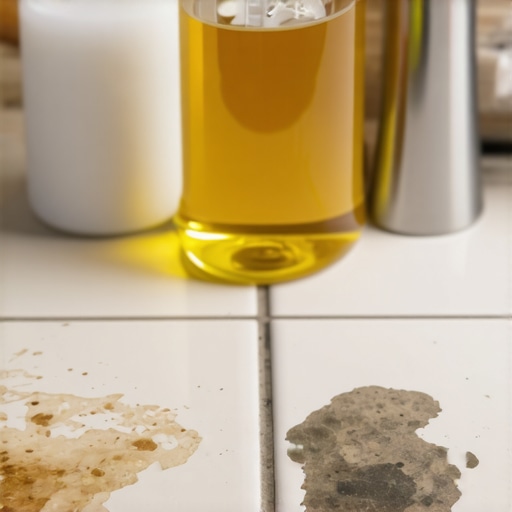
Vinegar destroys grout because its acetic acid reacts with the calcium carbonate found in cement based grout, dissolving the mineral structure that holds the sand particles together. This chemical reaction creates calcium acetate, a water soluble salt that washes away during rinsing, leaving the grout porous, brittle, and prone to structural failure over time. If you want to keep things clean without the damage, you should look into tile cleaning tips for a sparkling bathroom in 2025 that focus on pH neutral solutions. Grout is an alkaline material. Most cementitious grouts sit at a pH of 10 or 12. When you introduce white vinegar, which has a pH of about 2.4, you are initiating a neutralization reaction that is anything but neutral for your floor. It is a slow, microscopic demolition. You won’t see it the first time. You might not see it the tenth time. But eventually, the grout will start to pit. It will start to flake. Then the water starts to migrate. Once water gets under that tile, your subfloor is on a countdown to rot.
Why your subfloor is lying to you
Subfloors often hide moisture damage until the structural integrity is already compromised, making regular inspections and proper grout maintenance essential. A dip in the floor or a slightly soft spot under a tile is a sign that the capillary action of moisture has already begun its work on your plywood or OSB subfloor. I have pulled up tiles where the grout looked decent on the surface, but the homeowner had been using vinegar for years. The acid had eaten through the sealer and the top layer of the grout. Water was wicking down into the thin-set. The thin-set had lost its bond to the concrete backer board. It was a total system failure. This is why I preach the gospel of the TCNA. They don’t make these rules up to be difficult. They make them because water is the most patient enemy of a house. When you use an acid to clean, you are opening the front door and inviting the enemy in for a drink.
“A floor is only as good as the subfloor beneath it; deflection is the enemy of every joint.” – Master Flooring Axiom
The microscopic reality of grout porosity
Standard grout is a porous matrix of sand and cement that acts like a sponge for acidic liquids if not properly sealed with a high quality penetrating sealer. When you zoom in on a grout line, you see a crystalline structure that is designed to be rigid and load bearing. Vinegar breaks these crystals. The acetic acid molecules find the weak points in the calcium bonds. As the binder dissolves, the sand grains lose their anchor. This creates microscopic voids. These voids then fill with soap scum, skin cells, and bacteria. Now, instead of a clean shower, you have a bio-film breeding ground that is even harder to clean than the original grout was. If your grout is already showing these signs, you might need to investigate grout restoration secrets for long lasting results. It is better to restore it now than to replace the whole floor later. I have seen guys try to grout over old, acid-damaged grout. It never works. The new grout can’t bond to the chalky residue of the old stuff. It just pops out like a loose tooth.
The structural danger of expansion gaps
Expansion gaps at the perimeter of a tile installation are necessary to allow for the natural movement of the building, and failing to maintain the grout and sealant at these points can lead to moisture intrusion into the wall plates. In high humidity areas like the coastal South or the swampy heat of Houston, these gaps are even more active. The wood framing moves. The tile stays rigid. If you have been eating away at the perimeter grout with vinegar, that transition point between the floor and the baseboards will fail first. You will see a hairline crack. That crack is a highway for water. It will travel behind the baseboard and start to rot the bottom plate of your wall. I have seen mold climbing up the studs inside a wall because the homeowner was too busy spraying vinegar on the tile to notice the grout line at the wall was gone. It is a domino effect that starts in the pantry and ends with a five figure restoration bill.
Comparing grout types and chemical resistance
| Grout Type | pH Tolerance | Acid Resistance | Best Use Case |
|---|---|---|---|
| Sanded Cement | High (Alkaline) | Very Low | General floor tile joints |
| Unsanded Cement | High (Alkaline) | Very Low | Polished marble or narrow joints |
| High-Performance Cement | Moderate | Low | Commercial kitchens |
| Epoxy Grout | Very High | High | Showers and chemical labs |
| Urethane Grout | High | Moderate | Pre-mixed convenience jobs |
As you can see, epoxy grout is the only one that can really handle any kind of acidity. But most homes have standard sanded or unsanded cement grout. If you don’t know what you have, assume it is cement based. That means no vinegar, no lemon juice, and no harsh bathroom cleaners that don’t specifically state they are pH neutral. If the grout has already started to fail, you don’t necessarily have to tear it all out. You can look at how to refresh grout without replacing it to see if a colorant or a new sealer can buy you some time. But if the grout is soft enough to scratch with a fingernail, it is game over. You are looking at a regrout job at minimum.
“Cementitious grout is a Portland cement based product; it is inherently alkaline and will be degraded by any acid regardless of dilution.” – Tile Council of North America Standard
The definitive shower maintenance protocol
- Only use pH neutral cleaners specifically formulated for natural stone or ceramic tile.
- Dry your shower floor with a squeegee or a towel after every use to prevent mineral buildup.
- Reseal your grout lines every twelve to eighteen months using a high quality penetrating sealer.
- Inspect the transition between the tile and the baseboards for any signs of cracking or separation.
- Never mix bleach and vinegar, as this creates toxic chlorine gas that can be fatal in enclosed shower spaces.
Maintenance is about more than just looking clean. It is about preserving the structural assembly. When I build a shower, I am building a waterproof vessel. The tile is just the armor. The grout is the filler in the armor. If you dissolve that filler, the armor falls off. It is that simple. I have seen gorgeous showers with a style that looked like they belonged in a magazine, but they were falling apart behind the scenes because of bad cleaning habits. Don’t be the person who ruins a custom build with a three dollar bottle of vinegar. It is not worth the risk. Stick to the chemistry that works with the materials, not against them. If you keep the grout intact, the subfloor stays dry. If the subfloor stays dry, the house stays standing. That is the only math that matters in this business.
Comments
One response to “Why Vinegar is Actually Destroying Your Shower Floor Grout”
This post hits home for me, especially since I’ve always been cautious about using vinegar on my tile grout after hearing it’s a no-go from a tile expert. It’s remarkable how something so seemingly harmless can cause long-term damage if we’re not careful. Personally, I’ve seen grout lines start to look chalky and loose after occasional vinegar cleaning, and I now understand why. I’m curious, has anyone found a natural, pH-neutral cleaner that effectively prevents mold and mineral buildup without risking the integrity of the grout? I’ve tried commercial products, but I’d love to know if there’s an equally effective DIY solution that’s safe for the grout and friendly to my budget. Also, regular sealing sounds crucial, but how often do you folks actually reseal your grout? I’m considering doing it twice a year based on the post, but I’d appreciate hearing real experiences from others managing high-humidity bathrooms. It seems like a small effort with big payoff in this case.