
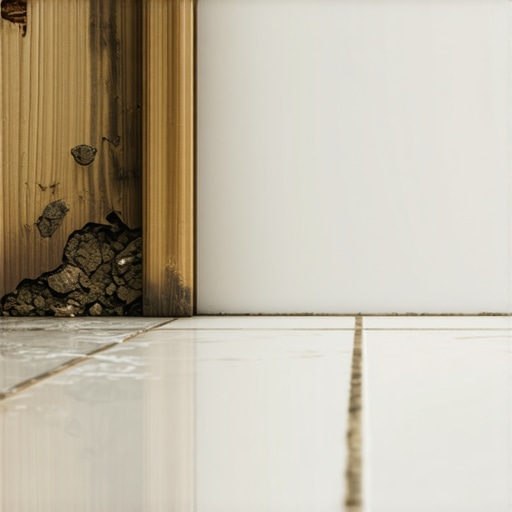
I smell like WD-40 and oak dust most days, a scent that comes from twenty five years of fixing mistakes that people call flooring. I once walked into a luxury bathroom in a coastal home where the homeowners had spent thirty thousand dollars on Italian marble. The marble was stunning, but the baseboards were a crime scene. They had installed high profile MDF trim because a designer liked the look. Within six months, the bottom of that trim had swollen to three times its original thickness. It looked like a soggy sponge, covered in black mold spores that were eating the drywall from the inside out. This happens because most people treat a floor as a cosmetic decision, but it is actually a structural engineering challenge. When you put organic fibers in a room that sees a ninety percent humidity spike every morning, you are not decorating, you are starting a science experiment. This article will break down why wood and its cheaper cousins fail and what materials will actually survive the splash zone.
The cellular failure of organic trim in wet environments
Wood baseboards rot in bathrooms because wood is a hygroscopic material that attracts water molecules through capillary action, leading to the rapid breakdown of lignin and the growth of fungal colonies. When water hits the base of a wood board, it does not just sit there. It travels upward through the vascular system of the wood. This is the same process that allowed the tree to transport water from its roots to its leaves. Even when the wood is dead and dried into a board, those cellular paths remain open. If that wood is not sealed on all six sides, including the bottom edge that sits against the floor, it will suck up moisture like a straw. Once the moisture content of the wood exceeds twenty percent, fungal spores that are already present in the air begin to feast on the cellulose. This is not just a cosmetic issue, it is a structural decay that can spread to your wall studs and subfloor.
“A floor is only as good as the subfloor beneath it; deflection is the enemy of every joint.” – Master Flooring Axiom
The physics of the moisture trap and why MDF is a disaster
Medium Density Fiberboard, or MDF, is essentially the fast food of the construction world. It is made of sawdust and resin compressed together. While it is cheap and easy to paint, it is the worst possible choice for a bathroom. When MDF gets wet, the resin bonds fail and the fibers expand at different rates. This causes the material to puff up and crumble. Unlike solid wood, which might cup or warp but stay in one piece, MDF loses its structural integrity completely. If you are looking for chic baseboard designs that transform rooms in 2025, you must prioritize materials that can handle the specific gravity of liquid water. In a bathroom, the water comes from two places, the obvious splashes from the shower and the invisible vapor in the air. When you take a hot shower, the air holds more water. As that air cools, the water condenses on the coldest surfaces, which are usually the baseboards near the floor. If those baseboards are MDF, they will absorb that condensation every single day until they rot.
The chemical superiority of cellular PVC trim
Cellular PVC is the professional standard for bathroom trim because it is a closed cell polymer that is completely impervious to water, mold, and insect damage while maintaining the appearance of painted wood. PVC stands for polyvinyl chloride. At the molecular level, this material is non polar, which means it does not attract water molecules. Because it has a closed cell structure, there are no pathways for water to travel through the material. You could submerge a PVC baseboard in a bucket of water for a decade and it would not change its dimensions or grow a single speck of mold. This makes it the perfect candidate for the bathroom environment. It can be cut with standard woodworking tools and even takes paint well if you use a high quality acrylic latex. It is the only way to get that traditional look without the traditional headache of rot.
Tile baseboards and the wet room philosophy
If you want a truly permanent solution, you stop using wood or plastic altogether and turn to masonry. Tile baseboards are the gold standard for durability. By using the same material on the wall that you use on the floor, you create a continuous moisture barrier. This is especially vital in showers that wow modern designs for 2025, where zero threshold entries are becoming the norm. When the floor and the wall are both protected by porcelain or ceramic, you eliminate the risk of water seeping into the wall cavity. Porcelain tile has a water absorption rate of less than 0.5 percent. Compare that to wood, which can have an absorption rate of thirty percent or more. Using a tile baseboard also makes cleaning much easier, as you can use stronger disinfectants without worrying about ruining a paint finish.
Comparing baseboard materials for wet environments
| Material | Moisture Resistance | Durability | Maintenance Needs |
|---|---|---|---|
| Solid Pine | Low | Moderate | High painting/sealing |
| MDF | Zero | Low | Frequent replacement |
| Cellular PVC | High | High | Low cleaning |
| Porcelain Tile | Absolute | Very High | Grout cleaning only |
The expansion gap and the one eighth inch rule
Installation errors cause more rot than the material itself, as failing to leave a proper expansion gap and sealing it with silicone allows water to bypass the baseboard and reach the drywall. Every floor moves. Whether it is a floating LVP or a glued down tile, there is expansion and contraction. I always see guys shove the baseboard tight against the floor. This is a mistake. You need a gap of about one eighth of an inch between the bottom of the baseboard and the floor surface. This gap should then be filled with a high quality, one hundred percent silicone caulk. Do not use painters caulk here. Painters caulk is acrylic and it will shrink and crack over time. Silicone is flexible and waterproof. It creates a gasket that allows the floor to move while preventing water from a spilled bath or a leaky toilet from getting under the trim and into the subfloor.
“Surface preparation is the foundation of a lasting installation.” – TCNA Handbook for Ceramic, Glass, and Stone Tile Installation
Professional installation checklist for bathroom baseboards
- Verify that the subfloor is level within one eighth of an inch over ten feet to ensure the trim sits properly.
- Back prime all solid wood trim if you insist on using it, covering the back and all edges with an oil based primer.
- Use stainless steel or galvanized finish nails to prevent moisture from causing rust streaks through your paint.
- Apply a bead of silicone to the bottom edge of the trim before it touches the floor.
- Maintain your grout lines if using tile trim to ensure no water reaches the adhesive layer.
The chemical reality of adhesives and caulk
When we talk about the longevity of bathroom trim, we have to talk about the chemistry of how it is attached. Most installers use a standard construction adhesive. In a high humidity environment, these adhesives can sometimes offgas or fail if they are not rated for wet zones. I prefer using a polymer based adhesive that can cure even in the presence of moisture. Furthermore, the grout used in tile installations must be sealed or you must use a high performance epoxy grout. Standard cementitious grout is porous. It will absorb water and eventually allow that water to reach the back of the tile, where it can weaken the bond. Maintaining the perimeter is as important as tile cleaning tips for a sparkling bathroom in 2025 because a clean surface prevents the buildup of organic matter that mold loves to eat. If you follow these structural rules, you will never have to smell that damp rot in your home again.