
The subfloor secret that ruins luxury installations
Most guys skip the leveling compound. They think the underlayment will hide the dip. It won’t. I spent three days grinding concrete on a job last month just so the floor wouldn’t click like a castanet. That same level of neglect is what leads installers to use metal corner beads in a wet environment. It is a fundamental failure of structural engineering. I have spent 25 years on my knees with a moisture meter and a level, smelling of sawdust and floor wax, and I have seen the same tragedy play out in hundreds of bathrooms. A homeowner spends thousands on beautiful ceramic or natural stone, only to have the entire corner assembly fail within three years because someone used a cheap, galvanized steel bead intended for dry-wall applications. The moisture is relentless. It finds the path of least resistance. When it hits that metal, the clock starts ticking. You are not just building a shower, you are managing a microscopic ecosystem of hydraulic pressure and chemical reactions.
The hidden chemistry of shower failure
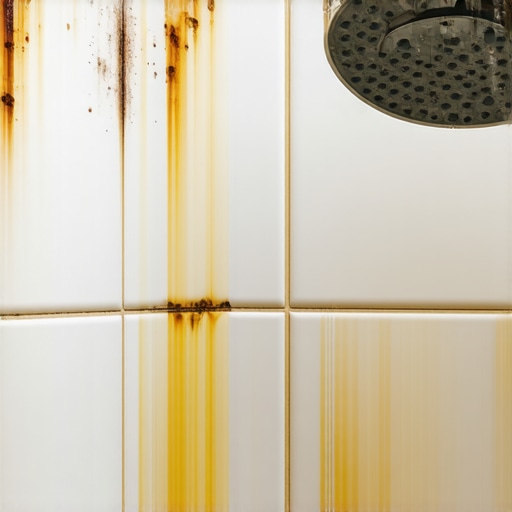
Metal corner beads in showers fail because of galvanic corrosion and alkaline reactions between the cement based thin-set and the zinc coating. This leads to oxide jacking which forces the grout to crack and pop away from the wall surface. This is a chemical certainty, not a possibility. When you mix portland cement with water, the resulting slurry is highly alkaline, often reaching a pH level of 12 or 13. This alkalinity is aggressive enough to eat through the thin sacrificial layer of zinc on a standard corner bead. Once the raw steel beneath is exposed to the humidity inherent in a bathroom, the oxidation process begins. Rust occupies more physical space than the original metal. This expansion, known as oxide jacking, creates internal pressure that no grout or tile bond can withstand. It will buckle. It will crack. The grout will crumble into the tray. For those looking for long term durability, understanding grout restoration secrets for long lasting results is only half the battle if the underlying structure is corroding.
“A floor is only as good as the subfloor beneath it; deflection is the enemy of every joint.” – Master Flooring Axiom
Why metal and moisture are natural enemies
Oxidation occurs when water penetrates the grout joints and reaches the steel bead. This causes structural expansion of the metal, leading to tile delamination. Professionals prefer PVC profiles or mitered edges for waterproof longevity in wet environments. Consider the physics of a shower. It is a box designed to contain and redirect hundreds of gallons of water every week. Even the best sealed grout is porous at a molecular level. Capillary action pulls moisture through the grout lines. If that moisture finds a galvanized metal bead, the bead becomes an anode. The chemical bond is replaced by a layer of iron oxide, which is essentially a structural lubricant that causes the tile to slide right off the wall. If you want showers that wow with modern designs for 2025, you must abandon the metal bead in favor of modern waterproofing membranes and plastic or stainless steel profiles.
The structural reality of corner transitions
Corner transitions require movement joints to accommodate thermal expansion and structural shifting without causing grout failure. In a shower, the walls are constantly expanding and contracting as they heat up and cool down during a wash. Ceramic tile and steel have vastly different coefficients of thermal expansion. The metal moves more than the tile. When they are locked together in a rigid corner bead, something has to give. Usually, it is the bond between the mortar and the metal. This is why the Tile Council of North America (TCNA) emphasizes the use of flexible sealants at changes of plane. A metal bead is the opposite of flexible. It is a rigid cage that traps stress until the assembly shatters. Using chic baseboard designs that transform rooms in 2025 won’t matter if the moisture from the failing shower corners is wicking into the wall cavity and rotting the base from the inside out.
Comparison of Corner Reinforcement Materials
| Material | Corrosion Resistance | Thermal Expansion | Bond Strength | Longevity |
|---|---|---|---|---|
| Galvanized Steel | Low | High | Poor | 2 to 5 Years |
| Stainless Steel (316) | High | Moderate | Moderate | 25+ Years |
| PVC / Plastic | Immune | Low | Excellent | Lifetime |
| Mitered Tile Edge | Immune | Identical | High | Lifetime |
The 1/8 inch rule for waterproofing
Expansion gaps of exactly one eighth of an inch are required at every change of plane to ensure structural integrity. Most installers pack these corners with hard grout. This is a mistake. As the house settles, that hard grout becomes a wedge. It exerts pressure on the tile edges. If there is a metal bead behind that grout, the pressure is concentrated on a sharp edge, leading to chipping. I always tell my apprentices that the gap is there for a reason. It is the lungs of the shower. It allows the walls to breathe. Instead of a metal bead, we use a high grade 100 percent silicone sealant that matches the grout color. This allows for movement while maintaining a water tight seal. My contrarian data point is this. While most installers want to pack the corner with grout for stability, a solid grout joint in a change of plane is the primary cause of structural leaking. You need the flexibility of silicone.
“The integrity of the assembly depends on the management of movement; rigid connections in wet areas are a recipe for catastrophic failure.” – TCNA Installation Guide
The ghost in the expansion gap
Water behaves like a ghost, moving through materials that appear solid to the naked eye. In a shower corner, hydrostatic pressure can force water behind the tile. If a metal bead is present, the water pools against it. Because the metal is non porous, the water cannot escape. It sits there, creating a dark, damp microclimate where mold thrives. This mold eventually eats through the paper backing of the gypsum board, if that was used, or degrades the cement board. By the time you see the first brown stain on your bathroom ceiling downstairs, the metal bead has likely disintegrated. I have pulled apart showers where the metal bead was nothing but a trail of orange dust. This is why we move toward integrated waterproofing systems like Kerdi or Wedi, where the corner is reinforced with fabric tape and liquid membranes, not metal. It eliminates the risk of oxidation entirely.
The path to a bulletproof shower installation
To ensure your shower survives the next decade, follow this professional checklist. This is the process I use on every high end job to ensure I never get a callback.
- Verify the subfloor deflection meets L/360 standards for ceramic tile or L/720 for stone.
- Install a dedicated waterproofing membrane that extends at least six feet up the walls.
- Use only PVC or high grade stainless steel profiles if a decorative edge is required.
- Maintain a 1/8 inch gap at all internal and external corners for silicone placement.
- Ensure 95 percent mortar coverage on the back of every tile to eliminate air pockets.
- Back-butter every tile to ensure a chemical and mechanical bond to the substrate.
The final verdict is simple. Metal corner beads are for dry living rooms and bedrooms. They have no place in the moisture rich environment of a modern bathroom. When you choose materials, think about the chemistry of the bond and the physics of the water. Do not let a two dollar piece of steel ruin a ten thousand dollar tile job. Focus on the structural reality of the installation, and your floors and walls will stand the test of time. Keep the sawdust under your nails and the metal out of your showers. It is the only way to build a surface that performs as well as it looks.