
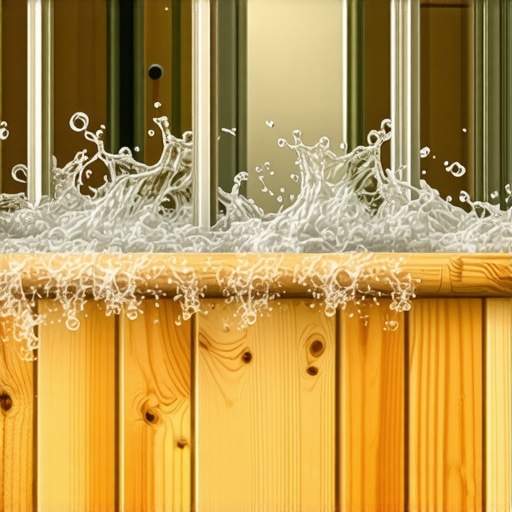
I have spent twenty-five years on my knees with a moisture meter and a level, and if there is one thing I have learned, it is that water always wins. I once walked into a house where a fifteen thousand dollar wide-plank walnut floor was cupping so bad it looked like a potato chip because the installer did not check the crawlspace humidity. The baseboards in the adjacent master bath were even worse. They were solid oak, turned black at the bottom from the homeowner spray near the walk-in shower. It was a complete disaster that could have been avoided with a little common sense about material science. Most people think of baseboards as a simple cosmetic finish, but in a wet room, they are a critical component of the moisture barrier system. Wood is a living, breathing organism that never forgets its primary job is to transport water. When you put it next to a shower, you are asking for a structural failure that will cost thousands to remediate. [IMAGE_PLACEHOLDER_1]
The fatal flaw of cellulose fibers in wet environments
Cellulose fibers in wood baseboards are naturally hydrophilic, meaning they actively attract water molecules. In the high-humidity environment of a walk-in shower, these fibers swell and break down the lignin that holds them together. This process leads to rot, mold growth, and total structural failure of the wall base. When water hits the edge of a wood board, it moves through the tracheids and vessels via capillary action. This is the same mechanism trees use to pull water from the roots to the canopy. Even if you paint the front of the board, the bottom edge and the back are often raw wood. These surfaces act like a straw, sucking up every drop of water that splashes out of the shower. Once that moisture is inside the board, it has nowhere to go. It sits against the paper facing of the drywall and creates a perfect breeding ground for Stachybotrys chartarum, commonly known as black mold. You will not see it at first, but you will smell it. It is that musty, earthy scent that tells me a bathroom was built by someone who cared more about looks than physics.
Why your subfloor is lying to you about humidity
Subfloor moisture levels can fluctuate wildly depending on the hydrostatic pressure beneath the slab or the relative humidity in a crawlspace. A wood baseboard installed in a bathroom will absorb this moisture from the ground up, even if there is no direct splash. Most installers skip the moisture barrier behind the baseboard, thinking the paint will protect it. It will not. In my decades of experience, I have seen concrete slabs that look bone dry but are actually pumping out pounds of water vapor every day. This vapor hits the back of the wood baseboard and condenses. The wood expands, the joints open up, and the caulk line at the top snaps like a dry twig. This creates a gap where even more steam can enter the wall cavity. It is a feedback loop of destruction. If you want to see what a professional looks for in these areas, you should check out these tile cleaning tips for a sparkling bathroom in 2025 to understand how real waterproof surfaces behave. I spent three days grinding concrete on a job last month just so the floor would not click like a castanet. That same level of care must be applied to your baseboards. If the subfloor is not perfectly dry and the material is not moisture-resistant, you are just building a ticking time bomb.
“A floor is only as good as the subfloor beneath it; deflection is the enemy of every joint.” – Master Flooring Axiom
The ghost in the expansion gap at the floor edge
Expansion gaps are required for every hard-surface floor, but in a wet room, this gap becomes a highway for vapor transmission. Wood baseboards fail to bridge this gap safely because they cannot be silicone-sealed to the floor without eventually pulling away. Wood moves too much. Porcelain tile or PVC baseboards are dimensionally stable, meaning they do not grow and shrink with the seasons. When you use wood, the seasonal movement will break the seal at the floor line. Once that seal is gone, water from a damp bath mat or a minor spill will find its way under the baseboard and into the subfloor. This is why I always advocate for a sanitary base or a tiled-in baseboard. It allows you to create a continuous waterproof membrane from the floor up the wall. If you are planning a renovation, look at showers that wow modern designs for 2025 to see how designers are moving away from wood trim in favor of integrated tile solutions. A tile baseboard can be grouted and caulked with high-grade 100 percent silicone that will last for decades. Wood baseboards, on the other hand, will require maintenance every six months just to keep the paint from peeling. It is a losing battle every single time.
The chemical failure of engineered wood and MDF
Medium Density Fiberboard (MDF) is essentially a sponge made of sawdust and glue that will explode when it touches water. While solid wood is bad, engineered trim or MDF is a death sentence for a bathroom near a shower. The resins used to bind MDF are often not water-rated. When moisture hits the bottom of an MDF baseboard, it undergoes thickness swell. The board will grow by thirty percent or more in a matter of hours. The paint will crack and the material will begin to flake off in chunks. I have seen homeowners try to save money by using pre-painted MDF baseboards, only to have them look like soggy cardboard within a month. Even if you use a high-quality primer, the moisture will find the nail holes. Every time you drive a finish nail into a baseboard, you are creating a direct path for water to reach the core of the material. This is why I carry a gallon of WD-40 and a sharp set of chisels in my truck. I spend more time tearing out rotten MDF than I do installing new trim. If you want a look that lasts, you need to consider chic baseboard designs that transform rooms in 2025 that utilize waterproof materials like extruded polystyrene or porcelain.
How to refresh grout without replacing it
Grout maintenance is the secret to keeping your bathroom waterproof and preventing subfloor rot. If you have chosen the right materials like tile baseboards, you only need to worry about the joints. Over time, grout can become porous or cracked, allowing water to seep behind the tiles. This is why knowing how to refresh grout without replacing it is a vital skill for any homeowner. You can use a high-quality grout colorant or sealer to restore the hydrophobic properties of the joint. This is a much better alternative than ripping out wood baseboards that have already started to rot. When you refresh your grout, you are essentially renewing the armor of your bathroom. I tell my clients that a well-maintained tile baseboard will outlive the house itself, whereas wood will be in a landfill in five years. Do not be the person who ignores their grout lines until the floor starts to feel soft underfoot. That softness is the sound of your joists rotting away.
Comparing baseboard materials for wet zones
| Solid Oak | Low | 1-3 years | High | |
| MDF | Very Low | Less than 1 year | Impossible | |
| PVC Composite | High | 20+ years | Low | |
| Porcelain Tile | Extreme | 50+ years | Minimal | |
As you can see from the data, the difference is not even close. Porcelain tile is the undisputed king of the wet room. It has a water absorption rate of less than 0.5 percent, which means it is virtually impervious to the steam and splashes of a walk-in shower. PVC is a decent runner-up for those who want the look of traditional trim, but it lacks the structural rigidity of tile. When I am building a custom bathroom, I always push for the tile baseboard. It is not just about the moisture, it is about the cleaning. You can mop a tile baseboard with hot water and disinfectant every day for a century and it will still look brand new. Try that with wood and you will be calling me for a quote to replace it before the year is out.
“Standard wood trim in a wet room is not an architectural choice, it is a maintenance liability that ignores the basic laws of physics.” – NWFA Installation Guide Supplement
A checklist for a waterproof bathroom transition
If you are determined to have a beautiful bathroom that does not rot, follow this strict protocol for your baseboards and transitions. Do not let your contractor cut corners here. They want to get the job done fast, but you have to live with the results for a long time. Here is the list I use on every high-end job.
- Select porcelain tile or waterproof PVC instead of wood or MDF.
- Apply a waterproof membrane like Kerdi-Band to the wall-to-floor junction.
- Seal the bottom of the baseboard with 100 percent silicone caulk, not acrylic.
- Ensure the shower curb is sloped inward to keep water off the bathroom floor.
- Verify that the bathroom exhaust fan is rated for the square footage to reduce humidity.
- Check the moisture content of the subfloor with a pin-meter before installation.
- Leave a 1/8 inch gap at the bottom of the baseboard and fill it entirely with flexible sealant.
By following these steps, you are protecting the structural integrity of your home. It might cost a few hundred dollars more in materials now, but it will save you five thousand dollars in mold remediation later. I have seen too many good houses ruined by cheap trim. Don’t let your home be one of them. If you need professional advice or want to discuss a specific project, you can always reach out through our contact us page. We deal with these technical challenges every day and we know how to make a floor last a lifetime. Stop thinking about the color of the paint and start thinking about the chemistry of the bond. That is how a master architect builds a bathroom.