
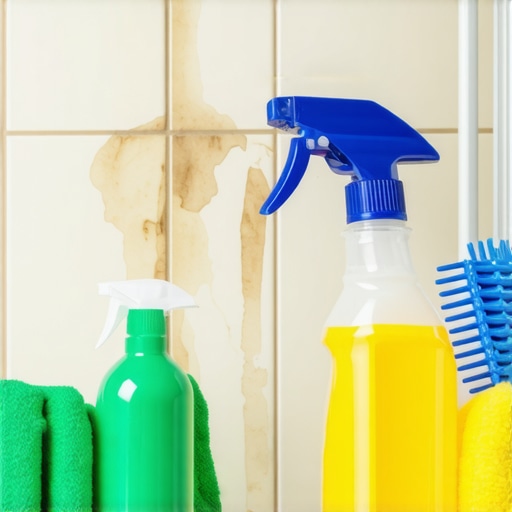
The chemical war inside your shower joints
Shower grout failure occurs when acidic solutions like vinegar dissolve the calcium carbonate binder in cementitious grout. This chemical reaction leads to structural degradation, increased porosity, and eventually, the total loss of the tile bond. Using pH-neutral cleaners is the only way to preserve the integrity of your shower tile and grout systems.
I have spent over twenty-five years on my knees with a trowel and a moisture meter. I have seen every DIY disaster in the book. Most guys skip the technical specs because they just want to get the job done and get paid. But I spent three days last month grinding out concrete and chipping away at a master shower because a homeowner thought they were being eco-friendly. They used white vinegar every morning for three years. By the time I got there, the tiles were literally sliding off the wall like they were on ice. The vinegar had eaten the very cement that held the floor together. It smelled like a salad dressing factory in there, but the structural reality was a nightmare. When you use vinegar, you are not just cleaning. You are performing a slow-motion demolition of your own bathroom. Most people see grout as a cosmetic filler. I see it as a rigid structural matrix that prevents water from migrating into your subfloor and wall studs. When that matrix is compromised, the clock starts ticking on a five-figure repair bill.
The structural burden of the cementitious joint
Cement-based grout is a porous material composed of Portland cement, graded aggregates, and chemical additives designed for compression strength. Its primary role is to fill the voids between tiles and distribute stress across the floor or wall surface. Maintaining the crystalline structure of this cement is vital for long-term durability.
Grout is not some inert plastic. It is a hydraulic cement product. When you mix it with water, it undergoes a chemical reaction called hydration, forming a dense crystalline lattice. This lattice is what provides the strength to hold your showers together. However, that lattice is fundamentally alkaline. Vinegar is acetic acid. When acid meets an alkaline base, you get a neutralization reaction. On a microscopic level, the acetic acid molecules are tearing apart the calcium silicate hydrate bonds. Every time you spray that solution on your tile, you are stripping away a layer of the binder. You might see the dirt disappear, but that is because you are literally dissolving the top layer of the grout along with the grime. Eventually, the grout becomes sandy and soft. You can take a fingernail and scratch it away. That is not just a cleaning issue. It is a failure of the building envelope. Once the grout loses its density, it becomes a sponge for moisture, leading to the exact mold and mildew problems you were trying to avoid in the first place.
“A floor is only as good as the subfloor beneath it; deflection is the enemy of every joint.” – Master Flooring Axiom
Why your grandmother’s advice is destroying your bathroom
Traditional cleaning myths suggest that vinegar and baking soda are universal cleaners, but this combination is chemically unsuitable for modern tile installations. The acidity of vinegar aggressively attacks the sealers and the cement binders found in most residential grout. This leads to irreparable etching and subsurface moisture intrusion.
The old-timers used to swear by vinegar, but they were often dealing with different materials or simply did not care about the twenty-year lifespan of a floor. In the modern era, we use advanced thin-sets and high-performance grouts that are engineered for specific environmental stresses. When you introduce a strong acid into that environment, you are voiding the engineering. I have walked into hundreds of homes where the grout restoration secrets for long-lasting results were ignored in favor of a cheap bottle of white vinegar. The result is always the same. The grout lines start to look ‘splotchy’ because the acid has etched the surface unevenly. You cannot just wipe that away. You have to mechanically remove the damaged grout and start over. It is a labor-intensive process that most homeowners are not prepared for. If you want to keep things clean without the damage, you need to look into tile cleaning tips for a sparkling bathroom in 2025 that focus on pH-balanced solutions. Stop listening to the internet bloggers who have never actually set a tile in their lives.
The microscopic erosion of cementitious binders
At the molecular level, acetic acid reacts with the calcium carbonate in grout to create calcium acetate, water, and carbon dioxide gas. This chemical transformation permanently removes the solid binder from the grout joint. The result is a microscopic honeycomb effect that leaves the joint brittle and prone to cracking.
Let us talk about the physics of the pour. When we install a floor, we are looking for a specific density. If you look at a cross-section of grout under a microscope, it looks like a mountain range. There are peaks and valleys. When you apply vinegar, the acid pools in the valleys. It starts eating the calcium that holds the sand particles together. Without the binder, the sand just sits there. This is why your grout starts to feel ‘gritty’ after a few months of using acidic cleaners. You are feeling the literal components of the grout falling apart. This is especially dangerous in showers where water is constant. That water now has a direct path to the substrate. If you do not have a high-quality waterproofing membrane like Schluter-Kerdi or a liquid-applied guard behind that tile, you are going to have rotting studs in no time. If your grout is already starting to fail, you might need to learn how to refresh grout without replacing it before the damage reaches the subfloor.
| Cleaning Agent | pH Level | Impact on Grout Binder | Recommended Use |
|---|---|---|---|
| White Vinegar | 2.5 | High Erosion | Never use on grout |
| Lemon Juice | 2.0 | High Erosion | Never use on grout |
| Bleach (Diluted) | 11.0 | Mild Degradation | Occasional disinfection only |
| Neutral Cleaner | 7.0 | No Impact | Daily maintenance |
| Epoxy Cleaner | 8.5 | Low Impact | Specialized installations |
The physics of the bond failure
Tile adhesion relies on the mechanical and chemical bond between the thin-set mortar and the tile backing. When acidic cleaners penetrate the grout joints, they can eventually reach the thin-set layer. This weakens the bond and causes tiles to ‘tent’ or delaminate from the substrate.
I have seen this happen in many showers with a style trendy ideas for small bathrooms where the footprint is small and the water exposure is concentrated. The vinegar seeps through the porous grout and hits the thin-set. Thin-set is also cement-based. The acid does not care if it is grout or mortar. It eats both. Once the thin-set starts to crumble, the tile is no longer supported. You might hear a hollow sound when you tap on the tile. That is the sound of a failure. This is why we insist on eco-friendly tile solutions for sustainable homes in 2025 that utilize non-toxic but non-acidic cleaners. You can be green without being destructive. If you lose that bond, there is no ‘patching’ it. You are looking at a full rip-out. I have had to tell families that their beautiful $10,000 bathroom was a total loss because of a $2 bottle of vinegar. It is a conversation I hate having.
Why your baseboards are a moisture wick
Baseboards located near shower stalls or in tiled bathrooms act as a secondary defense against moisture, but they are highly susceptible to wicking. When grout fails due to acidic cleaning, moisture often migrates horizontally, saturating the baseboard and the drywall behind it. This leads to swelling and mold growth.
People always forget about the baseboards. They think because the baseboard is outside the shower, it is safe. But water is a traveler. It follows the path of least resistance. If your grout is compromised, the water travels under the tile and hits the edge of the room. Wood or MDF baseboards will suck that water up like a straw. You will notice the paint starting to peel or the wood starting to swell at the bottom. This is a classic sign that your grout is no longer doing its job. I always suggest looking into baseboards makeover ideas to elevate your space that include moisture-resistant materials like PVC or primed finger-jointed pine that is sealed on all six sides. If you are doing a full remodel, consider chic baseboard designs that transform rooms in 2025 that account for the high-humidity environment of a bathroom. Never assume the floor ends at the tile line. The entire system is connected.
- Check grout for any signs of powdering or sand loss every six months.
- Use a pH-neutral cleaner specifically labeled for natural stone or ceramic tile.
- Reseal your grout joints annually to prevent moisture penetration.
- Inspect the transition between the floor and the baseboard for any signs of swelling.
- Ensure your bathroom fan is moving at least 50 CFM to reduce ambient humidity.
Better ways to maintain a sanitary surface
Maintaining a clean shower requires mechanical action and the right surfactants, not harsh acids. Steam cleaning is an effective, chemical-free alternative that uses heat to loosen grime without affecting the cementitious bond of the grout. For deep stains, oxygen-based cleaners offer a safer alternative to vinegar.
If you want a clean bathroom, you need to focus on the science of surfactants. A surfactant lowers the surface tension of water, allowing it to lift dirt away. Most neutral cleaners do this perfectly without eating your floor. If you have a real mess, use an oxygen-based powder mixed with warm water. It breaks down organic stains without the acidity. I also tell my clients to invest in a good squeegee. If you remove the water from the showers after every use, the minerals in the water do not have a chance to settle into the grout. It takes thirty seconds and saves you thousands of dollars in the long run. For those looking for the ultimate modern look, check out showers that wow modern designs for 2025 which often feature larger format tiles and fewer grout lines. Fewer grout lines mean less maintenance and fewer places for moisture to hide. Keep it simple. Keep it neutral. And for heaven’s sake, keep the vinegar in the kitchen. Your subfloor will thank you.