
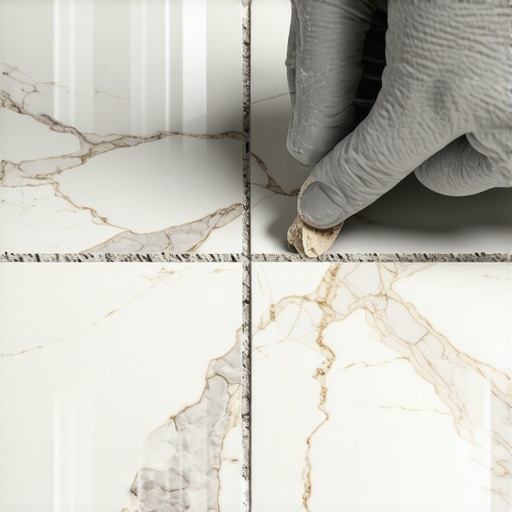
The hidden chemistry of marble failure
I spent three days grinding concrete on a job last month just so the floor wouldn’t click like a castanet, but the real disaster was the shower. I walked into a master bath where the homeowner had just spent thirty thousand dollars on book-matched Statuario marble. It was a masterpiece of stone selection. Then I looked at the corners. Every single joint had a dark, greasy halo bleeding two inches into the stone. The installer used a standard five dollar tube of acetoxy silicone from a big box store. That vinegar smell you get from cheap caulk is acetic acid. On a ceramic tile, it is fine. On marble, it is a slow motion chemical burn. The acid reacts with the calcium carbonate in the stone, etching the surface and drawing oils deep into the pores. You cannot sand that out. You cannot bleach it out. That stone was ruined before the first shower was even taken. If you want showers that wow, you have to understand the molecular reality of the materials you are touching. Marble is not just a hard surface. It is a dense, prehistoric sponge that reacts to every chemical it touches. Using the wrong sealant is like putting battery acid on a silk suit. It might look fine for twenty minutes, but the degradation starts immediately at the atomic level.
The fundamental difference between acetoxy and neutral cure
Neutral cure silicone is mandatory for marble because it releases alcohol or oxime during the curing process rather than acetic acid. This chemistry prevents the acidic etching of calcium carbonate. Since marble is a metamorphic rock composed mainly of recrystallized carbonate minerals, any acid exposure results in permanent surface damage and structural weakening at the bond line. Most installers grab whatever is on the truck. That is a mistake that leads to callbacks and lawsuits. When we talk about high end stone, we are talking about a material with a specific porosity. Standard silicones contain unreacted plasticizers. These are the oils that keep the silicone flexible. In a neutral cure, non-bleeding formula, these plasticizers are chemically locked into the polymer chain. In cheap acetoxy versions, they are free to migrate. Because marble is porous, it acts like a wick, drawing those oils into the stone. This creates the permanent wet look known as picture framing. It is the hallmark of an amateur installation. If you are researching grout restoration secrets, you will find that preventing this damage is far easier than fixing it. Once the oil is in the stone, the stone is trash.
“A floor is only as good as the subfloor beneath it; deflection is the enemy of every joint.” – Master Flooring Axiom
The physics of the expansion joint in wet environments
Expansion joints in marble showers must handle three dimensional movement while maintaining a watertight seal against a porous substrate. Marble has a different coefficient of thermal expansion than the cement board or waterproofing membrane behind it. As the shower heats up, the stone expands. Without a flexible neutral cure silicone joint at the changes of plane, the stone will heave or the grout will crack. We see this constantly. People think grout is enough. Grout is rigid. Grout will crack at the corner of a shower every single time because houses breathe and move. You need a 100 percent silicone sealant that meets ASTM C920 standards. This isn’t just about water. It is about movement capability. A high quality neutral cure silicone can handle 25 to 50 percent movement. That means it can stretch and compress without pulling away from the marble. If the bond fails, water gets behind the stone. Then you get mold, rot, and the eventual collapse of the substrate. This is why we pay attention to the mil thickness of our membranes and the chemical composition of our sealants. It is a structural engineering requirement. While many focus on tile cleaning tips, no amount of scrubbing will fix a failed expansion joint that has allowed water to saturate the subfloor.
| Property | Acetoxy Silicone | Neutral Cure (Non-Bleeding) |
|---|---|---|
| Cure Byproduct | Acetic Acid (Vinegar) | Alcohol or Oxime |
| Substrate Compatibility | Glass, Ceramic, Aluminum | Marble, Granite, Limestone, Metal |
| Oil Migration Risk | High (Causes Staining) | Zero to Low |
| Adhesion Strength | High on non-porous | Superior on stone and masonry |
| Odor Level | Strong, pungent | Mild, low VOC |
Why your subfloor is lying to you
The subfloor often hides moisture levels that will eventually force the silicone bond to fail from the underside. Even if you use the right neutral cure product, if the moisture vapor emission rate of the slab is too high, the sealant will eventually peel. I have seen guys put marble over a green slab and wonder why the silicone turned black in three months. That is not mold. It is the chemical breakdown of the bond due to hydrostatic pressure. You need to use a moisture meter. You need to know if you are at three pounds or ten pounds of pressure. If the moisture is too high, it pushes through the stone and attacks the underside of the sealant. This is especially true in regions like the humid Gulf Coast or the damp Pacific Northwest. In those areas, the vapor drive is constant. You cannot fight physics. You have to prep the surface. This involves mechanical abrasion and ensuring the stone is bone dry before the tube ever hits the gun. If the stone is damp, the neutral cure silicone cannot find a home in the pores. It just sits on top. Then, the first time someone steps on the floor, the joint zips open like a jacket. This is why I tell people that how to refresh grout is a secondary concern to how you seal your transitions. A sealed transition is the only thing standing between your joists and dry rot.
The ghost in the expansion gap
The ghost refers to the invisible movement that occurs in every bathroom as the seasons change and the wood framing expands. When you install marble against chic baseboard designs, you have to leave a gap. If you jam the stone tight against the wall and fill it with grout, the floor will tent. I have seen marble tiles snap in half because they had nowhere to go. You leave that 1/4 inch gap at the perimeter and you fill it with a color matched neutral cure silicone. This allows the floor to float and breathe. Most homeowners hate the look of a silicone joint because they think of that messy, yellowing caulk in their grandma’s tub. Modern neutral cure silicones come in hundreds of colors that match the grout perfectly. When done right, you cannot even tell it is silicone. But it is there, doing the work of a shock absorber. It prevents the marble from crushing itself. It protects the integrity of the installation. For a professional, this is the difference between a job that lasts fifty years and a job that lasts five. We are looking for longevity. We are looking for performance.
- Always clean marble edges with denatured alcohol before applying silicone.
- Check the expiration date on the tube as neutral cure has a shorter shelf life.
- Use masking tape for a clean line to avoid dragging silicone into the stone face.
- Never use a soapy finger to tool the joint as the soap can contaminate the stone.
- Ensure the room temperature is between 40 and 90 degrees Fahrenheit for proper curing.
The 1/8 inch that ruins everything
A joint that is too narrow will cause the silicone to fail through cohesive tearing because it cannot handle the percentage of movement. If you only leave a 1/16 inch gap, and that gap moves 1/32 of an inch, you have just asked that silicone to stretch 50 percent. That is the limit for even the best products. If you leave a 1/8 inch or 3/16 inch gap, that same movement is only a fraction of the product’s capability. This is the math that installers ignore. They want tight joints because they think it looks better. They are wrong. It looks terrible when it rips and turns into a dirt trap. A proper joint width allows the neutral cure silicone to behave like the elastomer it is designed to be. This is particularly vital when transitioning from a stone floor to baseboards makeover ideas where the materials have wildly different expansion rates. Wood moves a lot. Stone moves a little. The silicone in between is the mediator. Without it, the wood will simply rip the grout out or crack the stone. I have seen wood baseboards shrink so much in the winter that they pulled the top layer of stone right off the floor because the installer used a rigid adhesive instead of a flexible sealant. Don’t be that guy. Use the right chemistry for the right material.
“Marble is a living material; treat it with the chemistry it deserves or watch it die.” – Stone Specialist Manual
While most people want the thickest underlayment, too much cushion actually causes the locking mechanisms on LVP to snap under pressure. The same logic applies to stone. You cannot have a soft, bouncy substrate under marble. It must be rigid, but the joints must be flexible. That is the paradox of flooring. You build a rock solid foundation and then you give it room to dance. If you are looking for eco-friendly tile solutions, look for low VOC neutral cure silicones. They are safer for the installer and the environment. They don’t off gas the same harsh chemicals as the acid cure stuff. In the end, it comes down to respecting the stone. Marble took millions of years to form. Don’t ruin it in ten minutes with a tube of the wrong caulk. If you need help with your next project, you can contact us for professional guidance. We have seen every failure in the book and we know how to avoid them. It starts with the subfloor and it ends with the right bead of silicone. Take the time to do it right or don’t do it at all. The stone deserves better.